SB 721 Inspection Timeline for Owners: 2026 Compliance Guide
SB 721 inspection timeline explained: deadlines, 6-year cycles, repair windows, and compliance steps for California property owners. Start your checklist.
Table of Contents
- Understanding SB 721 and the Inspection Timeline for Owners
- Key Dates: SB 721 Inspection Deadlines and the 6-Year Cycle
- The SB 721 Inspection Process: What Owners Need to Know
- SB 721 Repair Requirements and Timelines After Inspection
- SB 721 Compliance Checklist: Step-by-Step Owner Action Plan
- SB 721 Penalties for Non-Compliance and Liability Risks
- Budgeting and Reserve Planning for SB 721 Compliance
- Local Jurisdiction Variations and SB 721 Enforcement
SB 721 Inspection Timeline for Owners: 2026 Compliance Guide
Last Updated: July 16, 2026
California property owners managing multifamily buildings face a critical compliance deadline with SB 721. This guide breaks down what you need to do, when you need to do it, and how to avoid penalties. Understanding the SB 721 inspection timeline isn’t optional, it’s the difference between staying compliant and facing enforcement action from your local building department.
Properties that miss inspection deadlines face escalating fines, potential legal liability, and operational restrictions. The buildings that handle this smoothly aren’t scrambling at the last minute; they mapped out their timeline months in advance.
Understanding SB 721 and the Inspection Timeline for Owners
Senate Bill 721 requires inspections of exterior elevated elements, balconies, decks, stairways, and elevated walkways, on multifamily residential buildings. The law emerged from high-profile balcony failures that resulted in injuries and deaths.
What makes SB 721 different from other building code requirements is its compressed timeline and mandatory enforcement. Unlike rules relying on owner initiative, SB 721 inspections are triggered automatically based on building age and occupancy type. Local enforcement agencies actively track compliance and impose penalties ranging from fines to operational restrictions.
The core requirement is straightforward: multifamily buildings with three or more units must have their exterior elevated elements inspected by a licensed professional. But coordinating between building management, licensed contractors, HOA boards, and local agencies requires careful planning.
Start your compliance planning 6 months before your deadline. Most property managers who miss deadlines waited until the last 60 days, when licensed inspectors are booked solid.
Properties Subject to SB 721 Requirements
SB 721 applies specifically to multifamily residential buildings, three or more units in a single structure. Single-family homes, duplexes, and triplex properties are exempt. Commercial buildings are exempt. Condominiums are covered, but responsibility typically falls on the HOA board rather than individual unit owners.
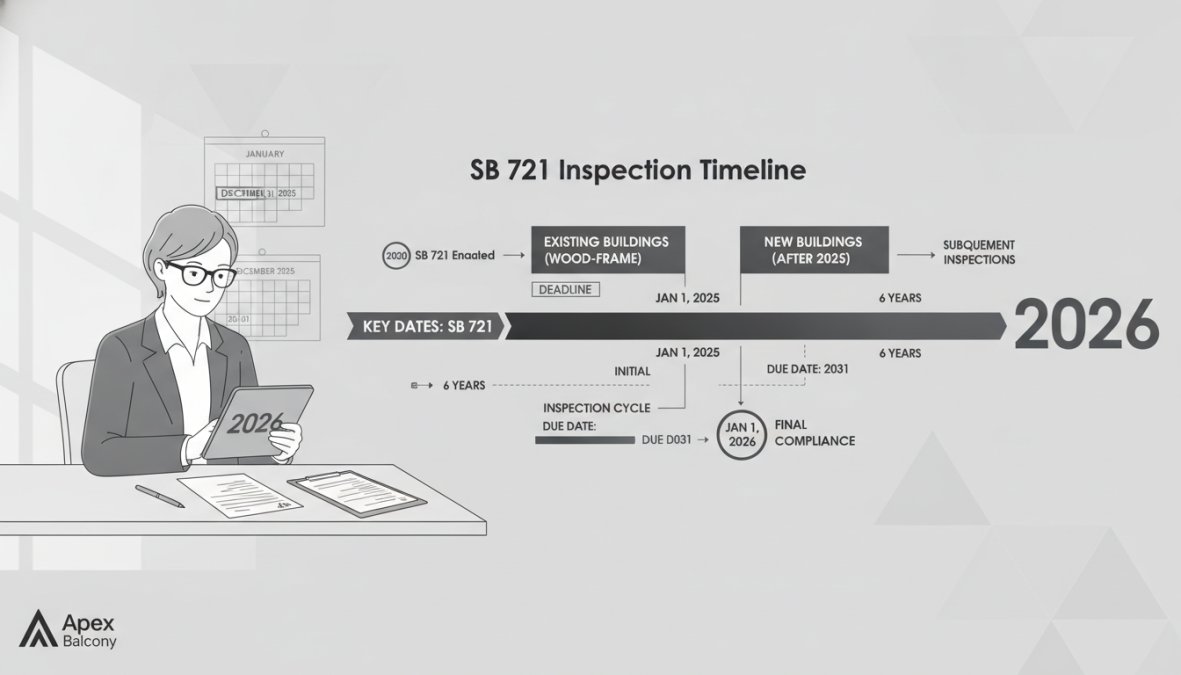
Building age determines your deadline. Buildings constructed before January 1, 2014 had an initial deadline of January 1, 2025. Buildings constructed between January 1, 2014 and January 1, 2020 have a deadline of January 1, 2029. Newer buildings constructed on or after January 1, 2020 face their first inspection deadline six years after initial occupancy.
While SB 721 is a state law, local enforcement varies. Some jurisdictions have strict compliance tracking and aggressive penalty enforcement; others are still building their inspection databases. Regardless of your local agency’s approach, the state requirement applies equally everywhere.
For condominiums, the HOA board is responsible for scheduling and paying for building inspections. Individual owners cannot opt out or delay based on personal preference.
Key Dates: SB 721 Inspection Deadlines and the 6-Year Cycle
The January 1, 2026 deadline represents a major compliance milestone for buildings constructed before January 1, 2014. If your building hasn’t been inspected yet and falls into this category, you’re in the critical window now. This isn’t a soft deadline, local agencies are actively tracking compliance, and penalties begin accruing on January 2, 2026 for non-compliant properties.
(/hoa-reserve-study-balcony-repair-costs/) Inspection Deadlines and the 6-Year Cycle]
Once you complete your initial inspection, you must schedule your next inspection no later than six years from the previous inspection date. A building inspected on June 15, 2026 must schedule its next inspection by June 15, 2032. Missing that deadline by even one day makes you technically non-compliant.
For buildings constructed between January 1, 2014 and January 1, 2020, the first inspection deadline is January 1, 2029, roughly three years away. For buildings constructed on or after January 1, 2020, the first inspection deadline is six years after the building receives its initial occupancy permit.
Don’t assume your building’s construction date is the occupancy permit date. Request your occupancy permit documentation from the city; estimated dates can lead to missed deadlines.
The 6-year cycle is absolute. There are no extensions, no grace periods, and no exceptions for buildings undergoing major repairs.
The SB 721 Inspection Process: What Owners Need to Know
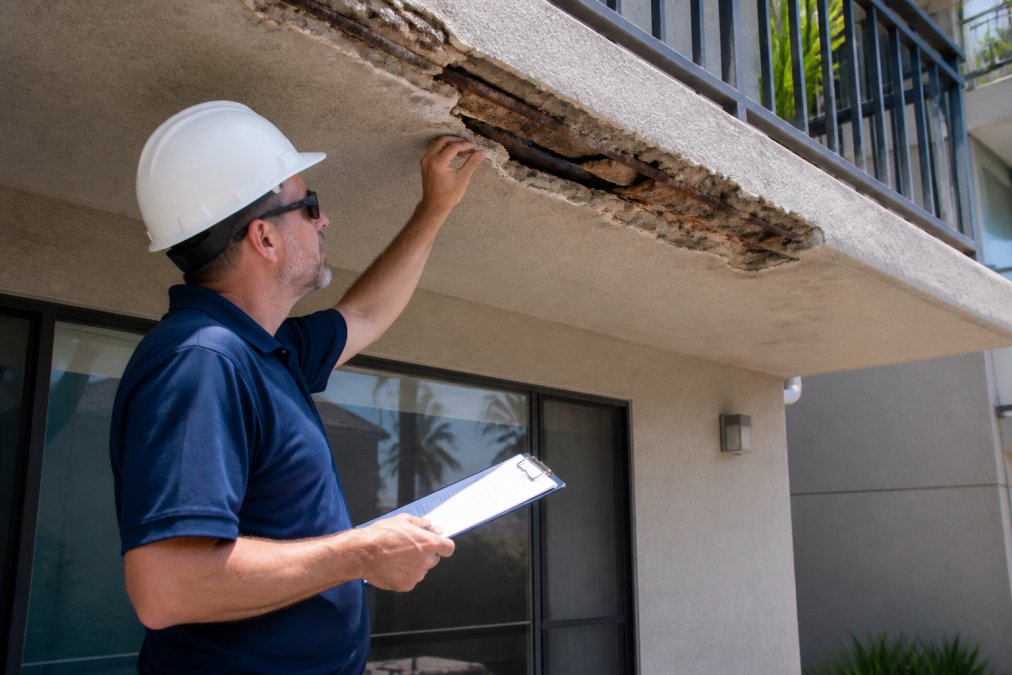
A licensed professional, typically a structural engineer, architect, or licensed building inspector, conducts a visual inspection of all exterior elevated elements. The inspector examines every balcony, deck, stairway, and elevated walkway for signs of structural distress: cracking, deterioration, rust, water damage, and separation of connections.
If the visual inspection reveals potential problems, the inspector may recommend destructive testing, removing small samples of material to assess internal conditions. This might include core sampling of concrete, wood boring to check for rot, or removal of fasteners to inspect for corrosion. Destructive testing adds cost and time but is often necessary for a complete structural assessment.
The inspection generates a written report documenting all findings, photographs, measurements, and the inspector’s professional opinion on structural integrity.
What Components Require Inspection
Exterior elevated elements include any structure extending from the building and elevated above ground level:
- Exterior stairs and landings
- Elevated walkways and catwalks
- Exterior decks attached to residential units
- Elevated entry platforms
The inspection covers the entire structure: load-bearing components, connections, fasteners, waterproofing, and structural supports. For balconies, this means examining the ledger board connection, support posts or cantilever beams, flooring system, railing, and waterproofing membranes.
Who Is Qualified to Perform Inspections
California law requires SB 721 inspections be performed by a licensed professional:
- A licensed structural engineer
- A licensed architect
- A licensed building inspector with specific training
- An engineer or architect with at least 10 years of building inspection experience
The inspector must have demonstrable expertise in structural systems and building code compliance. A general contractor or property manager cannot perform SB 721 inspections. The inspector’s professional license is on the line with every report, creating strong incentive for thorough, conservative reporting.
Visual and Destructive Testing Standards
Visual inspection uses standardized assessment criteria, looking for visible cracks, rust, rot, water staining, deterioration, separation at connections, missing fasteners, and waterproofing deterioration.
Destructive testing might include drilling core samples from concrete, boring into wood to check for decay, removing fasteners to inspect for corrosion, or removing sections of waterproofing. The extent depends on what the visual inspection reveals.
Visual inspection typically costs $1,500-$3,000 for a 20-unit building. Adding destructive testing could increase costs to $5,000-$10,000 or more. However, skipping destructive testing when concerns exist creates liability risk if hidden problems later emerge.
SB 721 Repair Requirements and Timelines After Inspection
Once the inspection report is complete, the clock starts on the repair timeline. California law requires that structural defects be repaired within a specific timeframe based on severity classification.
The 120-Day Repair Window
Repairs classified as "critical" or "immediate" must be completed within 120 days of the inspection report. This applies to conditions posing imminent risk of failure or injury, severely corroded fasteners, major cracks in load-bearing components, or complete separation of connections.
The 120-day window is strict. If your inspection is completed on March 1, you have until June 29 to finish critical repairs. Extensions are possible but require documented proof of active work and good-faith effort.
Non-critical repairs have a longer timeline, typically one year from the inspection report date. These require attention but don’t pose immediate safety risk.
The 120-day repair window begins when the inspection report is issued. Mark the report date on your calendar immediately and work backward to schedule contractor bids, permitting, and work commencement.
Prioritizing Repairs by Severity
Critical repairs must happen first, within the 120-day window. These get priority for contractor scheduling, permitting, and materials. Once critical repairs are underway, you can plan non-critical repairs for later in the year (within the one-year deadline).
Among non-critical repairs, prioritize lower-cost items that can be completed quickly, deferring expensive work to a later phase.
SB 721 Compliance Checklist: Step-by-Step Owner Action Plan
Pre-Inspection Preparation
Step 1: Confirm Your Building’s Inspection Deadline (Immediate)
Determine your building’s construction date and occupancy permit date. Confirm which category your building falls into and set calendar reminders.
Step 2: Budget for Inspection and Repairs (1-2 months before deadline)
Inspection costs typically range $2,000-$8,000 depending on building size. Request quotes from at least two licensed inspectors. Budget for potential destructive testing (add 30-50% to visual inspection cost) and set aside contingency funds for repairs.
Step 3: Schedule Your Inspection (3-4 months before deadline)
Licensed inspectors book up quickly. Contact inspectors 3-4 months in advance. Provide building details and get written quotes before committing.
Step 4: Prepare Building Access and Documentation
Ensure inspectors can access all balconies and elevated elements. Coordinate with residents in advance. Gather building plans, construction documents, and any previous inspection or repair records.
During and After Inspection
Step 5: Attend the Inspection or Designate a Representative
Someone from building management should be present to answer questions about building history and known issues.
Step 6: Review the Inspection Report Immediately Upon Receipt
Review it within 48 hours. Identify critical repairs, non-critical repairs, and any unclear findings. Contact the inspector for clarification if needed.
Step 7: Dispute Severity Classifications If Warranted (within 30 days)
If you believe the severity assessment is too aggressive, hire a second inspector for an independent opinion. This costs $1,500-$3,000 but might justify a more manageable repair timeline.
Step 8: Obtain Repair Bids from Licensed Contractors (within 30 days)
Share the inspection report with at least three contractors. Request detailed proposals breaking down costs by repair item and timeline.
Documentation and Reporting Requirements
Step 9: Document All Repair Work and Completion
As repairs are completed, document them with photographs, contractor invoices, and completion certifications.
Step 10: File Completion Documentation with Local Agency
Once repairs are complete, submit documentation to your local building department. Requirements vary by jurisdiction.
Step 11: Schedule Your Next Inspection (before six-year deadline)
Mark your calendar for the next inspection deadline, six years from your current inspection report date. Schedule 2-3 months before the deadline to avoid last-minute scrambling.
SB 721 Penalties for Non-Compliance and Liability Risks
Missing an SB 721 inspection deadline or failing to complete required repairs carries real consequences.
Enforcement Actions by Local Agencies
Local building departments impose penalties for non-compliance, starting with notices of violation and escalating to fines if compliance isn’t achieved. Fines can range from hundreds to thousands of dollars per day of non-compliance.
Beyond fines, local agencies can restrict operations. A non-compliant building might face restrictions on new unit leasing, occupancy permits for renovations, or forced occupancy reductions. These operational restrictions have immediate financial impact through lost rental income.
In extreme cases, local agencies can place liens on properties or pursue legal action to compel compliance.
Insurance and Liability Implications
Non-compliance creates significant liability exposure. If a balcony fails and someone is injured, and the building was non-compliant with SB 721, the property owner faces potential liability claims. Insurance carriers may refuse to cover incidents on structures that were knowingly non-compliant.
HOA boards and property managers can face personal liability if they fail to enforce SB 721 compliance. Board members can be sued by residents if negligence in managing compliance results in injury or property damage.
The reputational impact also matters. In competitive rental markets, tenants and buyers research building safety records. A building with SB 721 non-compliance history becomes harder to lease and sell.
Budgeting and Reserve Planning for SB 721 Compliance
SB 721 compliance requires budget planning at multiple levels. Inspection costs typically range from $2,000 to $8,000 depending on building size and complexity. Add another 30-50% if destructive testing is needed.
Repair costs are highly variable. A building with minor findings might need $10,000-$20,000 in repairs. A building with significant structural issues might need $100,000-$500,000 or more.
For HOA-managed buildings, SB 721 compliance costs typically come from reserve accounts. California law requires HOAs to maintain adequate reserves, and SB 721 compliance is a legitimate reserve expense. However, buildings with inadequate reserves face a difficult choice: special assessment to fund repairs, or deferred maintenance that creates liability.
The strategic approach is to anticipate SB 721 costs in your long-term reserve planning. If your building’s inspection deadline is January 1, 2029, start setting aside funds now. A building with 30 units might set aside $200-$300 per unit per year for three years, creating an $18,000-$27,000 reserve for inspection and anticipated repairs.
Local Jurisdiction Variations and SB 721 Enforcement
While SB 721 is a state law, local enforcement varies significantly. Some jurisdictions have dedicated SB 721 compliance staff and maintain detailed databases. Others handle SB 721 as part of general code enforcement.
Some cities have published detailed SB 721 guidance documents, inspection checklists, and repair timelines. Others provide minimal guidance. A few jurisdictions have created online portals where property owners can track compliance status and submit inspection reports electronically.
Contact your local building department or code enforcement agency to understand their specific SB 721 enforcement approach. Ask about inspection deadline tracking, required documentation, repair approval processes, penalty schedules, and available resources.
The bottom line: SB 721 compliance is non-negotiable. Buildings that get ahead of deadlines avoid emergency contractor pricing, inspection backlogs, and regulatory penalties. If your building’s deadline is approaching or has already passed, contact a licensed inspector immediately. If your deadline is years away, start reserve planning now. At Apex Balcony, we’ve helped hundreds of building owners and HOAs navigate SB 721 compliance with licensed inspections and expert guidance through the repair process. Book your inspection today and protect your residents and your assets.
Frequently Asked Questions
What is the current deadline for SB 721 inspections?
The primary SB 721 inspection deadline is January 1, 2026, for multifamily apartment buildings with three or more units. Property owners must complete initial inspections of all Exterior Elevated Elements (balconies, decks, stairways, and load-bearing components) by this date to remain compliant. Missing this deadline can result in enforcement action by local agencies and potential liability for resident safety.
How often are SB 721 inspections required under the 6-year cycle?
After the initial January 1, 2026 deadline, SB 721 requires inspections every 6 years. This means your next inspection cycle will be due by January 1, 2032, then 2038, and so on. The 6-year inspection cycle ensures ongoing structural integrity monitoring of balconies and other Exterior Elevated Elements throughout the building's lifespan.
What happens if I miss the SB 721 inspection deadline or fail compliance?
SB 721 penalties for non-compliance include enforcement actions from local building departments, potential fines, and mandatory corrective action orders. More critically, non-compliance exposes property owners to significant liability if a resident is injured due to a defective balcony or elevated element. Insurance coverage may be denied if you fail to maintain required inspections and repairs, leaving you personally liable for damages.
What is included in an SB 721 inspection, and who can perform it?
SB 721 inspections examine all Exterior Elevated Elements including balconies, decks, stairways, and load-bearing components for structural integrity and waterproofing. Inspections must be conducted by a licensed professional engineer, architect, or qualified inspector with construction experience. The inspection process includes both visual assessment and destructive testing where necessary to identify hidden damage, corrosion, or structural deficiencies.