SB 326 vs SB 721: Key Differences Explained
SB 326 vs SB 721 differences: understand inspection requirements, timelines, and compliance deadlines for California balcony safety laws.
Table of Contents
- SB 326 vs SB 721 Differences: A Side-by-Side Overview
- What is SB 326 and What Does It Require?
- What is SB 721 and How Does It Differ?
- California Balcony Inspection Requirements Under Both Laws
- Who Can Perform SB 326 Inspections: Qualified Professionals
- SB 721 Compliance Deadline and Inspection Cycles
- SB 326 Inspection Checklist: What Gets Inspected
- Consequences of Non-Compliance and Liability Implications
SB 326 vs SB 721: Key Differences Explained
Last Updated: June 26, 2026
California property owners must navigate two distinct balcony safety laws. Understanding the SB 326 vs SB 721 differences is critical to maintaining legal compliance and protecting residents. Below, we explain exactly how these laws differ, who they affect, and what compliance requires.
SB 326 vs SB 721 Differences: A Side-by-Side Overview
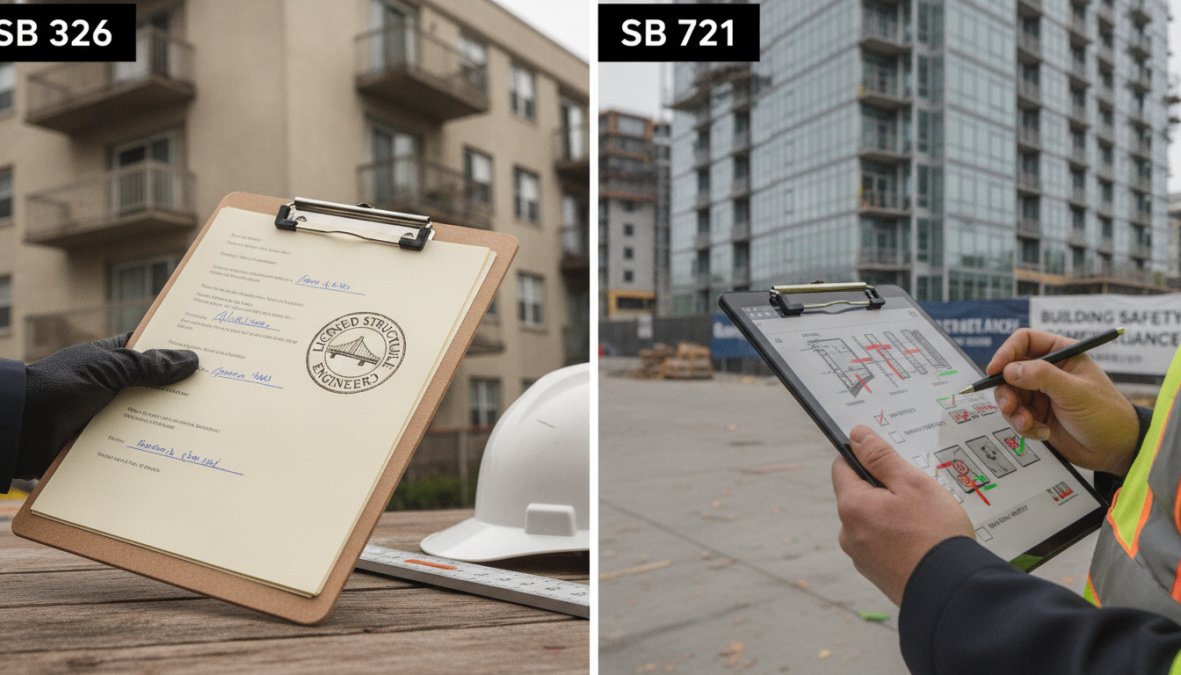
SB 721, effective in 2019, focuses on balconies in residential buildings with three or more units. SB 326, effective in 2022, expands scope to include all elevated exterior elements. The most immediate practical difference: SB 721 requires inspections every six years, while SB 326 follows a nine-year cycle. For properties subject to both laws, which most are, the six-year SB 721 cycle takes precedence.
| Aspect | SB 721 | SB 326 |
|---|---|---|
| Effective Date | January 1, 2019 | January 1, 2022 |
| Scope | Balconies only | All Elevated Exterior Elements (EEEs) |
| Applies To | Residential buildings 3+ units | Residential buildings 3+ units |
| Inspection Cycle | Every 6 years | Every 9 years |
| Professional Requirements | Licensed contractor or engineer | Licensed contractor, architect, or engineer |
| Report Deadline | Before inspection completion | Within 30 days of inspection |
| Failure Consequences | Civil penalties, liability exposure | Fines up to $5,000 per violation |
SB 721 covers only balconies on a 6-year cycle. SB 326 is broader, includes all elevated exterior elements, and operates on a 9-year inspection schedule. Many properties must comply with BOTH laws simultaneously.
What is SB 326 and What Does It Require?
Senate Bill 326 mandates that all residential buildings with three or more units have their elevated exterior elements inspected by a licensed professional and repaired if necessary. The inspection must document structural integrity of balconies, decks, stairs, railings, and other load-bearing components.
Property owners must complete the initial inspection by January 1, 2025, for buildings constructed before January 1, 2022. Subsequent inspections occur every nine years. The law requires that deficiencies be reported within 30 days, and owners must complete repairs based on severity.
Unlike earlier regulations, SB 326 mandates corrective action. If an inspection reveals a safety hazard, repairs must be scheduled and completed, or the property faces enforcement action from local building departments.
SB 326 inspections must be documented with photographs, measurements, and written descriptions. Keep reports organized by building and date, they’re your primary defense if liability questions arise.
What is SB 721 and How Does It Differ?
Senate Bill 721, enacted after high-profile balcony collapses, requires visual inspection of all balconies every six years by a licensed contractor or structural engineer. Unlike SB 326, which covers all elevated exterior elements, SB 721 focuses exclusively on balconies.
The inspection cycle under SB 721 is more frequent, every six years versus nine years for SB 326. For properties subject to both laws, the six-year cycle takes precedence, meaning more frequent inspections than either law alone would require.
California Balcony Inspection Requirements Under Both Laws
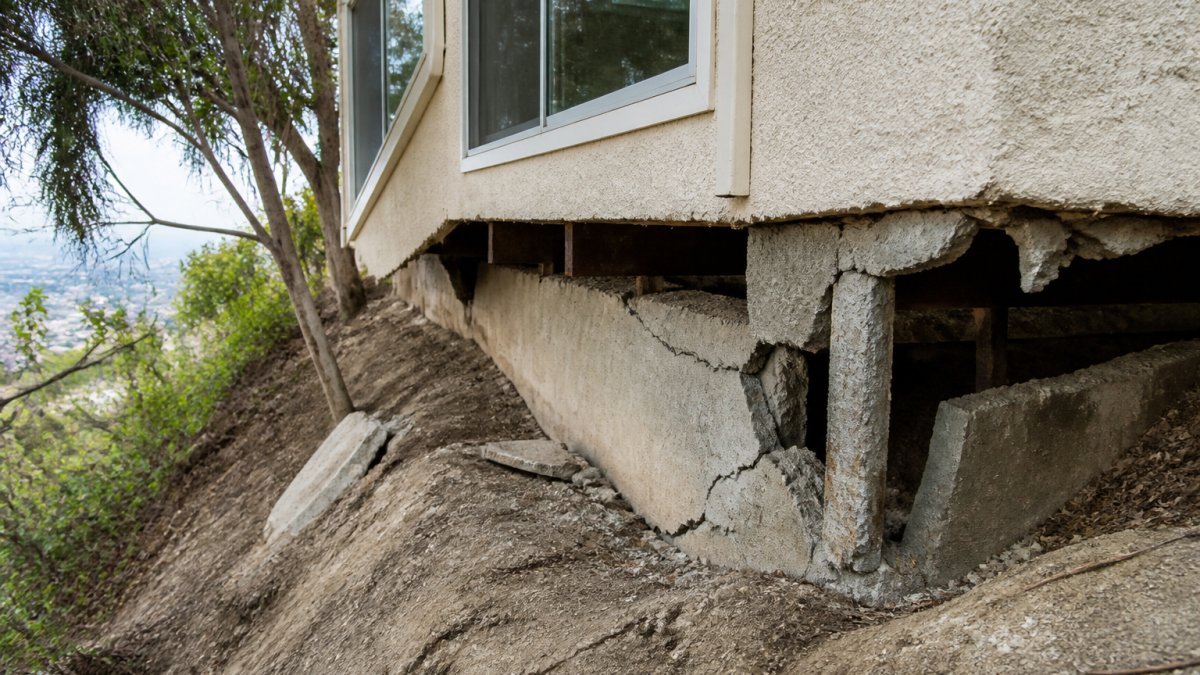
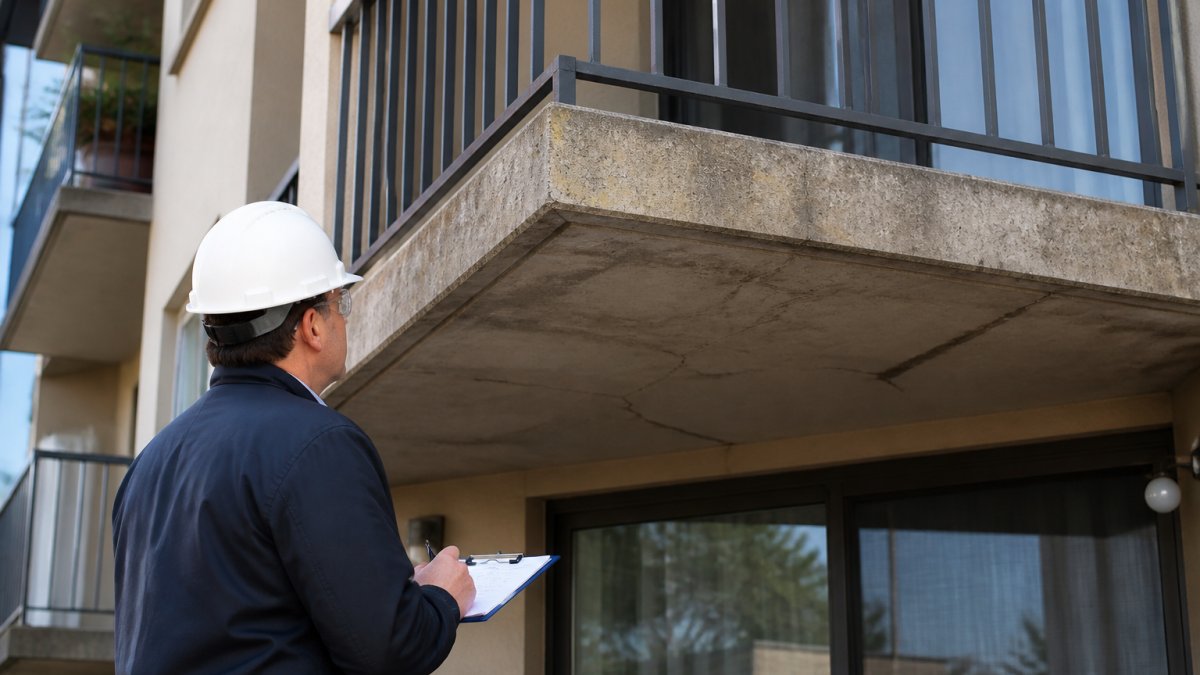
Both laws require visual inspections by qualified professionals. The inspector examines railings and attachments, deck surfaces, ledger board connections, fasteners, flashing, waterproofing, and signs of decay or corrosion. Water intrusion is the leading cause of balcony failure in California’s climate.
Both laws require inspections thorough enough to identify conditions that could lead to failure or injury. Working with experienced inspectors who understand California building codes and both laws’ requirements reduces the risk of missed deficiencies.
Elevated Exterior Elements (EEEs) Defined
Elevated Exterior Elements are structural components extending from a residential building that support occupant load. Under SB 326, EEEs include balconies, decks, patios, stairs, landings, and any structure protruding from the building envelope used by residents. An EEE must be elevated and part of the building’s exterior.
Common examples include standard balconies and decks, exterior stairs and landings, rooftop terraces, covered porches, and cantilever structures.
Structural Integrity and Load-Bearing Components
Structural integrity refers to the ability of elevated exterior elements to safely support design loads. California building code typically requires residential balconies to support 40 pounds per square foot of live load.
Load-bearing components include the ledger board, band board, rim joists, support posts, footings, and fasteners. Water damage is the primary threat, when water intrudes behind the ledger board or into joist ends, it causes rot, fastener corrosion, and structural weakening.
Rot and corrosion are often hidden beneath finishes. If an inspection report identifies “further investigation recommended,” take it seriously, the inspector suspects hidden damage.
Who Can Perform SB 326 Inspections: Qualified Professionals
Under SB 326, qualified inspectors include licensed contractors (with appropriate classification), structural engineers, and architects. Not all licensed professionals have specific SB 326 and SB 721 experience. The best approach is working with inspectors who specialize in California balcony compliance and have conducted numerous inspections.
Licensed Contractors, Architects, and Structural Engineers
A licensed contractor performing SB 326 inspections must hold a license in a classification covering structural work, typically B (General Building Contractor) or C-5 (Framing and Rough Carpentry). The contractor must carry errors and omissions insurance.
Structural engineers bring the highest technical expertise and can perform detailed load calculations and specify repairs with precision, though they’re typically more expensive than contractors. Architects also qualify but are less commonly used than contractors or engineers.
Verify that your inspector holds the appropriate license, carries insurance, and has specific SB 326 and SB 721 experience. Ask for references from other property owners they’ve inspected.
SB 721 Compliance Deadline and Inspection Cycles
The original SB 721 compliance deadline passed, buildings were required to have their first inspection by January 1, 2020. However, the law requires ongoing inspections every six years. Buildings inspected in 2020 need their next inspection by January 1, 2026.
Many property owners lose track of the six-year deadline after completing the initial inspection. Local building departments increasingly enforce compliance, resulting in fines and, in some cases, orders to vacate until repairs are completed.
Inspection Frequency and Periodic Inspection Requirements
Periodic inspection requirements mean compliance is not a one-time event. After the initial inspection, property owners must schedule follow-up inspections at regular intervals. For SB 721, this is six years; for SB 326, nine years. The clock starts from the date of the previous inspection.
California Building Standards Commission guidance on periodic inspection schedules clarifies that inspections must occur within 30 days of the deadline to remain compliant. Inspections scheduled after the deadline put you out of compliance, even by two weeks.
Set calendar reminders 90 days before your inspection deadline. Contact your inspector 60 days in advance to ensure availability.
SB 326 Inspection Checklist: What Gets Inspected
A thorough SB 326 inspection covers all components of elevated exterior elements:
- Ledger board and attachment: Proper flashing, fastener spacing, and signs of water intrusion or decay
- Rim joists and band boards: Proper fastening and water protection
- Deck surface and substrate: Rot, splintering, separation, and moisture damage
- Support posts and footings: Proper sizing, spacing, connection, and frost line depth
- Railings and balusters: Code compliance (36-42 inches high, balusters spaced no more than 4 inches apart), proper attachment
- Fasteners and hardware: Appropriate materials and no signs of corrosion or failure
- Flashing and waterproofing: Proper protection against water intrusion
- Stairs and landings: Code compliance for tread depth, riser height, and handrails
Visual Inspection Components and Documentation
Visual inspection means observing conditions without removing finishes or destructive testing. However, thorough visual inspection includes probing suspect areas for soft spots, checking fastener tightness, and examining joints closely.
Documentation must include photographs of major components and deficiencies, written descriptions of conditions, measurements where relevant, identification of areas requiring further investigation, clear repair recommendations, and notation of inaccessible components. Vague descriptions don’t meet standards; specific descriptions provide actionable information.
Consequences of Non-Compliance and Liability Implications
Missing inspection deadlines or ignoring identified deficiencies carries serious consequences. Local building departments impose fines ranging from hundreds to thousands of dollars per violation. For large properties with multiple deficiencies, fines accumulate quickly.
More significant is liability exposure. If a balcony fails and someone is injured, a property owner who failed to conduct required inspections or ignored findings faces potential criminal liability and civil lawsuits. Attorneys will subpoena inspection records, and absent required inspections strengthens their case.
Insurance policies often require compliance with applicable building codes. Insurers can deny coverage for injuries or damage related to balcony failure if the owner failed to comply with SB 721 or SB 326, leaving the owner to bear full costs.
Enforcement, Safety Hazards, and Insurance Considerations
Enforcement varies by jurisdiction, but the trend is toward increased enforcement as building departments recognize public safety implications. Safety hazards must be addressed promptly, "reasonable" typically means 30-90 days depending on severity. Immediate hazards like loose railings require repair within days.
Insurers increasingly require proof of SB 721 and SB 326 compliance as a condition of coverage. When renewing policies, property owners may be asked to provide inspection reports. Failure to provide documents can result in policy cancellation.
Lenders and investors scrutinize balcony compliance when evaluating properties for financing or acquisition. Properties with outstanding violations may be difficult to refinance or sell, with buyers demanding price reductions averaging 5-10% of property value.
If an inspection identifies a safety hazard, document the finding and remediation plan in writing. Communicate with residents about the issue and repair timeline. Failure to act on known hazards strengthens liability if an incident occurs.
Practical Compliance Strategy for Property Managers
Create a compliance calendar accounting for both laws and identifying which buildings are due for inspection each year. Work with professionals specializing in SB 721 and SB 326 compliance, they understand specific requirements and know what local building departments expect.
After receiving inspection reports, prioritize repairs by severity. Life-safety issues (missing railings, significant structural damage) require immediate attention. Minor issues can be scheduled during regular maintenance. Document your prioritization and timeline.
Maintain organized records of all inspections, reports, and repairs. Include photographs, inspector credentials, and detailed descriptions of work performed.
| Compliance Task | Timeline | Responsibility | Notes |
|---|---|---|---|
| Track inspection deadlines | Ongoing | Property manager | Use compliance software or calendar system |
| Schedule inspection 60 days before deadline | Quarterly review | Property manager | Ensures inspector availability |
| Conduct inspection | On schedule | Licensed professional | Verify license and insurance |
| Receive and review report | Within 7 days | Property manager/owner | Identify deficiencies requiring action |
| Prioritize repairs | Within 14 days | Property manager/owner | Address life-safety issues first |
| Complete repairs | Within 30-90 days | Licensed contractor | Document completion with photos |
| Archive records | Ongoing | Property manager | Maintain for minimum 10 years |
SB 721 and SB 326 compliance requires expertise, attention to detail, and proactive management. Property owners who wait until deadlines approach or work with inexperienced inspectors often scramble to address deficiencies and face enforcement action. Partner with professionals specializing in California balcony compliance to ensure your property remains compliant and secure.
Frequently Asked Questions
What is the main difference between SB 326 and SB 721?
SB 326 applies to condominiums and common interest developments, requiring inspections of balconies and elevated exterior elements every six years. SB 721 is broader, covering multi-family apartments and rental properties with similar inspection mandates. While both focus on structural integrity and safety of EEEs, SB 721 has stricter timelines and applies to more property types. The inspection cycle and enforcement mechanisms also differ between the two California Civil Code requirements.
Who is qualified to perform SB 326 inspections under California law?
SB 326 inspections must be conducted by licensed contractors, structural engineers, or architects with experience in building maintenance and structural assessment. These professionals must have expertise in evaluating load-bearing components and identifying safety hazards in elevated exterior elements. The California Department of Real Estate and local building code authorities enforce these qualification requirements to ensure inspections meet statutory standards and protect residents from structural failures.
What is the SB 721 compliance deadline for my property?
SB 721 compliance deadlines depend on when your property was constructed and when inspections were last completed. Properties must undergo periodic inspections every six years, with initial inspection cycles based on the building's age. The deadline for your specific property is determined by California Civil Code Section 1368.4 timelines. Property managers and HOA boards should consult their inspection history and building records to determine exact deadlines, as missing compliance deadlines can result in enforcement action and liability issues.
What happens if my property fails a California balcony inspection?
If your property fails an inspection under SB 326 or SB 721, you must document the findings and develop a repair plan. Safety hazards and structural integrity issues must be addressed within specific timeframes set by California law. Failure to repair identified defects can result in enforcement action, fines, and liability exposure for property owners and HOAs. Licensed contractors should be engaged to design and execute necessary repairs to load-bearing components and waterproofing systems, ensuring the building meets current code standards.