How to Identify Balcony Membrane Failure
Learn to spot balcony membrane failure before it causes structural damage. Identify water stains, cracked tiles, and drainage issues. Get a seasonal.
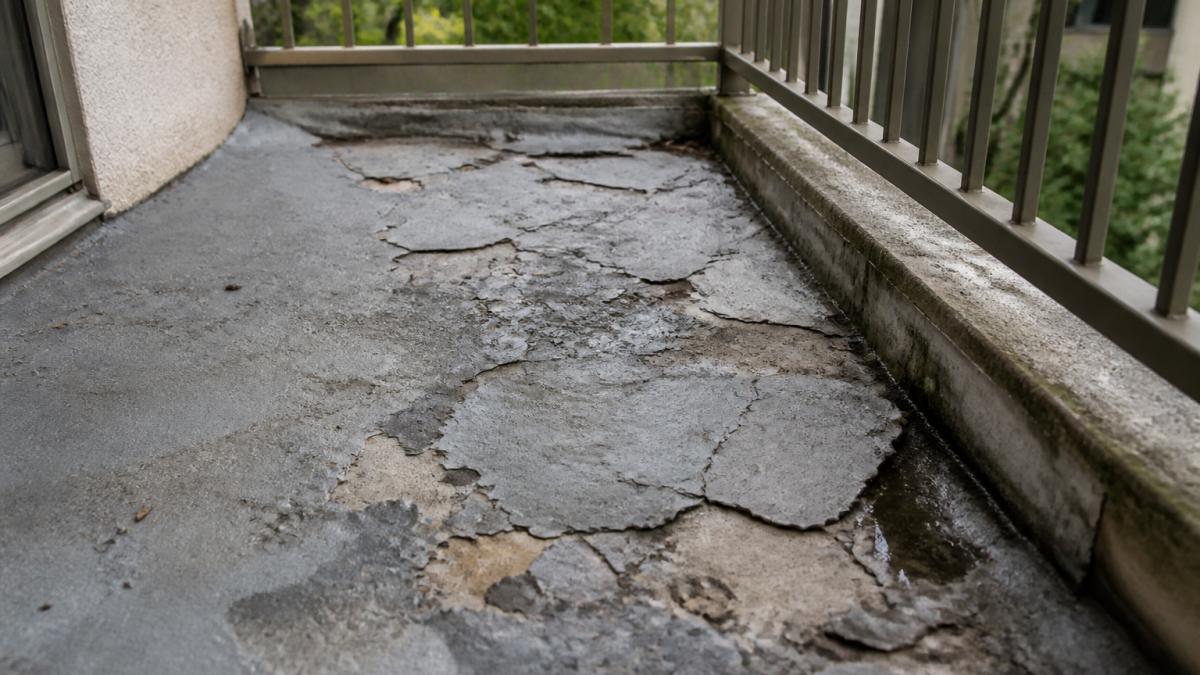
Table of Contents
- What Balcony Membrane Failure Looks Like
- SB 326 Balcony Inspection Requirements and Compliance
- Signs of Dry Rot in Balcony Joists and Framing
- Step-by-Step Inspection Process for Balcony Membranes
- Hiring a Licensed Structural Inspector for Professional Assessment
- Common Mistakes to Avoid During Inspection
- Seasonal Inspection Checklist
- Frequently Asked Questions
Last Updated: September 27, 2026
What Balcony Membrane Failure Looks Like
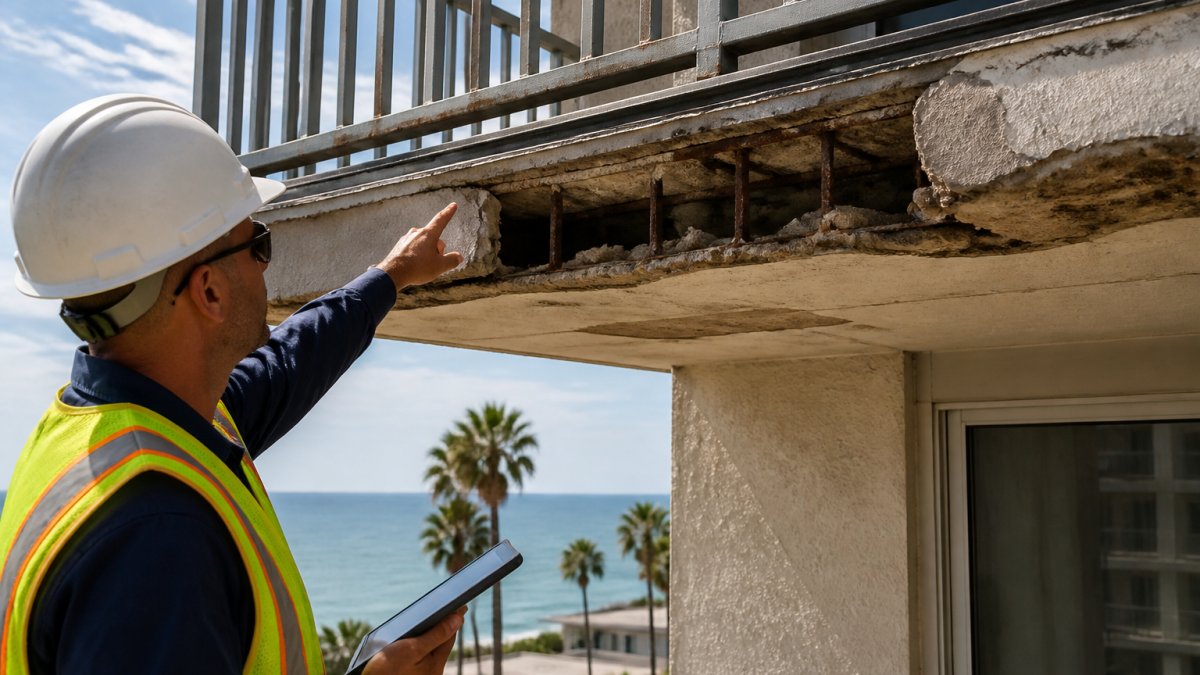
Balcony membrane failure is when the waterproof layer protecting your balcony deck breaks down, allowing water to penetrate into the structure below. This happens slowly at first, but the damage compounds quickly. Once water gets past the membrane and into the framing, you’re looking at structural decay that spreads fast.
The signs of balcony membrane failure are visible if you know what to look for. Water stains on the ceiling below are often the first clue. Cracked or loose tiles on the deck surface are another. Ponding water that sits on the balcony after rain is a major red flag. These aren’t minor cosmetic issues, they’re warnings that your balcony’s structural integrity is at risk.
At Apex Balcony, we’ve worked with hundreds of building owners across California. The patterns are consistent. Most property owners catch these problems too late because they don’t know what to look for. Early detection saves tens of thousands in repairs and keeps residents safe.
Water stains on ceilings below
Water stains on the ceiling of the unit below are the most common first sign of balcony membrane failure. The stain appears as a dark, discolored patch. It may look wet or dry depending on how recently the balcony leaked.
These stains don’t appear overnight. They develop over weeks or months as water seeps through the membrane, past the substrate, and down into the structure. By the time you see the stain, water has already been pooling above for a while.
Check the color and texture. Fresh stains are darker and may feel damp to the touch. Older stains are lighter and crusty. Either way, a water stain means moisture ingress is happening right now. This is not a cosmetic problem you can ignore.
Cracked, loose, or drummy tiles
Walk across the balcony deck and listen. Tap the tiles with your foot or a rubber mallet. A solid tile makes a crisp sound. A tile that’s lost its bond to the substrate sounds hollow, that’s called a drummy tile.
Cracked tiles are obvious. Loose tiles rock slightly when you step on them. Both mean water is getting underneath. Cracks let water in directly. Loose tiles mean the adhesive has failed, usually because water has been trapped underneath for months.
Check the grout lines too. Cracked or missing grout is another entry point for water. Even small gaps let moisture seep down to the membrane and substrate below.
SB 326 Balcony Inspection Requirements and Compliance
California’s SB 326 law requires balcony inspections for residential buildings with three or more units. The law applies to buildings constructed before January 1, 2008. Inspections must be completed by a licensed structural engineer or architect.
The deadline for initial inspections depends on when your building was constructed. Extensions have been granted in some cases, but you should verify your building’s compliance status now.
The inspection report must document the condition of all balconies, decks, and exterior stairs. It must identify defects and rate their severity. If significant defects are found, you have a set timeframe to complete repairs. Non-compliance can result in fines and legal liability if someone is injured.
Apex Balcony specializes in SB 326 compliance for California property owners. We understand the legal requirements and help you navigate the inspection process with minimal disruption to residents.
Signs of Dry Rot in Balcony Joists and Framing
Dry rot is wood decay caused by a fungus that thrives in moist environments. It’s called “dry” rot because the wood becomes brittle and dry as the fungus breaks down the cellulose. Once dry rot starts, it spreads through the framing quickly.
Dry rot is the most dangerous consequence of balcony membrane failure. The wood loses strength. Structural failure can happen suddenly. In 2015, a balcony collapse in Berkeley California killed six people. The primary cause was dry rot in the joists, which developed because the balcony membrane had failed years earlier.
How moisture ingress leads to structural decay
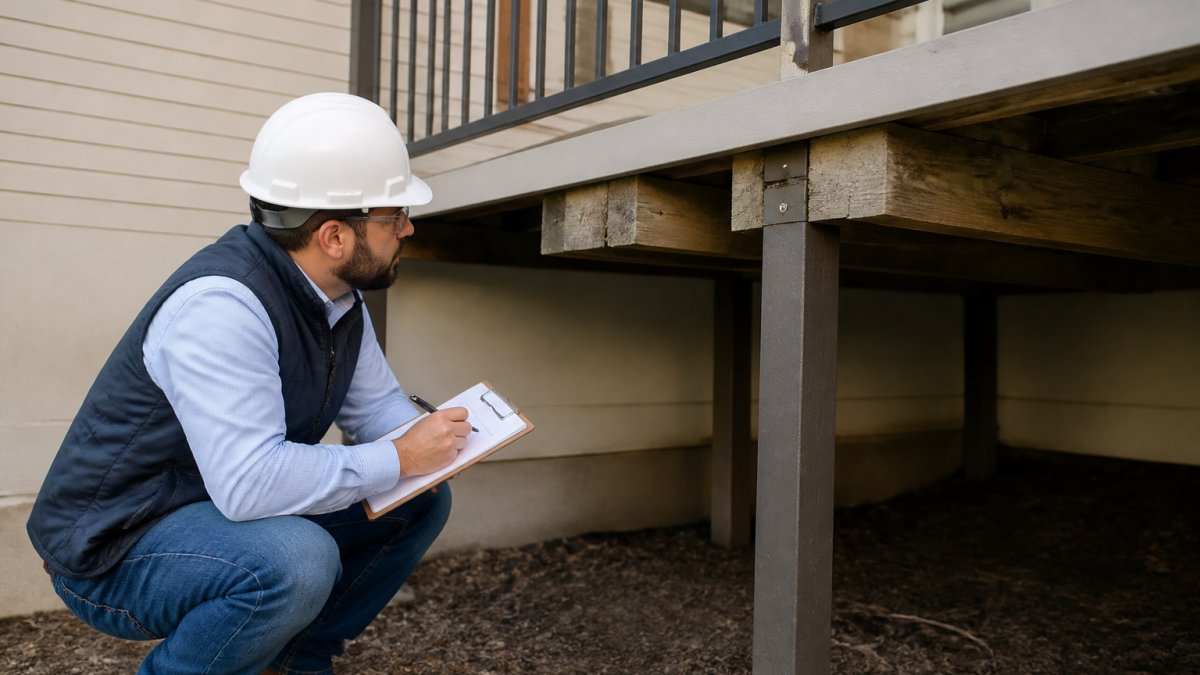
Water penetration through a failed membrane doesn’t stop at the surface. It soaks into the substrate, usually concrete or wood. From there, it moves into the framing members: joists, rim boards, and ledger boards. The wood stays damp because the balcony structure traps moisture. Ventilation is poor. The wood never fully dries.
Fungal spores are already present in the wood. When moisture levels stay high (above 20% wood moisture content), the fungus activates and begins breaking down the wood fibers. This process can take months or years, but once it starts, it accelerates.
The decay weakens the wood from the inside out. The wood becomes soft and crumbly. It loses its load-bearing capacity. The balcony sags. Cracks appear in the structure. Eventually, the balcony can collapse under its own weight or the weight of residents and furniture.
Visual indicators of wood deterioration
Look at exposed wood on the balcony structure. Soft, spongy wood is a sign of decay. Press a screwdriver or awl into the wood. If it sinks in easily, the wood has lost structural integrity. Sound wood resists penetration.
Discoloration is another sign. Decayed wood often appears darker or bleached. The surface may be soft and crumbly. In advanced cases, the wood becomes hollow or develops large voids.
Check the ledger board where the balcony attaches to the building. This is a common failure point.
Step-by-Step Inspection Process for Balcony Membranes
A proper balcony membrane inspection requires a systematic approach. You need to examine the surface, check for water penetration, test the substrate, and document everything. This process takes time, but it’s the only way to catch problems early.
Step 1: Examine the surface coating and membrane integrity
Start at the top of the balcony deck. Look at the surface coating. Is it intact or peeling? Are there cracks, blisters, or areas where the coating has separated from the substrate?
Step 2: Check flashing and wall-to-deck transitions
Flashing is the metal or membrane material that bridges the gap between the balcony deck and the building wall. This is a critical detail. Water runs off the deck and toward the wall. If the flashing isn’t installed correctly, water gets behind it and into the wall.
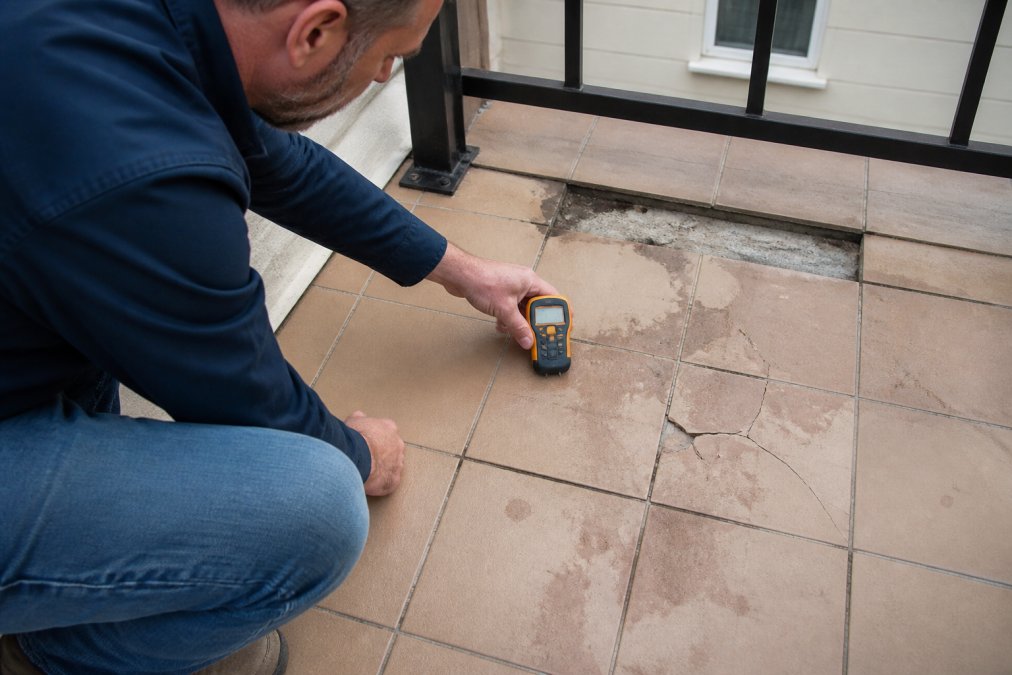
Step 3: Test with a moisture meter
A moisture meter is an essential tool for identifying hidden water damage. It measures the moisture content of wood and concrete. You can’t see moisture problems with your eyes alone. The meter reveals them. While this device is effective for detecting hidden water damage within the balcony structure, similar moisture intrusion often migrates into the wall cavities where you can identify signs of rot behind siding.
Step 4: Inspect seams, joints, and penetrations
Seams are where two pieces of membrane material meet. Joints are where the deck meets the building. Penetrations are holes where pipes, drains, or other elements pass through the membrane. All of these are potential failure points.
Hiring a Licensed Structural Inspector for Professional Assessment
A professional inspection is the most reliable way to assess balcony membrane failure. A licensed structural engineer or architect has the training and tools to identify problems you might miss. They produce a detailed report that documents the condition and recommends repairs.
Common Mistakes to Avoid During Inspection
Many property owners try to inspect their balconies themselves and miss critical problems. Others hire unqualified inspectors and get inaccurate reports. Avoid these common mistakes.
Seasonal Inspection Checklist
Inspect your balcony at least twice a year: spring and fall. Spring inspection catches winter damage. Fall inspection prepares the balcony for winter weather.
Spring Inspection:
- Look for water stains on the ceiling below
- Check for cracks or peeling coating
- Test flashing and wall-to-deck transitions
- Look for standing water or ponding areas
- Check for cracked or loose tiles
- Test moisture levels with a meter
- Inspect caulking and sealant condition
- Look for signs of mold or mildew
Fall Inspection:
- Clear debris from the deck and drains
- Check drainage to ensure water flows off properly
- Inspect coating for damage or wear
- Test flashing before winter weather arrives
- Look for cracks that may allow freeze-thaw damage
- Check caulking around penetrations
- Document any changes since spring inspection
Frequently Asked Questions
What are the signs of a failed waterproof membrane on a balcony?
Common signs include water stains on ceilings below the balcony, cracked or loose tiles, ponding water that doesn’t drain, visible mold or efflorescence (white salt deposits), and soft or spongy areas in the substrate. Flashing failures at wall-to-deck transitions and corrosion on steel components also indicate membrane failure. If you notice any of these, moisture has likely penetrated the waterproofing layer and begun damaging the structure beneath.
How do SB 326 and SB 721 impact balcony inspection requirements?
SB 326 requires inspection of balconies and elevated elements in buildings three or more units built before 2018. SB 721 extends requirements to newer properties. Both laws mandate licensed structural engineers evaluate for safety and water intrusion. Failure to comply can result in fines and liability. Property owners must document inspections and remediation to maintain legal compliance and protect residents from injury or property damage caused by structural failure.
Can I test for moisture in my balcony myself without hiring an inspector?
Yes, a moisture meter is an affordable tool homeowners can use to detect excess moisture in the substrate. However, a moisture meter alone cannot diagnose the cause of failure, identify hidden damage within the structure, or determine repair scope. Professional inspectors use meters alongside visual assessment, hydrostatic pressure testing, and knowledge of building codes to provide a complete picture. For SB 326 and SB 721 compliance, a licensed structural engineer’s report is legally required.
What is dry rot in balcony joists and why does it happen?
Dry rot is fungal decay in wood caused by persistent moisture exposure, typically from waterproofing membrane failure. When water penetrates the membrane, it saturates wood joists and framing. The fungus breaks down the wood’s structural integrity, causing it to become soft, crumbly, and weak. Signs include discolored or darkened wood, visible gaps, and wood that crushes easily under pressure. Once dry rot begins, it spreads quickly and can compromise the entire balcony structure if not addressed immediately.