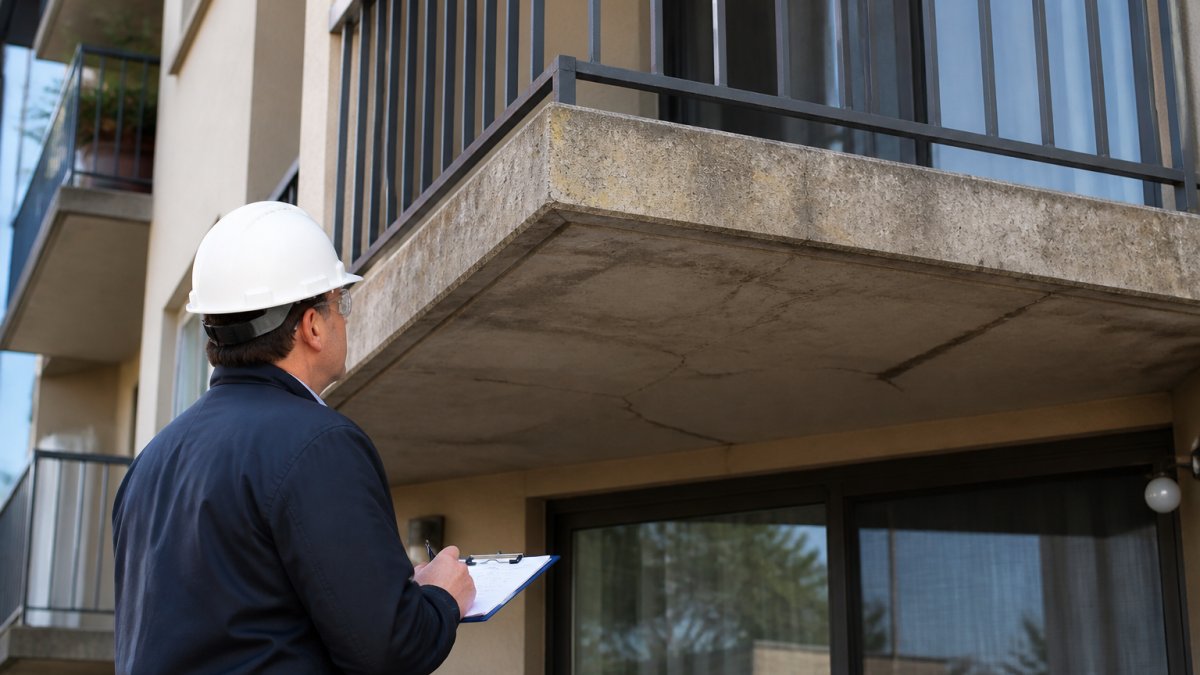
Common Structural Defects in Multi-Family Buildings
Learn the most common structural defects in multi-family buildings, from water intrusion to foundation problems, and how to spot them early.
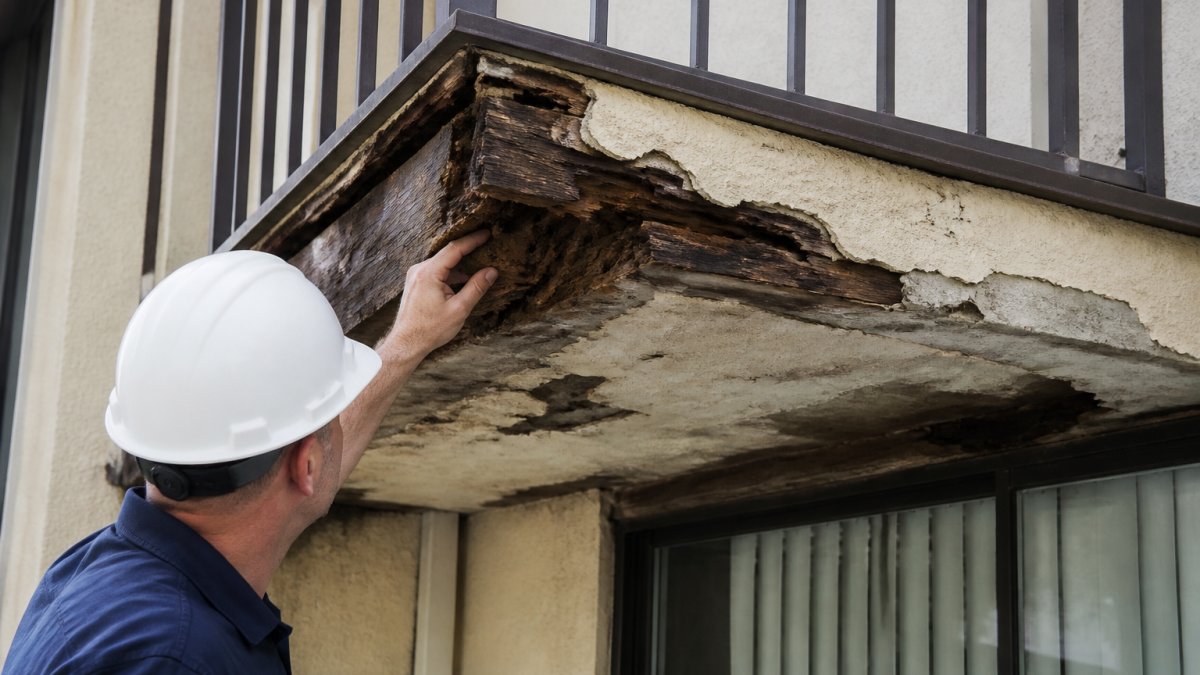
Table of Contents
- Water Intrusion and Moisture Damage: The Most Common Structural Defect
- Signs of Structural Failure in Buildings Every Owner Should Recognize
- Balcony Structural Defects: Why Elevated Elements Fail First
- Foundation Problems in Apartment Buildings and Differential Settlement
- Roofing Defects, Framing Deficiencies, and Building Envelope Failures
- Structural Inspection Checklist for Apartment Buildings
- Conclusion
- Frequently Asked Questions
Last Updated: October 14, 2026
Water Intrusion and Moisture Damage: The Most Common Structural Defect
Water intrusion is the leading cause of structural deterioration in multi-family buildings. This guide breaks down the most common structural defects and what to do next.
Moisture damage rarely announces itself. It works behind stucco, under decks, and inside wall cavities for months before a stain appears.
The most frequent entry points are:
- Failed flashing at roof-to-wall junctions
- Cracks in exterior cladding and stucco
- Clogged or improperly pitched gutters and downpipes
According to FEMA guidance on moisture and building damage, prolonged moisture exposure weakens structural connections long before visible sagging appears.
Ignoring a small ceiling stain for one rainy season can turn a minor flashing repair into full framing replacement. Water travels along the path of least resistance, so the leak source is often far from the stain.
Signs of Structural Failure in Buildings Every Owner Should Recognize
The clearest signs of structural failure in buildings are cracks that widen over time, uneven floors, warped ceilings, and doors or windows that suddenly stick.
Walk your property quarterly and look for:
- Diagonal cracks at corners of door and window openings
- Stair-step cracking in masonry walls, a classic settlement pattern
- Uneven or sloping floors in upper units
- Warped ceilings or sagging rooflines
- Separation between balconies and the main structure
- Rust stains on concrete, a sign of rebar corrosion
A common mistake is treating cosmetic and structural cracks the same. Hairline shrinkage cracks in stucco are usually harmless; cracks wider than a quarter inch, or any that grow month to month, need a licensed inspector.
Balcony Structural Defects: Why Elevated Elements Fail First
Balcony structural defects appear earlier than defects elsewhere because elevated elements face weather from every direction. Cantilevered and projecting balconies carry loads with fewer support points, so weaknesses compound fast.
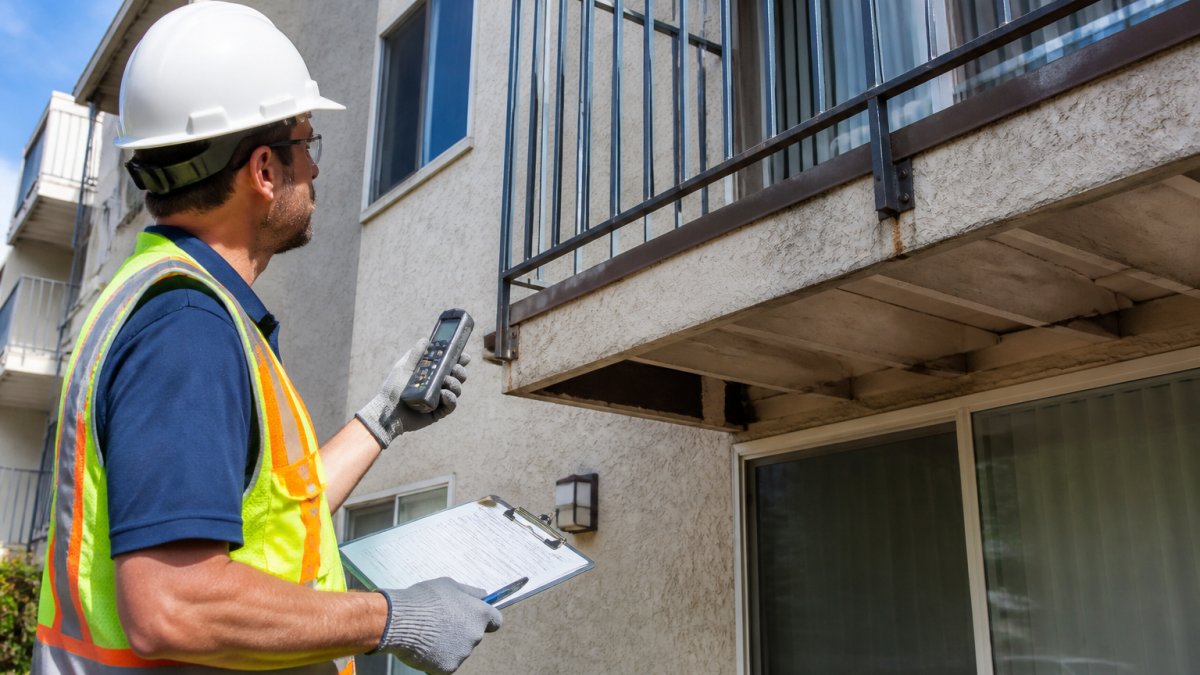
The failure modes documented most often:
- Rotted wood joists where they meet the building wall
- Corroded steel brackets and straps
- Water trapped between the walking surface and the framing below
These defects are not theoretical. The 2015 Berkeley balcony collapse killed six people, and a 2021 Malibu collapse injured several more, both involved deteriorated structural elements that failed under normal use.
Balconies, decks, and stairways fail before the rest of the building because they are exposed on all sides and often under-maintained. Prioritize them in every inspection cycle.
Foundation Problems in Apartment Buildings and Differential Settlement
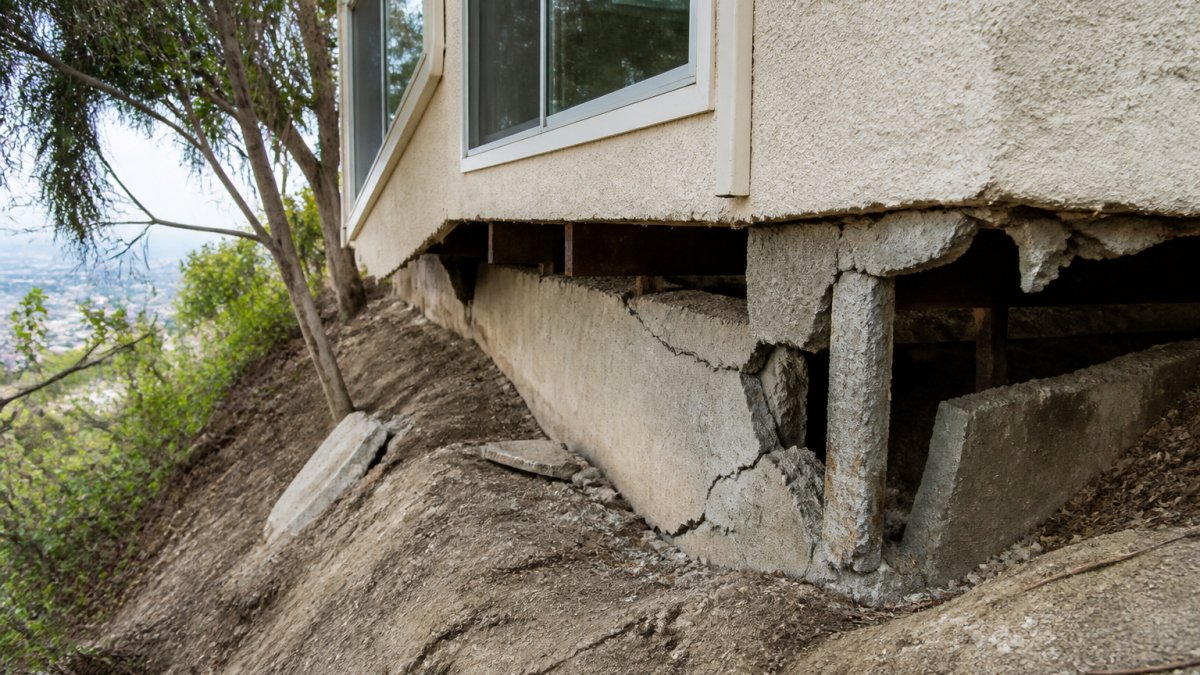
Foundation problems in apartment buildings usually show up as differential settlement, where one part of the structure sinks faster than another, producing cracked walls, uneven floors, and doors that no longer close. What separates a manageable issue from a costly one is how long movement has been active and whether water is still reaching the soil beneath the footings. Persistent moisture often exacerbates these foundation shifts by destabilizing the surrounding grade, a process that frequently mirrors the structural distress seen in failing retaining walls that compromise the integrity of the entire site.
How to read the pattern
Settlement cracks follow predictable patterns that tell you what is happening:
- Stair-step cracking in brick or block walls points to differential settlement, where one portion of the foundation is dropping relative to another.
- Diagonal cracks radiating from corners of door and window openings often indicate movement at the foundation or a failing header.
- Separations where additions meet the original structure are classic evidence of two foundation systems moving at different rates.
Expansive clay soils, poor drainage, and tree roots pulling moisture from under footings accelerate the process. In multifamily buildings the risk compounds: one foundation issue can affect stacked units, shared stairwells, and common-area corridors at once.
Why foundation movement is often slow and cumulative
Foundation movement is rarely a single event. A foundation settling a fraction of an inch per year looks fine for a decade, then produces a wave of cracking when a wet winter follows a dry summer.
This is why inspection timing matters: checking after the first heavy rain reveals new cracks and damp patches that point directly to drainage and grading problems, far cheaper to correct than structural repairs.
Check your property after the first heavy rain of the season. New cracks and damp patches that appear within days of a storm point directly to drainage and grading problems, which are cheaper to fix than structural repairs.
Short-term mitigation vs. permanent repair
Owners face a trade-off between stabilizing the symptom and correcting the cause:
- Short-term mitigation, patching cracks, regrading soil, extending downspouts, and adding drainage, buys time and reduces further movement. It is appropriate when the cause is clearly water-related and the structure is stable.
- Permanent repair, underpinning, helical piers, or foundation replacement, addresses the cause but is disruptive, expensive, and requires engineering design. It is appropriate when movement is ongoing, when the structure has lost capacity, or when safety is at risk.
- Deferred maintenance is the third path, and it is the most expensive. Water that is not redirected continues to soften soil, corrode reinforcement, and widen cracks. What starts as a $2,000 drainage correction can become a six-figure foundation project if ignored for several seasons.
Lifecycle implications for multifamily owners
Foundation repairs affect more than the foundation: they disrupt residents, can require temporary relocation, and may trigger disclosure obligations during a sale. Planning foundation maintenance in a multi-year capital reserve, rather than reacting to failures, is the difference between a controlled repair and an emergency.
A practical approach:
- Document the foundation condition at purchase and after every significant weather event.
- Correct drainage and grading before assuming the structure needs repair.
- Re-inspect after corrections to confirm movement has stopped.
- If movement continues, bring in a licensed engineer to evaluate cause and capacity.
- Budget for both short-term mitigation and long-term repair in your reserve study.
Foundation movement is slow until it is not. The cheapest repair is the one you make before the water reaches the soil.
Roofing Defects, Framing Deficiencies, and Building Envelope Failures
Roof-covering failure, improper framing, and a compromised building envelope are the three defects that most often trigger large repair bills.
Roofing defects include failed flashing at penetrations, deteriorated underlayment, and ponding water from inadequate slope.
Framing deficiencies include missing or undersized shear walls, improperly nailed connections, missing straps and connectors, and cut or notched structural members.
Building envelope failures include defective windows, cracked exterior cladding, and failed sealants.
| Defect Category | Typical Warning Sign | Primary Risk |
|---|---|---|
| Water intrusion | Ceiling stains, damp walls | Rotted framing, mold |
| Foundation settlement | Stair-step cracks, uneven floors | Structural instability |
| Balcony defects | Rotted joists, loose railings | Collapse, injury |
| Roofing failure | Ponding water, interior leaks | Envelope breach |
| Framing deficiencies | Sagging floors, wall movement | Seismic weakness |
| Envelope failure | Cracked cladding, window leaks | Moisture damage |
| Concrete deterioration | Crumbling, rust staining | Rebar corrosion |
Structural Inspection Checklist for Apartment Buildings
A structural inspection checklist for apartment buildings should tell you what to look for, how to judge what you find, and when to call a licensed inspector. The checklist below is organized by building system and paired with a severity framework so owners and managers can triage findings instead of treating every crack as an emergency.
Severity levels: what to watch, what to schedule, what to escalate
- Monitor (cosmetic or early-stage): Hairline shrinkage cracks in stucco, minor sealant gaps, small paint blisters. Document with dated photos and re-check at the next quarterly walk. These rarely indicate structural movement on their own.
- Schedule a professional assessment (prompt): Cracks wider than a quarter inch, stair-step cracking in masonry, recurring ceiling stains after rain, rust staining on concrete, or any crack that has visibly grown since the last inspection. These point to active water intrusion or movement and should be evaluated by a licensed inspector within weeks, not months.
- Escalate immediately (potential safety risk): Separation between a balcony and the main structure, loose or leaning guardrails, spalling concrete with exposed reinforcing steel overhead, sagging rooflines, or doors and windows that suddenly bind. Restrict access to the affected area and bring in a qualified engineer before residents use it again.
Multifamily-specific inspection priorities
Shared structures and stacked units change the risk profile: one defect can affect multiple residents at once, and common areas often fall between the cracks of unit-by-unit maintenance.
- Elevated elements first: Balconies, decks, exterior stairways, and walkways are exposed on all sides and carry the highest consequence of failure. Inspect connections at the building wall, guardrail posts, and walking-surface waterproofing every cycle.
- Parking structures: Look for ponding water, efflorescence, spalling under slabs, and rust staining at beam-to-column connections. Post-tensioned garages deserve extra attention because cable corrosion is invisible until failure.
- Shared plumbing and roof drainage: A single failed riser or clogged roof drain can damage multiple stacked units. Trace the full path from roof to grade.
What a qualified inspection actually examines
A licensed inspector or engineer should document, at minimum:
- All balconies, decks, and stairways for rot, corrosion, and loose connections
- Flashing at every roof penetration, wall junction, and parapet
- Gutters and downpipes for blockage, pitch, and overflow evidence
When to bring in an engineer or specialist
A general inspection identifies symptoms; an engineer determines cause and capacity. Escalate when you see:
- Movement that continues after drainage or moisture issues are corrected
- Cracks that cross structural members rather than following mortar joints
- Any elevated element with corroded or deteriorated connections
For properties with elevated elements, California’s SB 326 and SB 721 requirements set specific inspection timelines that owners must meet. Even where those statutes do not apply, the underlying logic, inspect elevated elements on a defined cycle, document findings, and repair what is unsafe, is sound practice for any multifamily portfolio.
Build a simple inspection log that records date, location, finding, severity level, and action taken. A documented history is the single most useful tool when you need to show that you identified and addressed a defect in good faith.
This is where Apex Balcony fits in. Our licensed inspectors have decades of combined construction and design experience and specialize in identifying early signs of structural failure before they become emergencies. We inspect every balcony, deck, and stairway and give you a clear report you can act on.
HOA boards and property owners who need a documented, defensible inspection that stands up to audit or litigation.
Conclusion
The most dangerous structural defects are invisible until they are expensive. Water intrusion, differential settlement, and balcony deterioration progress quietly, and by the time a resident reports a problem, the damage is often severe.
Apex Balcony helps property owners and HOAs stay ahead of that curve. Our licensed inspectors identify early signs of structural failure, keep you compliant with SB 326 and SB 721, and give you a clear path to the repairs you need.
Book an inspection with Apex Balcony and protect your residents, your asset, and your liability exposure before the next rainy season.
Frequently Asked Questions
What are the four main types of structural failure?
The four main types are water intrusion and moisture damage, foundation problems including differential settlement, framing deficiencies, and roof-covering or building envelope failures. In multi-family buildings, these often overlap. Water intrusion weakens wood framing, which then causes balcony structural defects and wall cracks. Foundation problems in apartment buildings show up as settlement cracks and uneven floors. Recognizing which category a defect falls into helps owners prioritize repairs and understand whether they face a safety hazard or a cosmetic issue.
How can property owners distinguish cosmetic cracks from structural cracks?
Cosmetic cracks are typically hairline, appear in drywall or paint, and stay stable over time. Structural cracks are wider than a quarter inch, run diagonally across walls, appear near door or window corners, or grow noticeably within months. They often accompany uneven floors, warped ceilings, or sticking doors. Any crack that lets light through, displaces brick or concrete, or pairs with water staining signals a structural defect that warrants a professional inspection before it worsens.
Which structural defects require immediate professional attention?
Call a licensed inspector immediately for sagging or bouncing balconies, visible rebar corrosion or crumbling concrete, diagonal cracks wider than a quarter inch, floors that slope noticeably, or any railing that moves when pushed. These signs of structural failure in buildings point to compromised load-bearing elements. In multi-family properties, delaying inspection risks safety hazards and costly repairs. State balcony laws in some regions also mandate periodic inspections, so urgent defects may carry compliance deadlines as well.
How often should a multi-family building receive a structural inspection?
Most multi-family properties benefit from a professional structural inspection every three to five years, with annual visual checks by maintenance staff in between. Buildings near the coast, older wood-frame construction, and properties with known water intrusion should be inspected more often. Some states require periodic inspections of elevated elements like balconies and stairways. A structural inspection checklist for apartment buildings helps owners track foundation problems, framing deficiencies, and roofing defects between full inspections so small issues do not become expensive failures.