Balcony Maintenance & Liability Protection: A Guide
Balcony maintenance liability: Balcony maintenance is critical for liability protection. Learn structural risks, inspection requirements, and how to.
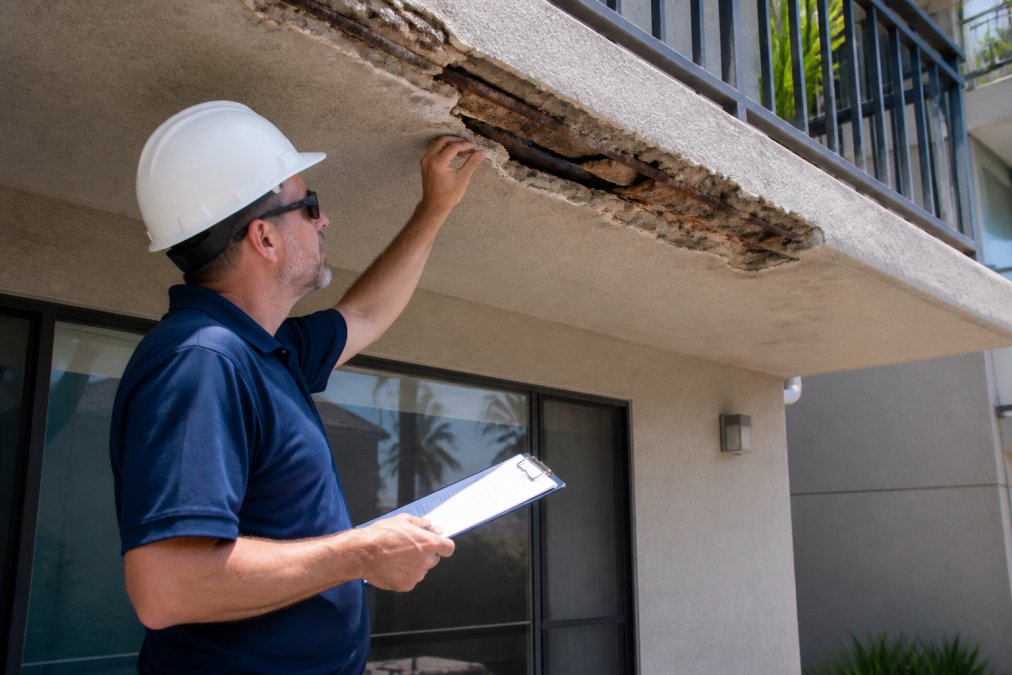
Table of Contents
- Why Balcony Maintenance Is Critical for Liability Protection
- Common Causes of Balcony Structural Failure
- SB 326 Inspection Requirements and Your Legal Obligations
- Liability Risks of Deferred Maintenance
- Hiring a Licensed Balcony Inspector
- Documentation and Risk Mitigation Strategies
- Preventative Maintenance Best Practices
- Conclusion: Protecting Your Property and Residents
- Frequently Asked Questions
Last Updated: August 31, 2026
Why Balcony Maintenance Is Critical for Liability Protection
Balcony failures start small, a hairline crack, water pooling behind sealant, rust bleeding through paint, and most property owners miss the early warnings. Then comes collapse, injuries, lawsuits, and the question that haunts every HOA board: “Why didn’t we catch this sooner?”
Balcony maintenance liability is one of the highest-risk exposures in multifamily property management. A single structural failure triggers personal injury claims, regulatory fines, and criminal negligence charges. The liability falls on you personally if you’re on the board or in management.
California law doesn’t give you time to delay. SB 326 and SB 721 impose strict inspection timelines and liability standards (leginfo.legislature.ca.gov). Miss a deadline or overlook a defect, and your insurance won’t cover you.
This guide covers the legal requirements, real risks of deferred maintenance, how to hire the right inspector, and documentation practices that hold up in litigation.
Common Causes of Balcony Structural Failure
Balcony collapse typically results from water intrusion, corrosion of steel reinforcement, dry rot in wood framing, or exceeded load-bearing capacity.
Water is the primary culprit. When moisture penetrates the balcony deck or seeps behind railings, it attacks structural elements underneath. In concrete balconies, water reaches the steel rebar and triggers oxidation. In wood-framed systems, it causes dry rot that weakens load-bearing joists. Sealant failure, cracked caulk, deteriorated flashing, or gaps around penetrations allow water to penetrate.
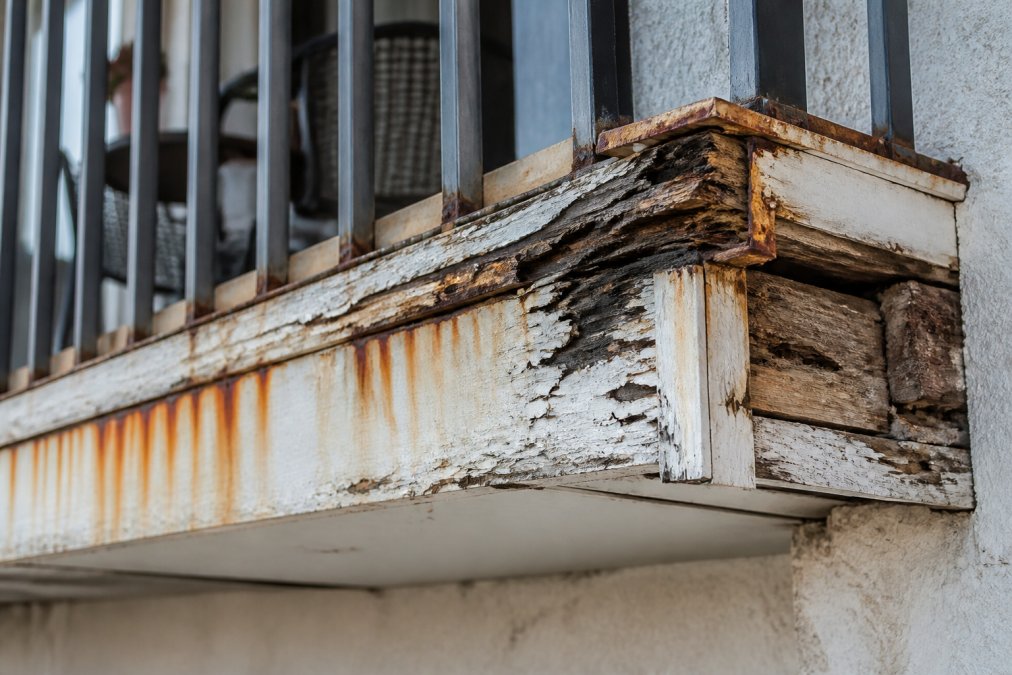
Corrosion of reinforcing steel is particularly dangerous because it’s invisible until failure is imminent. When rebar oxidizes, it expands, pushing against concrete and causing spalling, the surface breaks away in chunks. Once spalling begins, the process accelerates. Exposed rebar corrodes faster, concrete deteriorates more, and structural capacity declines rapidly.
Drainage system failures compound the problem. Balconies need positive drainage to shed water quickly. When drains clog, gutters overflow, or the deck slopes incorrectly, water pools. Standing water penetrates every crack and gap. Property managers who defer maintenance on drainage systems are inviting failure.
Unpermitted repairs and modifications create hidden liabilities. A contractor patches a balcony deck without proper waterproofing. Someone adds a hot tub without checking load limits. These shortcuts feel like cost savings until they cause collapse and become evidence of negligence.
Age alone doesn’t cause failure, but deferred maintenance does. A properly maintained 40-year-old balcony will outlast a neglected 10-year-old one. The difference is whether water has been kept out and structural integrity preserved.
SB 326 Inspection Requirements and Your Legal Obligations
California’s SB 326, effective January 1, 2018, requires detailed structural inspections of exterior elevated elements on residential buildings with three or more units. The law applies to balconies, decks, stairs, and other elevated components that could fail and injure residents or the public.
You must conduct a detailed structural inspection within nine years of the building’s original completion date, then every nine years thereafter (leginfo.legislature.ca.gov). For buildings completed before January 1, 2018, the first inspection deadline was January 1, 2025. If your building missed that deadline, you’re already in violation.
The inspection must be performed by a licensed engineer (civil or structural) or an architect (leginfo.legislature.ca.gov). The inspector must examine structural condition, identify defects, and assign a grade based on structural integrity. The report must document findings in detail.
Here’s where liability becomes personal: if an inspection reveals defects, California law requires you to notify residents and take corrective action. You can’t ignore the report or wait for funding. The law holds property owners and HOA boards accountable for acting on inspection findings. Failure to act creates documented negligence if an incident occurs.
The grading system matters. An “A” grade means good condition. A “B” grade indicates minor defects needing repair. A “C” grade means significant structural defects requiring repairs. A “D” grade indicates the element is unsafe and must be closed or repaired immediately. If your inspector assigns a C or D grade and you don’t act, you’ve created a paper trail proving you knew about the hazard.
SB 721, effective January 1, 2026, raises the bar further by expanding inspection requirements, shortening timelines for certain buildings, and imposing stricter liability standards on property owners who fail to maintain balconies safely.
The legal obligation is clear: inspect, document, and remediate.
Liability Risks of Deferred Maintenance
Deferred maintenance is a choice, and courts treat it that way. When a balcony fails and someone is injured, the first question isn’t “Was the building old?” It’s “Did the owner know about the defect and fail to fix it?”
If your inspection report shows a C-grade balcony and you did nothing, you’ve admitted knowledge and negligence in writing. The plaintiff’s attorney will use that report as Exhibit A. Your defense becomes nearly impossible. Insurance companies know this. Many policies specifically exclude coverage for damages resulting from known defects that weren’t repaired.
The financial exposure is staggering. A single balcony collapse can result in multiple injury claims, wrongful death suits, and regulatory fines. Settlements often exceed $1 million. In the 2015 Berkeley incident, six people died in a balcony collapse. The property owner faced criminal charges, civil liability, and regulatory penalties.
HOA board members face personal liability in many states. If the board votes to defer repairs despite an inspection report, board members can be sued individually. Insurance may not cover personal liability for board decisions that ignore professional recommendations.
Regulatory fines add another layer. California’s Department of Housing and Community Development can impose penalties for SB 326 violations. These are designed to force compliance.
The cost of addressing defects early is always less than the cost of litigation, settlements, and regulatory penalties. A $50,000 balcony repair prevents a $2 million lawsuit.
Hiring a Licensed Balcony Inspector
Not all inspectors are equal. Your inspector must be a licensed structural engineer or architect, not a general contractor or handyman. California law is specific: only licensed professionals can certify SB 326 compliance.
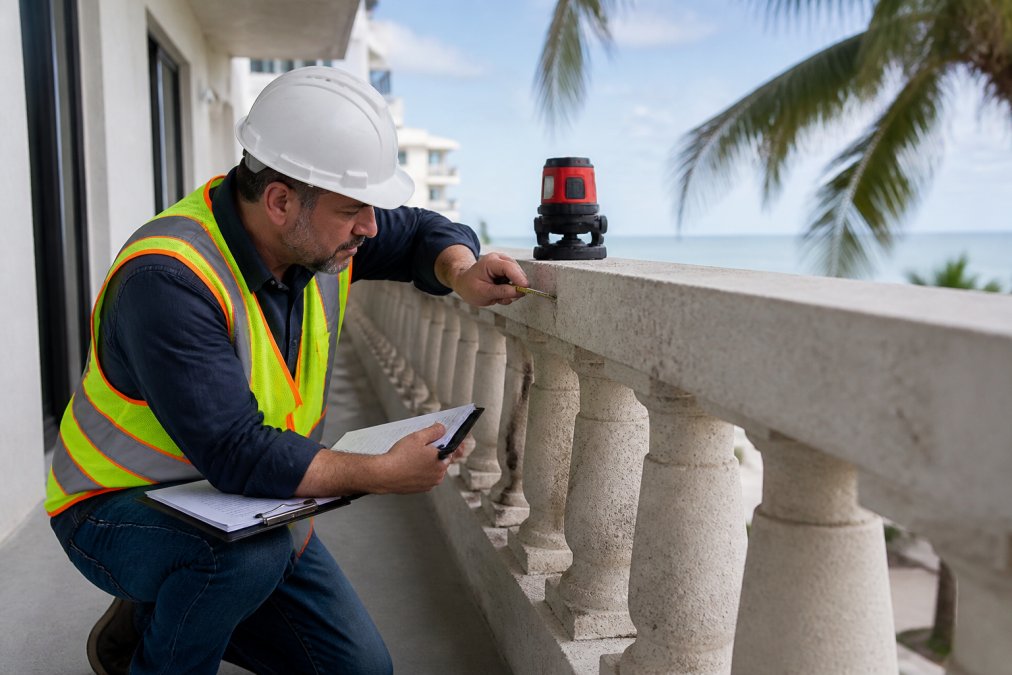
Start by verifying credentials. Ask for proof of licensure and check the California Department of Consumer Affairs database to confirm the inspector holds a current, active license. Ask how many balcony inspections they’ve completed. Someone who’s inspected 500 balconies will catch defects that a generalist might miss.
Ask about their inspection methodology. Do they use moisture meters to detect hidden water intrusion? Do they take core samples? Will they document findings with photos and measurements? A thorough inspection takes time. If an inspector quotes a suspiciously low price or promises to finish your building in a day, that’s a warning sign.
Discuss their reporting process. Will you get a detailed written report with photos, measurements, and specific repair recommendations? Will they grade each element according to SB 326 standards? The report is your legal protection and needs to be thorough and defensible.
Ask about their experience with your building type. A balcony system in a 1970s concrete building fails differently than one in a 2000s wood-frame building.
Finally, confirm they carry errors and omissions insurance. If their inspection misses a defect and someone is injured, you want recourse.
Apex Balcony’s inspectors bring decades of combined construction and design experience. We specialize in California SB 326 and SB 721 compliance and conduct detailed inspections of all elevated exterior elements. Our reports are thorough, defensible, and designed to guide you toward necessary repairs with confidence. We work with buildings of all sizes and understand the specific challenges each faces.
Documentation and Risk Mitigation Strategies
Your inspection report is your legal shield. It proves you knew about defects and took action. But the report alone isn’t enough. You need a documented system showing due diligence at every step.
Create a balcony maintenance log recording every inspection, repair, and preventative maintenance activity. Include dates, descriptions, contractor names, and costs. When a defect is identified, document the date it was reported, when residents were notified, and when repairs began. This timeline proves you acted responsibly.
Photograph everything, before repairs begin, during the work, and after completion. Photos create a visual record of defects and remediation that’s powerful in litigation.
Establish a repair timeline and stick to it. When your inspection report identifies defects, prioritize them: immediate safety hazards first, then significant structural issues, then minor defects. Communicate the timeline to residents.
Maintain communication records. Email board decisions about balcony maintenance to all members. Document that the board reviewed inspection findings and approved repairs. These communications prove the board took the issue seriously.
Create a preventative maintenance schedule. Establish a regular inspection cycle, perhaps annual visual inspections between formal SB 326 inspections. Schedule sealant replacement before it fails. Clean drains before they clog.
Keep insurance updated. After inspection findings, inform your insurance carrier immediately. Some policies require notice within specific timeframes. Failure to notify can void coverage.
Document contractor vetting. When you hire someone to perform repairs, verify their license and insurance. Request references. Keep copies of these verification steps.
Preventative Maintenance Best Practices
Preventative maintenance is the most cost-effective liability strategy.
Sealant and Waterproofing: Inspect sealants annually. Look for cracks, gaps, or areas where sealant has pulled away from the substrate. Replace compromised sealant immediately. Waterproofing failures accelerate deterioration.
Drainage Systems: Keep all drains and gutters clear. Schedule cleaning at least twice per year. Ensure water drains away from the building. Poor drainage is one of the easiest problems to prevent and most damaging if neglected.
Visual Inspections: Conduct quarterly walkthroughs of all balconies. Look for visible cracks, rust stains, peeling paint, soft spots in wood, or water pooling. Document what you see. Minor issues caught early are inexpensive to fix.
Railing and Guardrail Inspection: Check that railings are secure and meet code requirements. Grab them and test for movement. Loose railings are safety hazards and code violations.
Load Monitoring: Educate residents about load limits. Include load limits in lease agreements and resident communications. Make it clear that unauthorized modifications are prohibited.
Contractor Vetting: When repairs are needed, hire licensed professionals with balcony experience. Verify credentials before work begins. Require written warranties on materials and workmanship.
Seasonal Considerations: Climate affects balcony deterioration rates. In freeze-thaw climates, water that penetrates concrete expands when frozen, accelerating damage. In coastal areas, salt spray accelerates corrosion. Adjust your maintenance schedule based on local climate risks.
Documentation: Keep records of all maintenance activities. This creates a history showing responsible stewardship.
Conclusion: Protecting Your Property and Residents
Balcony maintenance isn’t an optional expense or deferred problem. It’s a liability management requirement. California law is explicit: inspect, document, and remediate. Courts hold property owners accountable for following this sequence. Insurance doesn’t cover negligence.
Invest in professional inspections, address findings promptly, and maintain preventative practices. This approach costs money upfront but prevents catastrophic liability exposure. The alternative, hoping nothing fails, is gambling with residents’ safety and your personal financial security.
Apex Balcony helps property owners across California navigate this landscape with confidence. Our licensed inspectors conduct thorough structural assessments that identify early signs of failure. We provide detailed reports that guide your repair decisions and create the documentation you need for liability protection. We work with buildings of all sizes and understand the specific challenges HOA boards and property managers face.
Book an inspection with Apex Balcony today. Let’s identify what your balconies need and create a clear path to compliance and safety.
Frequently Asked Questions
What’s the difference between SB 326 and SB 721?
SB 326, effective since 2018, requires detailed structural inspections of exterior elevated elements every nine years. SB 721, taking effect January 1, 2026, expands these requirements and shortens timelines for certain buildings. Both laws impose strict liability on property owners who fail to maintain balconies safely. If your building hasn’t had an SB 326 inspection since 2025, you may already be out of compliance.
Can I use a general contractor instead of a licensed engineer for inspections?
No. California law requires that SB 326 inspections be performed by a licensed structural engineer or architect. Using an unlicensed inspector creates liability because the inspection won’t satisfy legal requirements.
How much will repairs cost after an inspection?
Repair costs vary dramatically based on inspection findings. The inspection report will help you understand the scope and prioritize repairs.
What happens if my building failed an inspection and I haven’t done repairs yet?
You’re exposed to liability. If an incident occurs, the inspection report becomes evidence of negligence. Your insurance may not cover damages. The best course of action is to contact a licensed inspector immediately, get a current assessment, and develop a repair timeline.
Can I defer repairs if funding isn’t available?
Legally, no. California law requires that identified defects be repaired. You can phase repairs over time if necessary, but you must have a documented plan and be actively working through it. Indefinite deferral while residents occupy the building is negligence.
How do I know if my building needs SB 721 compliance?
SB 721 applies to residential buildings with three or more units. If your building is a multifamily property with three or more units, you’re subject to SB 721. The law takes effect January 1, 2026. If you’re uncertain whether your building qualifies, contact Apex Balcony for a consultation.
Frequently Asked Questions
What are the legal consequences of failing to maintain balconies?
Property owners and HOAs can face significant liability exposure when balcony maintenance is deferred. Negligence claims arise when structural failure causes injury or death. Courts assess whether owners knew or should have known about hazardous conditions. Failure to comply with SB 326 or SB 721 inspection mandates can result in fines and increased liability in litigation. Insurance may deny claims if inspections were not performed or documented. Criminal charges have been pursued in cases involving preventable deaths.
How do SB 326 and SB 721 impact property liability?
SB 326 requires inspections of balconies and elevated exterior elements in buildings with three or more units. SB 721 expanded these requirements and set stricter timelines. Compliance demonstrates due diligence and reasonable care, which strengthens your legal defense. Non-compliance creates presumptive negligence, courts assume you failed your duty to residents. Documented inspections and remediation records are critical evidence that you acted responsibly. Insurance carriers often require proof of SB 326/SB 721 compliance before covering claims.
How often should elevated exterior elements be inspected for safety?
SB 326 and SB 721 require initial inspections within specified timeframes based on building age and type. Follow-up inspections are typically required every six years for buildings in good condition, or sooner if issues are found. However, climate, exposure to moisture, and visible signs of distress may warrant more frequent inspections. Documentation of inspection frequency is essential for demonstrating compliance and due diligence in liability defense.
Can property owners be held personally liable for balcony structural failure?
Yes. Property owners and HOA board members can face personal liability if negligence is proven. Courts examine whether owners knew about hazardous conditions and failed to act. Lack of inspection records strengthens negligence claims. However, documented inspections, reasonable repair timelines, and professional remediation efforts demonstrate good-faith compliance and reduce personal liability exposure. Insurance and proper documentation are your primary defenses against personal judgment.