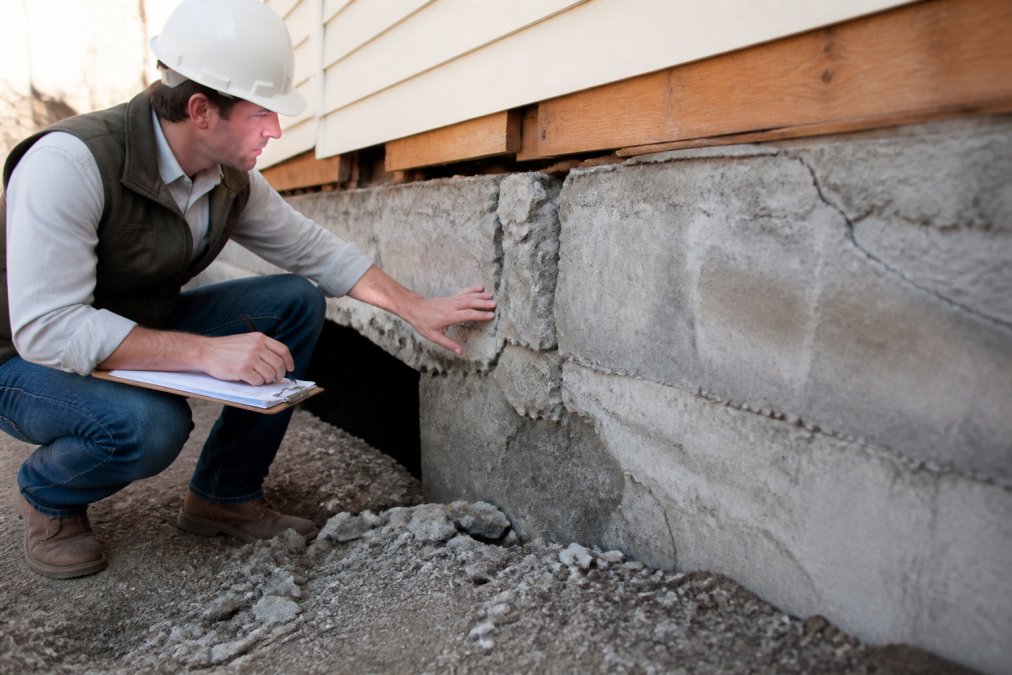
EmpireWorks Alternatives for Balcony Inspections
Compare balcony inspection alternatives to EmpireWorks. Find licensed inspectors, software, and services for California SB-326 and SB-721 compliance.
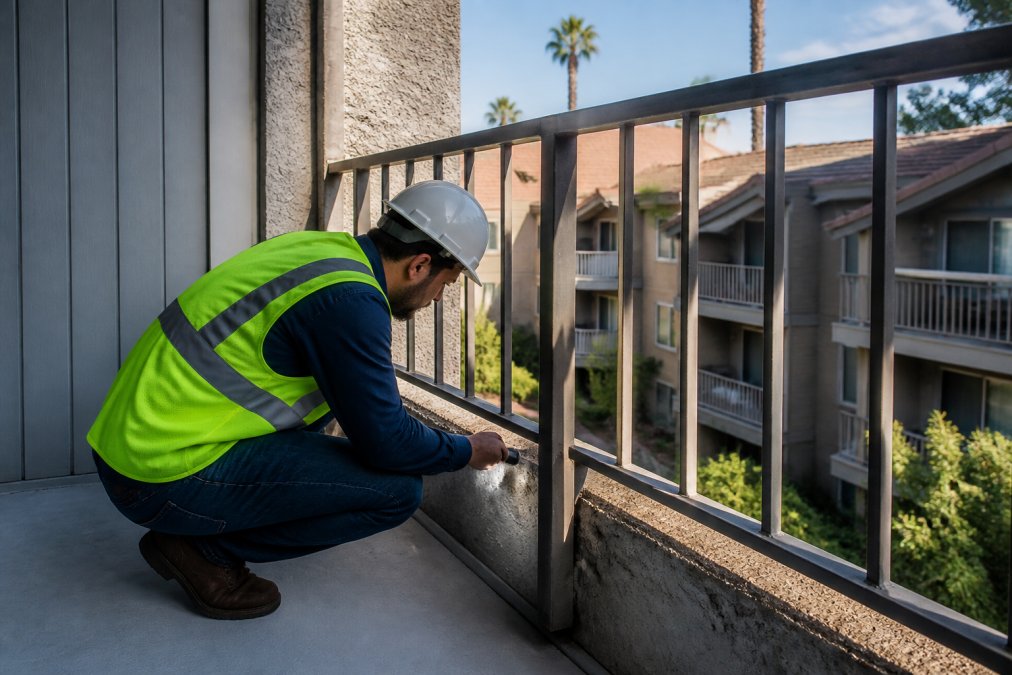
Table of Contents
- Why Property Managers Need Balcony Inspection Alternatives
- SB-326 Inspection Requirements for HOAs: What You Need to Know
- Licensed Inspection Services as EmpireWorks Alternatives
- Inspection Software Solutions for Structural Assessment
- Balcony Inspection Checklist for Property Managers
- California Balcony Inspection Cost: Budget Planning
- How to Vet and Select the Right Inspection Provider
- Conclusion
Last Updated: August 8, 2026
Why Property Managers Need Balcony Inspection Alternatives
California’s SB-326 and SB-721 legislation mandates compliance inspections for residential buildings with elevated exterior elements. A single structural failure can result in catastrophic liability, regulatory fines, and loss of life. Yet many property managers are locked into inspection providers that don’t align with their building’s needs, budget, or timeline.
The inspection landscape has fragmented significantly since these laws took effect, with providers ranging from boutique inspectors to large national firms. Property managers often find themselves caught between competing recommendations, unsure which provider delivers genuine compliance without unnecessary upselling. The right inspection partner should match your property’s scale, provide transparent reporting, and help you understand exactly what needs fixing without inflating costs. Below, we’ll show you how to evaluate alternatives for balcony inspections and select the provider that fits your situation.
SB-326 Inspection Requirements for HOAs: What You Need to Know
California’s Senate Bill 326 mandates comprehensive inspections of elevated exterior elements for common interest developments with three or more units. The law requires that all balconies, decks, stairways, and other load-bearing components meet current building code standards and remain structurally sound. These elements are considered part of the building envelope and essential to resident safety.
Understanding SB-326 vs. SB-721 Compliance
SB-326, enacted in 2018, focuses on common interest developments and HOA-managed structures. SB-721 applies to residential rental properties and extends inspection requirements to additional building types. Both laws require a licensed structural engineer or qualified contractor to visually inspect all elevated exterior elements, document findings in a standardized report, and identify components that fail to meet current building codes. The timelines and re-inspection intervals differ slightly, but the inspection methodology remains consistent.
Determining which law applies is straightforward: check your property’s ownership structure and whether residents own balconies individually or collectively. If uncertain, a qualified inspection provider should clarify this during your initial consultation without charging a fee.
Licensed Inspection Services as Alternatives
Licensed inspection services remain the foundation of balcony compliance. A qualified inspector, whether a structural engineer, civil engineer, or licensed contractor, brings professional liability insurance, years of experience identifying structural decay, and credibility if your inspection report is ever challenged in court or during an audit.
The key difference between providers lies in their depth of expertise, transparency about findings, and approach to remediation recommendations. The best providers help you understand the severity of findings so you can prioritize repairs strategically.
What to Look for in a Qualified Inspection Provider
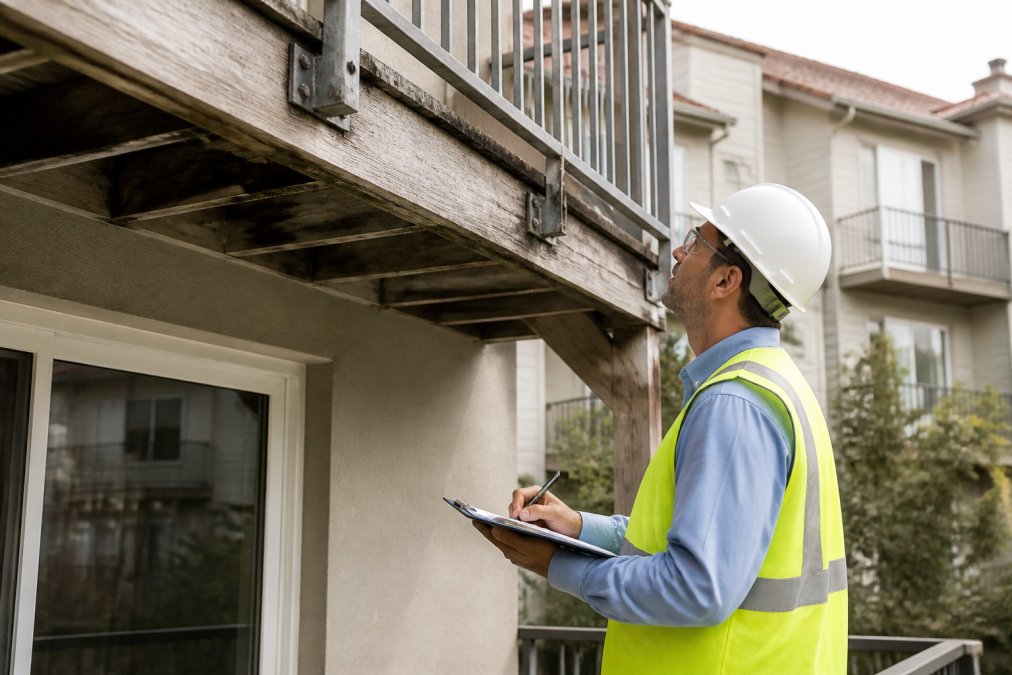
A qualified inspection provider should hold active licensure from the California Department of Consumer Affairs, carry professional liability insurance, and maintain a track record on similar properties. Ask potential providers how they document findings, do they use standardized templates, include photographic evidence, and provide clear categorization of defects by severity? Request references from similar-sized properties they’ve inspected.
One critical factor: does the provider have a financial incentive to recommend extensive repairs? Some inspection firms partner with remediation contractors, creating conflicts of interest. The best providers operate independently, offering inspection services only.
Inspection Software Solutions for Structural Assessment
Inspection software platforms have emerged as powerful tools for documenting findings, managing workflows, and generating professional reports. These platforms don’t replace inspector expertise but simplify data collection and create verifiable records over time, critical for demonstrating ongoing compliance if disputes arise.
OrangeQC: Mobile Inspection Platform
OrangeQC is a field-based platform enabling inspectors to capture data on mobile devices, tag issues with GPS coordinates and timestamps, and generate professional reports with photo integration. The platform works online and offline, making it reliable for inspectors managing multiple properties daily.
OrangeQC’s strength lies in flexibility, inspectors can create custom templates tailored to your building’s components, and the platform maintains a historical record of all inspections. This creates a longitudinal documentation trail showing how conditions have evolved, invaluable if audited or facing liability questions.
ScribeWare EEE: California-Specific Reporting
ScribeWare EEE is purpose-built for California’s SB-326 and SB-721 requirements. The software includes templates matching statutory reporting standards, ensuring your inspection documentation meets regulatory expectations without gaps or omissions.
This platform is ideal for property managers standardizing inspection processes across multiple buildings or inspectors handling dozens of California properties annually. The trade-off is specialization, ScribeWare EEE is California-focused, limiting utility if your organization manages properties in other states.
Hammer Missions: Drone-Based Facade Inspections
Hammer Missions uses AI-powered drone technology to capture high-resolution imagery of building facades, then provides software tools to annotate findings, track defects over time, and generate collaborative reports. Drone inspections excel at identifying water damage patterns, corrosion on metal components, and structural cracks that might be missed during traditional visual assessment.
The limitation is cost and complexity. Drone inspections require licensed pilots, specialized equipment, and higher service fees than traditional assessment. For small to mid-sized residential buildings, drone technology is often unnecessary. For large complexes or buildings with significant facade concerns, the detailed imagery can justify the investment.
Balcony Inspection Checklist for Property Managers
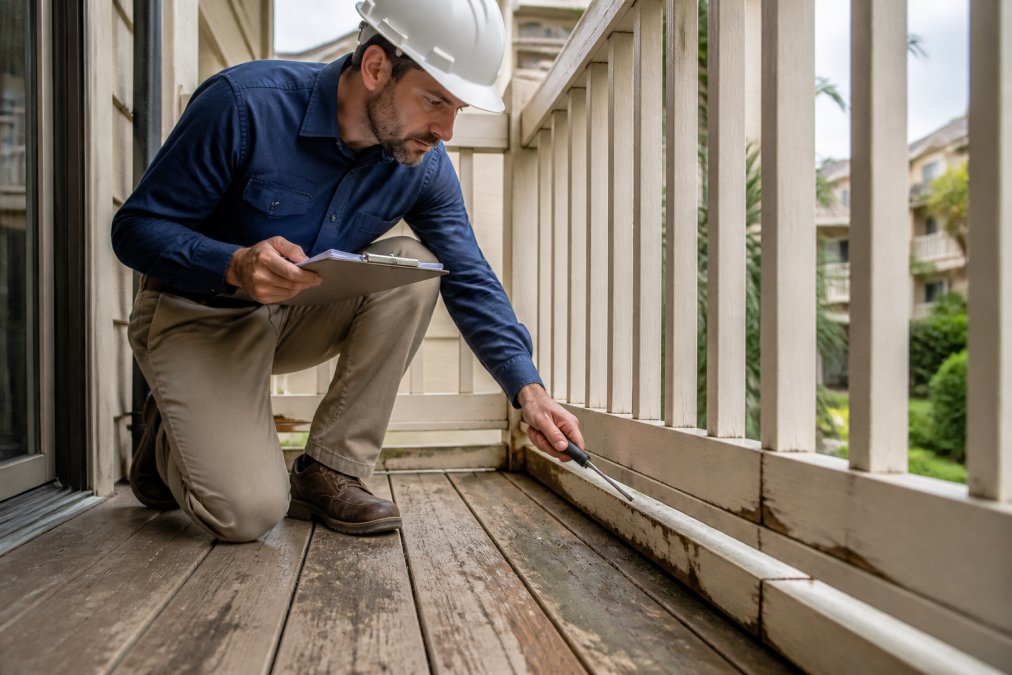
Understanding what inspectors should examine helps you evaluate whether a provider is thorough and whether findings make sense. A comprehensive balcony inspection covers structural integrity, waterproofing systems, load-bearing components, and safety hazards.
Critical Items to Verify During Inspection
A qualified inspector should systematically evaluate these elements on every balcony:
Structural framing and connections. The inspector examines ledger board attachment points where the balcony connects to the building, checking for proper fastening, corrosion, or separation. Ledger board failure is a leading cause of balcony collapse.
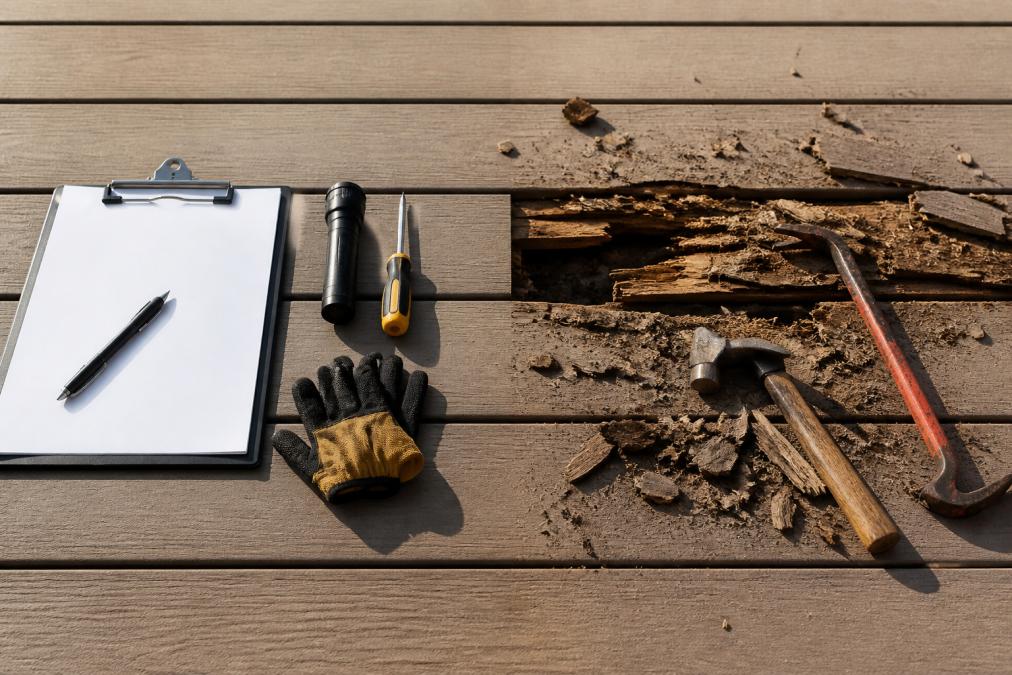
Decking material and condition. Whether wood, composite, or concrete, the inspector probes for soft spots, rot, or delamination. For wood decking, a moisture meter and borescope assess decay depth. Composite materials are checked for cracking, warping, or separation from support structure.
Railings and guardrails. The inspector examines connections, material integrity, and whether railing height and spacing meet current standards. Corroded or loose railings are common deficiencies.
Drainage and waterproofing. The inspector checks for proper slope on the deck surface, functioning drainage systems, and evidence of water penetration. Staining on ceilings or walls of units below often indicates balcony leaks.
Fasteners and hardware. Bolts, lag screws, and metal connectors are examined for corrosion, looseness, or missing components.
Red Flags That Indicate Structural Failure Risk
Soft wood or visible rot. If an inspector’s probe penetrates the wood surface easily, decay has compromised structural capacity. This is critical.
Separation or movement. Visible gaps between the balcony and building, or evidence of shifting or sagging, indicates connection failure, an emergency-level finding.
Corroded fasteners or metal components. Significant rust that has reduced material thickness is a structural concern. Corroded ledger bolts are particularly dangerous.
Water damage in units below. Active leaking or staining on ceilings and walls indicates waterproofing failure and ongoing water intrusion.
Missing or inadequate railings. Damaged, loose, or code-noncompliant railings pose an immediate fall hazard.
A thorough inspection report should clearly distinguish between critical findings and minor cosmetic issues. If everything is flagged equally, you’re not getting the prioritization needed to budget repairs strategically.
California Balcony Inspection Cost: Budget Planning
Understanding cost structure helps you evaluate provider quotes and avoid both underbidding and excessive pricing.
Factors That Affect Inspection Pricing
Building size and unit count. A 12-unit building requires less time than a 100-unit complex. Most providers charge either a flat fee per building or a per-unit rate.
Balcony complexity. Simple rectangular balconies are faster to inspect than structures with multiple tiers, different materials, or unusual configurations.
Accessibility. Buildings where balconies are easily accessible cost less than structures requiring lifts, scaffolding, or specialized equipment.
Report requirements. A basic inspection report costs less than detailed documentation with drone imagery, borescope findings, or 3D modeling.
Re-inspection intervals. Follow-up inspections on previously identified deficiencies have narrower scope and lower costs than initial comprehensive inspections.
Rather than fixating on a single number, evaluate whether a provider’s quote is reasonable given your building’s characteristics. Unusually low quotes often indicate the provider is cutting corners on documentation or thoroughness.
Inspection vs. Remediation: Understanding Total Costs
Inspection is only the first step. Once deficiencies are identified, remediation costs dwarf the inspection fee. An inspection might cost between a few hundred and several thousand dollars. Remediation, actually fixing identified problems, typically costs substantially more. Ledger board replacement, deck resurfacing, railing upgrades, and waterproofing systems represent significant capital expenditures.
This is why selecting an honest inspection provider matters. An inspector who inflates findings directly increases your remediation budget. An inspector who clearly distinguishes between critical safety issues and minor cosmetic concerns helps you prioritize spending and avoid wasting reserve funds.
When evaluating proposals, ask the provider to estimate typical remediation costs for similar buildings. This helps you budget realistically for the full compliance cycle.
How to Vet and Select the Right Inspection Provider
Choosing an inspection provider is critical and affects your compliance posture, budget, and resident safety. A systematic vetting process protects you from predatory upselling and ensures you’re working with someone who genuinely understands California’s regulatory environment.
Questions to Ask Before Hiring
Are you licensed as a structural engineer, civil engineer, or contractor in California? Verify their license status directly with the California Department of Consumer Affairs.
How many SB-326 and SB-721 inspections have you completed? Experience matters. A provider who’s inspected hundreds of California properties understands common deficiencies and realistic remediation costs.
Do you carry professional liability insurance? Ask for proof of current coverage.
What is your inspection methodology? Do they use borescope technology? Do they measure moisture content? Do they photograph all findings?
How do you document findings? Request a sample report. Is it clear and well-organized? Does it distinguish between severity levels?
Do you have financial relationships with remediation contractors? Ideally, your inspector operates independently.
What is your timeline? Reasonable timelines are typically 2-4 weeks from inspection to final report.
What happens if I disagree with your findings? A good provider should be willing to explain their assessment and consider a second opinion.
Red Flags in Inspection Proposals
Unusually low pricing. Below-market quotes often signal cut corners on documentation or planned upselling.
Pressure to decide quickly. Legitimate providers give you time to evaluate proposals and check references.
Vague scope of work. If the proposal doesn’t clearly specify what will be inspected or what the deliverable will be, ask for clarification.
Recommendation to use their remediation contractor. You should have freedom to solicit multiple bids for repairs.
Dismissiveness about your questions. A professional provider welcomes questions and provides clear answers.
No references available. A provider with a solid track record should provide contact information from three recent clients in your area.
The balcony inspection landscape in California has matured significantly since SB-326 and SB-721 took effect. You’re no longer limited to a single provider or forced to accept inflated costs and unnecessary recommendations. By understanding what constitutes a thorough inspection, evaluating providers systematically, and comparing alternatives, whether licensed inspectors, software platforms, or hybrid approaches, you can ensure your property remains compliant while protecting your budget and residents.
Apex Balcony specializes in helping HOA boards and property managers navigate this challenge. Our licensed inspectors bring decades of combined construction and design experience to every assessment, providing clear documentation of structural conditions without manufactured urgency or unnecessary upselling. We focus on identifying early signs of structural failure in elevated exterior elements, giving you the information you need to make informed remediation decisions. Whether you’re managing a small residential building or a larger complex, Apex Balcony’s inspection services are designed to be affordable, transparent, and compliant with California’s regulatory requirements. Book an inspection today and get clarity on your building’s actual condition.
Frequently Asked Questions
What is the difference between SB-326 and SB-721 inspection requirements?
SB-326 applies to residential common interest developments and requires triennial inspections of balconies and elevated exterior elements. SB-721 covers multi-family residential buildings with three or more units and mandates more frequent inspections with stricter timelines for repairs. Both laws aim to prevent structural failures, but SB-721 has more stringent compliance deadlines. Your property type and unit count determine which applies to you, and many California properties must comply with both.
What qualifications should a balcony inspection professional have?
A qualified inspector must hold a California state license as a structural engineer, civil engineer, or general contractor with balcony inspection expertise. They should have demonstrated experience with elevated exterior elements, dry rot assessment, and waterproofing systems. Verify their liability insurance covers structural inspection work, and ask for references from similar-sized properties. Licensed professionals understand building code standards and can produce reports that hold up under regulatory review or litigation.
How much does a California balcony inspection cost?
Inspection costs depend on building size, number of balconies, property age, and accessibility. Factors include whether drone technology or borescope methods are needed, travel distance, and report complexity. Request quotes from multiple providers to compare pricing and scope. Remember that inspection fees are typically far lower than remediation costs, skipping an inspection to save money now often costs thousands more in emergency repairs or regulatory penalties later.
What are the most common red flags inspectors find during balcony assessments?
Dry rot in wood framing, corrosion of fasteners and load-bearing components, failed waterproofing systems allowing water infiltration, cracked or spalling concrete, rusted steel reinforcement, and damaged deck coatings are frequent issues. Visual inspection combined with borescope methods reveals hidden decay inside structural members. If an inspector finds water staining, soft wood, or rust discoloration, those indicate immediate safety hazards requiring remediation before the next inspection cycle.