7 Ways to Prevent Balcony Wood Rot Under SB 721
Balcony wood rot puts SB 721 compliance at risk. Learn 7 prevention steps, from flashing repair to drainage fixes, plus a full inspection checklist.
Last Updated: October 30, 2026
Quick Summary
To prevent balcony wood rot, keep water off the wood and let anything that gets in dry out fast by clearing drainage paths, re-sealing joints annually, checking flashing at wall junctions, keeping sprinklers off the structure, trimming vegetation back, fixing ponding fast, and repairing small cracks now. Flashing that pulls away from the wall, dried and split sealant, and clogged drains cause most rot. Routine maintenance reduces the chance that balcony wood rot reaches the framing, but it does not replace the qualified SB 721 inspection.
- Three failure points cause most rot: flashing pulling away from the wall, dried and split sealant, and clogged drains.
- Use a seasonal checklist twice a year, ideally before and after the rainy season, and keep dated records.
- A walk-through is a visual monitoring tool, not an SB 721 inspection, and does not satisfy the statutory obligation.
- Early wood rot shows up as discoloration, softness, peeling paint, and a musty smell you can spot from the surface.
- Probing too hard with a tool can puncture waterproofing and create the leak you were checking for.
Table of Contents
- Why Balcony Wood Rot Is an SB 721 Problem, Not Just a Maintenance Issue
- SB 721 Balcony Inspection Requirements Every Owner Should Know
- How to Prevent Dry Rot on a Balcony: Seven Moisture-Control Steps
- Your Seasonal Balcony Inspection Checklist
- Early Warning Signs of Wood Decay You Can Spot Safely
- The SB 721 Inspection Repair Timeline, From Report to Sign-Off
- Book an SB 721 Inspection Before Rot Reaches the Framing
- Frequently Asked Questions
Why Balcony Wood Rot Is an SB 721 Problem, Not Just a Maintenance Issue
A soft board is a warning. When water reaches the framing behind it, the balcony can stop carrying the load it was designed for.
That is exactly the scenario SB 721 exists to catch.
Insurance coverage for long-term decay varies by policy, so review your own policy language before assuming a claim will help.
Weighing inspection against repair exposure is part of the decision.
SB 721 Balcony Inspection Requirements Every Owner Should Know
SB 721 requires periodic inspection of balconies, decks, stairways, and walkways on covered multifamily buildings by a qualified licensed professional. Owners should confirm the current statutory cycle and reporting requirements with the official text of the law or a qualified professional.
Apex Balcony provides licensed balcony inspectors who assess elevated exterior elements.
Which Buildings and Exterior Elevated Elements Are Covered
Coverage hinges on three factors: unit count, construction, and element type. All three have to line up before the inspection obligation attaches.
- Three or more units: the building may be in scope. Confirm with the statute.
- Wood-framed construction: a construction type that may fall within the statute’s scope. Confirm with the statute.
- Exterior elevated elements: balconies, decks, stairways, walkways, and similar structures that extend beyond the exterior wall.
When in doubt about whether an element is covered, get a written opinion from a qualified professional before skipping an inspection.
A building that is exempt from SB 721 is not automatically safe. Local building codes, insurance requirements, and the general duty of care still apply, and a collapse on an exempt structure is still a collapse.
How SB 326 Differs From SB 326
SB 326 covers homeowner associations; SB 721 covers the rest of multifamily housing. Same inspection idea, different responsible party.
HOAs handle SB 326 inspections. Apartment owners and landlords handle SB 721. Both require a qualified inspector and a documented report. The two statutes share the same six-year cycle and the same focus on exterior elevated elements, which is why owners sometimes assume one inspection satisfies both.
What the Inspection Actually Requires
A qualified inspection goes beyond a visual walk-by. Ask any inspector you consider how they assess load-bearing components and connections.
A written report should identify each elevated exterior element, describe the condition of its load-bearing components, and recommend specific repairs where deterioration is found.
The Six-Year Clock and Why the Start Date Matters
Confirm the current inspection cycle against the statute, and keep a record of the date of your last completed inspection report so the next inspection can be scheduled in time.
Repair Obligations After the Report
When a report identifies deterioration, schedule repairs with a licensed contractor and document the completed work so the file shows the finding was addressed.
For the full owner-facing timeline, see our SB 721 inspection timeline guide for owners.
How to Prevent Dry Rot on a Balcony: Seven Moisture-Control Steps
To prevent dry rot on a balcony, keep water off the wood and let anything that gets in dry out fast. Seven steps cover most of it.
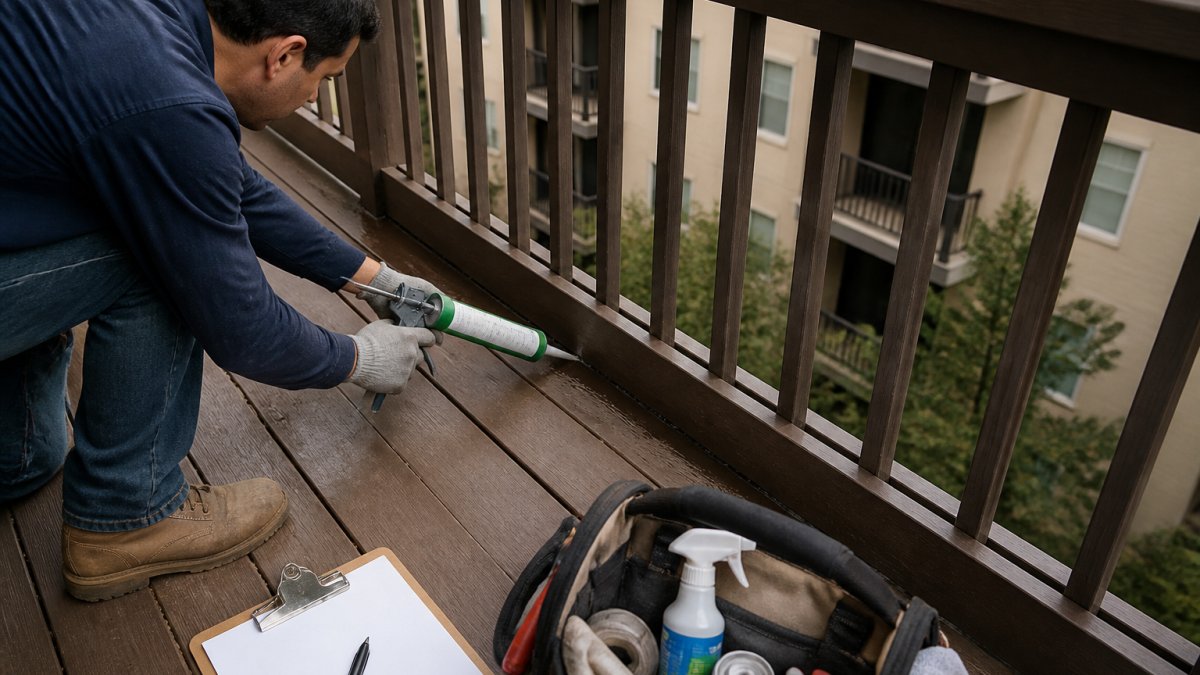
Consistent application of these protective measures ensures long-term structural integrity, though more extensive restoration efforts may eventually become necessary when renovating wood decks.
- Clear drainage paths. Blocked drains hold water against the deck.
- Re-seal joints annually. Sealant cracks as it ages and sun-cures.
- Check flashing at wall junctions. This is the top leak source we find.
- Keep sprinklers off the structure. Irrigation spray soaks wood daily.
- Trim vegetation back. Shade keeps wood damp for hours longer.
- Fix ponding fast. Standing water means the slope is wrong.
- Repair small cracks now. A hairline crack becomes a moisture pathway.
Where Water Gets In: Flashing, Sealants, and Drainage
Three failure points cause most rot: flashing that pulls away from the wall, sealant that has dried and split, and drains clogged with debris. Waterproofing only works when all three hold. Our guide to balcony waterproofing and structural integrity explains how each layer protects the framing.
Seven moisture-control steps cover most balcony wood rot prevention.
| Step | What to do | Why it matters |
|---|---|---|
| 1 | Clear drainage paths | Blocked drains hold water against the deck |
| 2 | Re-seal joints annually | Sealant cracks as it ages and sun-cures |
| 3 | Check flashing at wall junctions | Top leak source found |
| 4 | Keep sprinklers off the structure | Irrigation spray soaks wood daily |
| 5 | Trim vegetation back | Shade keeps wood damp for hours longer |
| 6 | Fix ponding fast | Standing water means the slope is wrong |
| 7 | Repair small cracks now | A hairline crack becomes a moisture pathway |
Your Seasonal Balcony Inspection Checklist
A seasonal walk-through catches moisture problems before they spread. Use this balcony inspection checklist twice a year, ideally before and after the rainy season, and keep a dated record of what you find. The record is what turns a walk-through into evidence that you were monitoring the building.
What a Walk-Through Can and Cannot Do
A walk-through is a visual monitoring tool. It is not an SB 721 inspection, and it does not satisfy the statutory obligation. The distinction matters because owners sometimes assume a maintenance log replaces a qualified inspection, and it does not. What the walk-through does is surface the conditions that make a qualified inspection worth scheduling early rather than on the deadline.
A seasonal checklist is prevention. An SB 721 inspection is compliance. Do both, and keep the records separate so neither one is mistaken for the other.
The Seasonal Checklist
- Look for water stains or dark streaks on wood, especially below railing posts and at deck-to-wall junctions
- Note any soft spots you notice, without probing or prying
- Check sealant lines at joints, penetrations, and the base of railings for cracks or gaps
Watch out: probing too hard with a tool can puncture waterproofing and create the leak you were checking for. Press lightly and stop at the first soft spot. Residents should report what they see and should not probe, pry, or dismantle any structural component.
Where Water Actually Gets In
Rot is a moisture problem before it is a wood problem. Four pathways account for most of the decay we see on multifamily balconies:
- Failed waterproofing at the walking surface. A coating or membrane that has cracked, blistered, or worn through lets water sit directly on the decking and framing.
- Clogged drains and scuppers. Water that cannot drain ponds at the low point, and the low point is usually where the framing meets the wall.
- Unsealed penetrations. Railing posts, fasteners, and any hole drilled through the deck or wall is a direct path for water into the framing.
- Poor or missing flashing at wall junctions. This is the top leak source we find. Flashing that has pulled away, was never installed correctly, or was covered over during a repair lets water run behind the siding and into the connection.
Water trapped at connections is the most damaging version of the problem because the connection is where the load transfers. A deck board that stays wet is a maintenance item. A connection that stays wet is a structural item.
Prevention Versus the Statutory Inspection
Routine maintenance and visual monitoring reduce the chance that rot reaches the framing. They do not replace the qualified inspection SB 721 requires, and they do not produce the written report the law expects. The practical split is:
- Owner or manager, seasonally: clear debris, check sealant, photograph changes, log findings
- Licensed contractor, as needed: re-seal joints, repair flashing, correct ponding, replace deteriorated surface material
- Qualified inspector, on the statutory cycle: examine load-bearing components, use destructive testing where needed, issue the written report
Keeping those three roles separate is what keeps a building both dry and compliant. Our guide to balcony waterproofing and structural integrity explains how each layer protects the framing.
Early Warning Signs of Wood Decay You Can Spot Safely
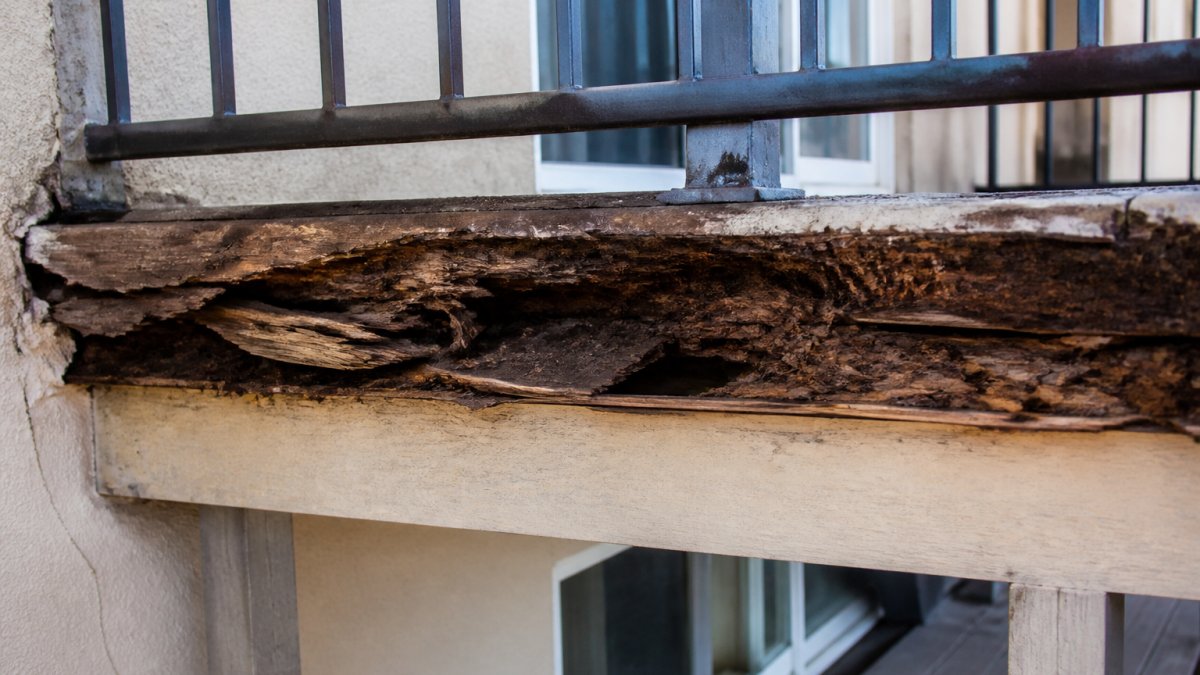
Early wood rot shows up as discoloration, softness, peeling paint, and a musty smell. You can spot most of it from the surface.
Signs worth reporting:
- Spongy decking underfoot
- Paint that bubbles or flakes in patches
- Dark staining near fasteners and joints
- Rusty nails backing out of the wood
Surface signs of rot often appear after moisture has been present for some time, which is why regular checks matter.
The SB 721 Inspection Repair Timeline, From Report to Sign-Off
Owners should act on inspection findings rather than file the report without follow-up.
The sequence:
- Inspector performs the visual examination, with destructive testing where needed
- Written report issued with findings and repair requirements
- Owner schedules repairs with a licensed contractor
- Repairs completed and documented
- Sign-off confirms the work meets the standard
For the full owner-facing timeline, see our SB 721 inspection timeline guide for owners.
Book an SB 721 Inspection Before Rot Reaches the Framing
Early detection of moisture problems is generally less costly than repairs after decay reaches load-bearing components.
A licensed inspection can identify moisture intrusion early, and a written report can give your board a clear repair path. When you’re ready to act, you can find balcony repair contractors in California.
Apex Balcony inspectors are licensed and bring decades of combined construction and design experience. Contact us for details on what an inspection includes.
Frequently Asked Questions
How can you prevent wood rot on a balcony?
Keep water away from the wood. Check and refresh sealants annually, confirm flashing sheds water away from the building envelope, clear drains and scuppers so water cannot pool, and repair cracked boards before moisture reaches the framing. A simple seasonal routine of cleaning, sealing, and inspecting can help reduce moisture-related wood decay.
What causes wood rot on balconies?
Moisture intrusion is the root cause. Common pathways include failed sealants at rail posts, worn flashing where the deck meets the wall, clogged drainage, and sprinkler overspray that keeps wood damp. In wood-framed multifamily buildings, small leaks feed dry rot for months before anything is visible. Wood decay can weaken structural members without obvious signs, which is one reason periodic inspection of exterior elevated elements is important.
Does waterproofing prevent balcony rot?
Waterproofing slows moisture intrusion but does not stop rot on its own. Coatings and membranes wear out, and water often enters through joints, post bases, and flashing that waterproofing does not cover. Treat waterproofing as one layer in a broader strategy: sound flashing, working drainage, sealed penetrations, and regular inspections. If existing wood decay is already present, recoating the surface traps the problem instead of fixing it.
What should property owners do after an SB 721 inspection finds damage?
Review the inspection report’s repair requirements with a licensed professional, prioritize anything affecting load-bearing components, and get the work scheduled promptly. Document every repair with photos and invoices for your records. Track inspection deadlines across the whole building, and consider restricting access to any balcony or stairway a report flags as a safety hazard until repairs are complete.
Rot does not wait for the next inspection cycle, and neither should you. Apex Balcony provides licensed inspections for SB 721 and SB 326 compliance, early detection of structural failure, and a clear path to the repairs your building needs. Get started with Apex Balcony and protect your residents, your reserve fund, and your liability position.