HOA Compliance Services: 7 Essential Strategies for 2026
Master HOA compliance services with actionable strategies for boards and managers. Learn enforcement best practices, software tools, and cost-benefit.

Table of Contents
- What Are HOA Compliance Services and Why They Matter
- Cost-Benefit Analysis: Outsourcing vs. Self-Management
- HOA Violation Letter Templates and Enforcement Best Practices
- HOA Violation Enforcement Best Practices for Board Members
- HOA Compliance Software Tools and Technology Solutions
- Professional HOA Compliance Services: Specialized Inspections and Risk Mitigation
- Post-Pandemic Compliance Trends and Operational Efficiency
- Conclusion: Building a Sustainable Compliance Framework
Last Updated: July 14, 2026
What Are HOA Compliance Services and Why They Matter
HOA compliance services ensure your community operates within legal boundaries and follows its governing documents. These services include violation tracking, enforcement procedures, documentation management, and adherence to CC&Rs (Covenants, Conditions, and Restrictions). Many boards attempt to manage compliance internally using spreadsheets and informal processes, which creates gaps, inconsistencies, and litigation exposure.
Understanding CC&Rs and Community Standards
Your CC&Rs form the legal foundation of your community, defining what residents can and cannot do with their properties. The challenge is that boards often fail to enforce them consistently, opening the door to selective enforcement claims and legal challenges.
Professional hoa compliance services ensure your CC&Rs are enforced fairly and consistently. This means documenting violations, applying rules uniformly across all units, and maintaining clear records of every enforcement action. When a resident challenges a violation notice, your documentation becomes your defense.
According to California Department of Consumer Affairs guidance on HOA governance, boards have a fiduciary duty to enforce community rules fairly and transparently. Failure to enforce creates liability for the board and the association.
Legal Liability and Fiduciary Duty
Board members often don’t realize they have personal liability exposure when compliance is mishandled. Your fiduciary duty requires that you act in the community’s best interest, which includes protecting the association’s assets and enforcing its governing documents. When violations go unenforced or enforcement is inconsistent, you’re failing that duty.
The consequences are real. Residents sue over selective enforcement. Assessments increase because compliance issues devalue properties. A single lawsuit over a mishandled violation notice can cost tens of thousands in legal fees alone.
Professional hoa compliance services transfer this risk. When a licensed property manager or compliance specialist handles enforcement, the association has evidence that decisions were made by trained professionals following established procedures.
Cost-Benefit Analysis: Outsourcing vs. Self-Management
The decision to outsource compliance or manage it internally often comes down to cost. But comparing only the direct expense misses the real financial picture.
Hidden Costs of Self-Managed Compliance
Self-management appears cheaper on the surface, but hidden costs accumulate quickly. A property manager handling compliance manually spends 10-15 hours per week on violation tracking, notice generation, and documentation, roughly 500-750 hours annually. At $25 per hour, that’s $12,500-$18,750 in labor costs alone.
Associations with documented compliance issues also face higher insurance premiums. Insurers view poor enforcement as a risk factor. Additionally, a single violation dispute reaching litigation can cost $5,000-$15,000 in attorney fees. Self-managed compliance, which often lacks proper documentation, makes these disputes more likely.
ROI of Professional HOA Compliance Services
When you invest in professional hoa compliance services, you’re buying consistency, documentation, and risk mitigation. Consistent enforcement increases compliance rates, reducing the volume of violations over time. Better documentation reduces legal exposure, when a resident challenges a violation notice, you have dated photos, inspection records, and written communication trails.
Improved community aesthetics increase property values. Studies show that well-maintained communities command 5-10% higher property values than poorly maintained ones. For a community with average home values of $500,000, that’s $25,000-$50,000 per home in added value. Professional services also reduce board burnout by freeing members to focus on strategic decisions rather than enforcement minutiae.
HOA Violation Letter Templates and Enforcement Best Practices
Violation notices are your primary enforcement tool, but they must be carefully crafted to be legally defensible and fair.
Creating Compliant Violation Notices
Your violation notice must clearly identify the violation with specific details, cite the specific CC&R or rule being violated, and give the resident a reasonable timeline to cure the violation, typically 10-30 days depending on severity.
The tone matters. Professional notices are factual, respectful, and focused on the specific violation. California Civil Code Section 5855 requirements for HOA enforcement notices specifies that notices must include the right to request a hearing and explain how to exercise it. Omitting this language makes the notice challengeable.
Documentation is critical. Every notice should be accompanied by dated photographs showing the violation. These photos become evidence if the resident disputes the violation.
Step-by-Step Violation Appeal Process
Residents have a right to appeal violation notices. A professional process protects both the resident’s rights and the association’s interests.
Step 1: Resident Submits Appeal (Within 10-15 days of notice)
The resident submits a written request for a hearing, explaining why they believe the violation notice was issued in error.
Step 2: Hearing Scheduled (Within 15-30 days)
The association schedules a hearing before the board or a designated hearing officer. The resident receives written notice of the hearing date, location, and their rights.
Step 3: Hearing Conducted (30-60 minutes)
The resident presents their case. The board or hearing officer asks questions. The property manager or compliance specialist presents evidence (photos, documentation, CC&R language).
Step 4: Decision Issued (Within 5-10 days of hearing)
The board issues a written decision explaining why the violation was upheld or overturned. If upheld, the resident receives a new cure timeline.
Step 5: Appeal to Arbitration (If applicable)
Some associations offer a second level of appeal to an outside arbitrator, providing additional fairness and reducing litigation risk.
| Step | Timeline | Responsible Party | Key Documentation |
|---|---|---|---|
| Appeal submitted | 10-15 days after notice | Resident | Written appeal letter |
| Hearing scheduled | 15-30 days | Property manager | Hearing notice to resident |
| Hearing conducted | 30-60 minutes | Board/hearing officer | Hearing transcript or notes |
| Decision issued | 5-10 days after hearing | Board | Written decision letter |
| Arbitration (if applicable) | 30-45 days | Outside arbitrator | Arbitration decision |
HOA Violation Enforcement Best Practices for Board Members
Enforcement requires a system that’s fair, consistent, and sustainable.
Due Process and Fair Housing Compliance
Due process means following your own rules consistently. If your CC&Rs require a 30-day cure period, you can’t give one resident 14 days and another 45 days. This inconsistency invites disputes and opens you to selective enforcement claims.
Fair housing laws add another layer of complexity. You cannot enforce rules differently based on protected characteristics like race, color, religion, sex, national origin, disability, or familial status. The defense against fair housing claims is documentation. When you have a system that applies rules consistently to all residents, you have evidence that decisions weren’t based on protected characteristics.
Documentation and Audit Trails
Every enforcement action must be documented: the initial violation observation with date and details, photographs, the violation notice, the resident’s response, cure deadline and compliance, follow-up inspections, any hearing or appeal, and the final resolution.
This documentation trail demonstrates that you followed fair processes and provides evidence if litigation occurs. A well-documented enforcement action is defensible; a poorly documented one is vulnerable. Professional compliance software integrates violation tracking with photo documentation, notice generation, and audit trails automatically.
HOA Compliance Software Tools and Technology Solutions
Modern software replaces manual spreadsheets with systems that track violations, generate notices, and maintain audit trails automatically.
Real-Time Tracking and Mobile Inspection Apps
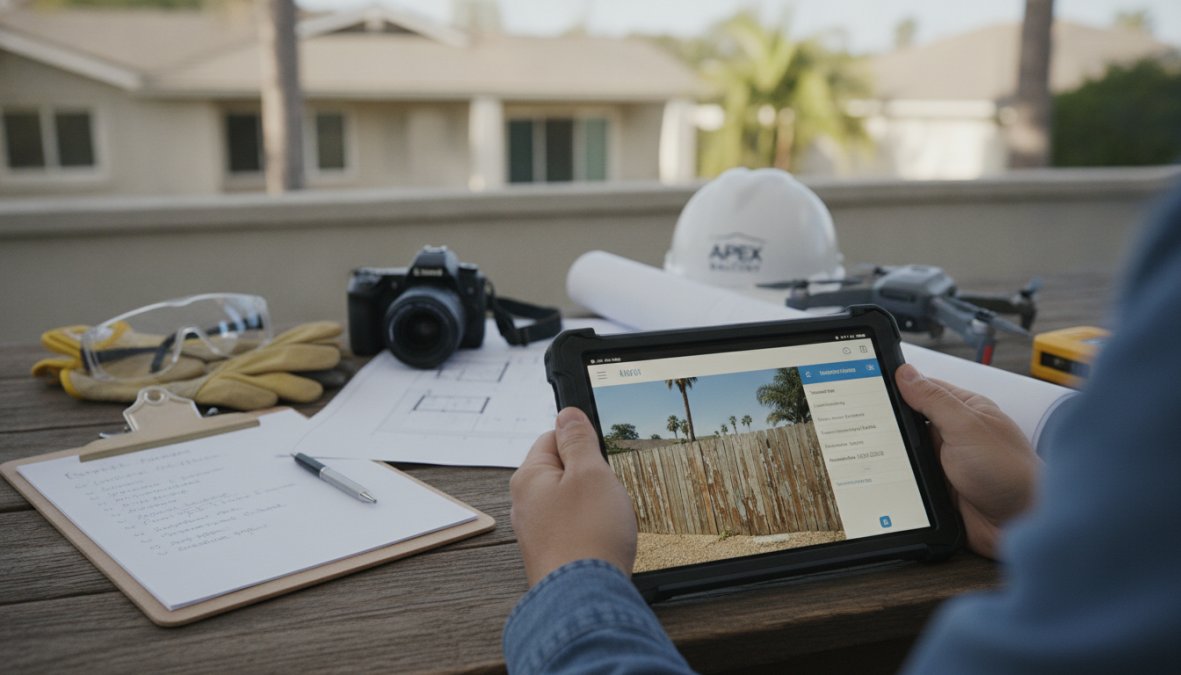
Mobile inspection apps let property managers or board members log violations while on-site. Inspectors use their phones or tablets to photograph violations, record details, and automatically timestamp entries. This real-time data capture eliminates transcription errors and ensures consistency.
GPS tagging records the exact location of each violation, preventing disputes about whether a violation occurred at a specific address. Real-time tracking also enables dashboard reporting, allowing boards to see violation trends and track enforcement velocity.
Integration with Accounting and Financial Systems
When compliance software integrates with your accounting platform, violations automatically create accounts receivable entries. This integration eliminates manual data entry and ensures that financial records match compliance records. If a violation results in a fine, that fine appears in both systems, preventing discrepancies.
Professional HOA Compliance Services: Specialized Inspections and Risk Mitigation
Some compliance challenges require specialized expertise. Structural safety, accessibility compliance, and regulatory inspections fall outside the scope of typical property management.
Community Inspections and Property Maintenance Standards
Regular community inspections identify violations before they become serious problems. Professional inspectors use standardized checklists that ensure consistency. Every unit is evaluated against the same criteria, eliminating bias or oversight.
The inspection report becomes a strategic tool. It shows residents what the association is monitoring, sets expectations for compliance, and provides a baseline for measuring improvement. Communities that conduct regular inspections typically see fewer violations.
Structural and Safety Compliance (SB 326 and SB 721)
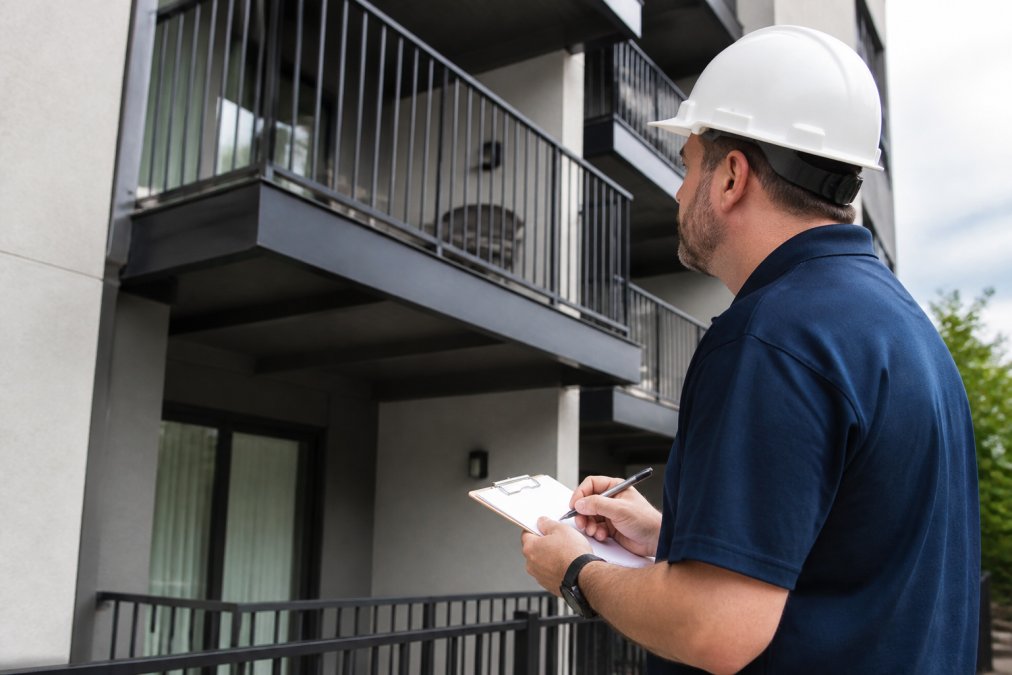
California’s SB 326 and SB 721 laws require associations to inspect elevated exterior elements, balconies, decks, stairs, and walkways for structural safety. These inspections must be conducted by licensed professionals and are mandatory for many associations.
Licensed inspectors with construction and design experience can identify early signs of structural failure before they become dangerous. The cost of these inspections is far lower than the cost of structural failure. SB 326 and SB 721 compliance is a legal requirement that protects residents and the association.
Post-Pandemic Compliance Trends and Operational Efficiency
The pandemic changed how associations operate. Remote meetings, digital communication, and virtual inspections became standard and have persisted.
Digital documentation has become the norm. Digital records are searchable, shareable, and backed up automatically. Remote board meetings have expanded participation and reduced the burden on board members. Automation has reduced administrative overhead, violation notices can now be generated automatically from inspection data, reducing errors and accelerating enforcement timelines.
The trend toward professional management continues to accelerate. Associations that managed compliance internally discovered how time-consuming it is. Many have shifted to professional property managers or compliance specialists, recognizing that the cost is justified by improved consistency and reduced board member burnout.
Effective HOA compliance requires systems, documentation, and expertise. Whether you choose to manage compliance internally or outsource to professionals, the key is consistency, fairness, and thorough documentation. For associations managing structural compliance challenges like balcony safety, professional inspection services are non-negotiable. Apex Balcony provides licensed, experienced inspectors who ensure your community meets SB 326 and SB 721 requirements while identifying early signs of structural failure. Book an inspection today and protect your residents and assets.
Frequently Asked Questions
What exactly do HOA compliance services do?
HOA compliance services help enforce community rules, manage violations, conduct property inspections, and ensure adherence to CC&Rs (Covenants, Conditions, and Restrictions). Services range from software platforms that automate violation tracking to full-service professional management firms that handle inspections, violation notices, appeals, and documentation. They protect legal liability, maintain community standards, and ensure fair enforcement across all residents.
Should we outsource HOA compliance services or manage it ourselves?
The decision depends on your community's size, budget, and volunteer capacity. Self-management saves costs but requires significant board time, training, and risk of inconsistent enforcement. Professional HOA compliance services reduce liability, improve transparency, and eliminate enforcement bias, but cost more. Consider: staff availability, legal complexity, fine schedules, and potential disputes. Many communities find outsourcing reduces burnout and legal exposure.
What should an HOA violation letter template include?
A compliant violation letter must include: specific CC&R violation cited, date observed, property address and owner name, detailed description of the violation, cure period (typically 14-30 days), fine schedule if applicable, appeal process instructions, and contact information. Letters must comply with fair housing laws and due process requirements. Many HOA compliance software tools generate customizable templates automatically to ensure legal compliance.
How do HOA compliance software tools integrate with accounting systems?
Modern HOA compliance software connects violation tracking to financial systems, automatically recording fines and late fees in accounting records. Integration enables real-time reporting on compliance revenue, tracks accounts receivable for unpaid fines, and streamlines dues collection. This eliminates manual data entry, reduces accounting errors, and provides boards with clear visibility into both compliance and financial health across the community.
What are the main post-pandemic compliance trends for HOAs?
Post-pandemic trends include increased focus on transparency and community communication, adoption of mobile-first inspection tools for remote board members, integration of virtual meeting capabilities for dispute resolution, and emphasis on mental health-aware enforcement (flexibility during hardship). Communities are also prioritizing digital documentation and audit trails to reduce in-person contact while maintaining accountability and fairness in rule enforcement.