How to Communicate Safety Inspection Schedules to Tenants
Learn how to communicate safety inspection schedules to tenants with proper notice, legal compliance, and conflict-free messaging. Step-by-step guide.
Table of Contents
- Why Communicating Inspection Schedules Matters
- Understanding SB 326 and SB 721 Compliance Requirements
- Minimum Notice Periods and Legal Requirements
- Creating a Landlord Notice of Entry Template
- Step-by-Step Process for Scheduling Inspections
- How to Handle Tenant Inspection Refusal
- De-Escalation Strategies and Tenant Communication
- Common Mistakes to Avoid
- Frequently Asked Questions
Last Updated: September 29, 2026
Why Communicating Inspection Schedules Matters
Safety inspection schedules aren’t optional. They’re required by law, and how you communicate them to tenants sets the tone for the entire process. Poor communication creates friction, missed appointments, and potential legal exposure. Clear, professional notice gives tenants time to prepare and shows respect for their privacy.
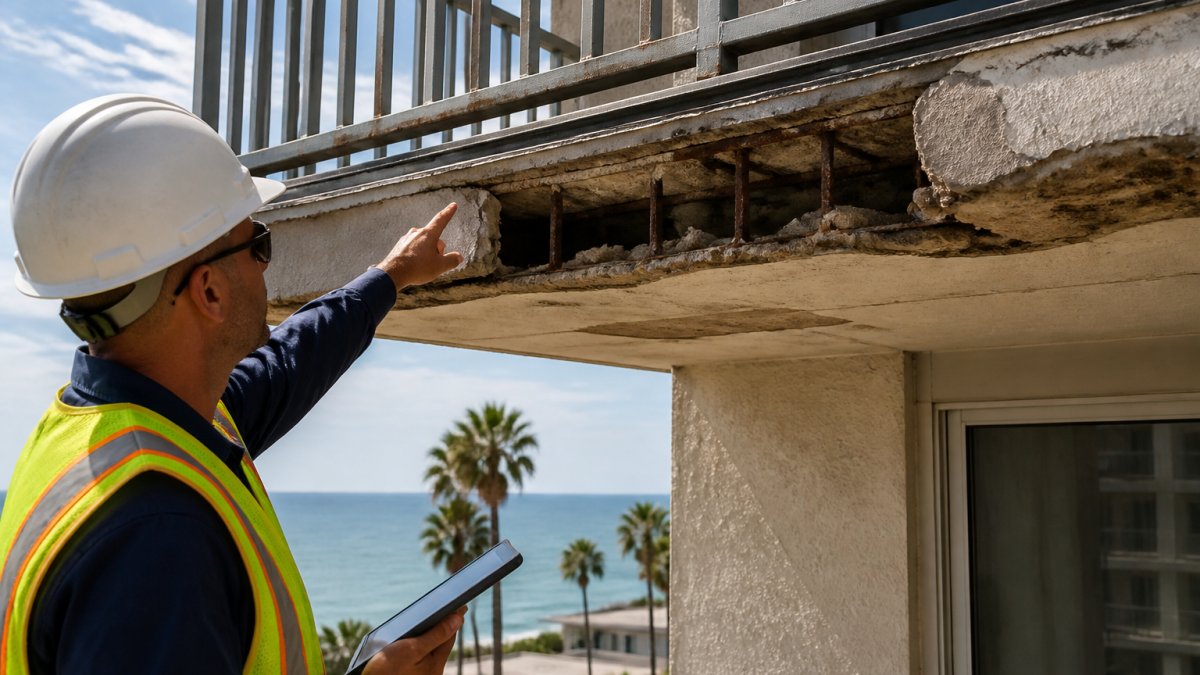
Balcony collapses and structural failures have caused serious injuries and deaths (Fatality Narrative: Carpenter Falls from Balcony). Inspections aren’t bureaucratic hurdles, they’re lifesaving requirements.
The difference between smooth inspections and contentious ones almost always comes down to communication. This guide shows you exactly how to communicate safety inspection schedules to tenants in a way that builds trust and ensures compliance.
Understanding SB 326 and SB 721 Compliance Requirements
California’s SB 326 (passed 2018) applies to buildings with three or more units built before January 1, 2008. SB 721 (passed 2020) applies to all residential buildings with exterior elevated elements, regardless of age or unit count. These laws exist because balconies, decks, and stairways deteriorate silently, water damage, rot, and structural failure often become dangerous before they’re obvious.
- SB 326: Three-plus unit buildings, pre-2008 construction, with exterior elevated elements
- SB 721: Any residential building with balconies, decks, or exterior stairs
- Both laws: Require initial inspections and ongoing periodic inspections
Minimum Notice Periods and Legal Requirements
California law requires written notice at least 24 hours before entry (some jurisdictions require 48 hours, check your local code and lease) (leginfo.legislature.ca.gov). Your notice must specify the date, time, reason (safety inspection), estimated duration, contact information, and tenant rights regarding entry refusal. Document everything in writing to create a clear record if disputes arise.
Creating a Landlord Notice of Entry Template
A strong notice of entry template sets expectations, demonstrates professionalism, and protects you legally. Write in plain language, avoiding jargon. Your goal is clarity, not intimidation.
Essential Elements Your Notice Must Include
Your notice needs specific information to be legally sufficient and practically useful:
- Property address and unit number
- Inspection date and time window (e.g., “between 9 AM and 12 PM on October 15, 2026”)
- Reason for entry: “Mandatory safety inspection of exterior elevated elements (balconies/decks/stairs) required by California law”
- Estimated duration
- Inspector identification (name, company, license #)
- Tenant rights (can be present, entry is mandatory)
- Contact information (phone and email)
- Date notice is sent
Delivery Methods That Ensure Compliance
Use multiple delivery methods simultaneously to create redundancy and prove good-faith notification. Best practice: certified mail (legal gold standard) + email with read-receipt + text reminder. This creates multiple layers of proof if disputes arise. The extra cost is worth the protection.
Step-by-Step Process for Scheduling Inspections
A clear process prevents confusion and keeps everything organized. Follow these steps to schedule inspections professionally and legally.
Step 1: Determine Your Inspection Timeline
Know your deadlines before notifying tenants. Map out your inspection schedule: initial inspection deadline, periodic inspection intervals (typically every 6 years), any accelerated timelines, and seasonal considerations. Clear timelines prevent scrambling and allow tenants to plan ahead.
Step 2: Draft and Customize Your Notice
Customize your template for each unit with specific dates, times, and inspector names. Avoid vague timing, unclear reasons, missing contact info, threatening language, and complex jargon. Your notice should read like professional communication, not a legal threat.
Step 3: Distribute Using Multiple Channels
Send notice at least 5 business days before inspection using multiple methods: certified mail, email, text reminder, and posted copy. This redundancy ensures receipt and documents your good-faith effort.
Step 4: Document All Communications
Keep records of every notice sent: email copies, certified mail receipts, and delivery dates. Create a simple spreadsheet tracking unit, date sent, method, and confirmation of receipt. This takes minimal time but provides maximum protection.
How to Handle Tenant Inspection Refusal
If a tenant refuses entry, remain calm and professional. Explain the legal requirement, offer to reschedule, and document the refusal in writing. Address privacy or damage concerns directly. Explain what the inspector will and won’t do, and offer to be present. If refusal continues after reasonable attempts, consult legal counsel.
De-Escalation Strategies and Tenant Communication
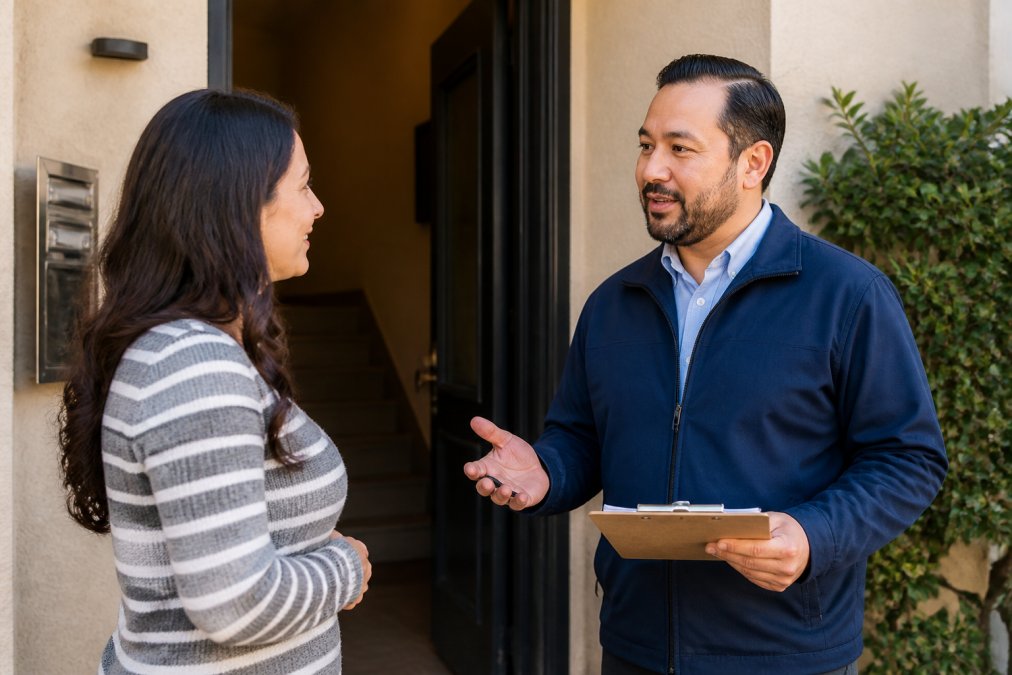
Difficult tenants don’t start difficult. They become difficult when they feel disrespected or unheard. De-escalation strategies prevent conflict before it starts. In practice, this means using communication methods that are both respectful and legally defensible, especially when tenants don’t respond or claim they never received notice.
Digital Communication Compliance and Read-Receipt Documentation
Email delivery: Send from a professional domain with read-receipt enabled. Use a clear subject line and send during business hours. If unopened within 24 hours, follow up with a phone call. Keep emails archived indefinitely.
Handling Non-Response and Assumed Receipt
If tenant doesn’t respond: Call 2-3 days before inspection and document the call. Leave a voicemail if unanswered. Proceed with inspection as scheduled after documented good-faith effort. On inspection day, if tenant doesn’t answer, leave a written notice of attempted entry. Consistent follow-up protocols ensure that interior access remains reliable, mirroring the systematic approach required for an exterior maintenance schedule.
Tone and Framing in All Communications
Treat tenants as partners, not adversaries. Listen to concerns before restating requirements. Acknowledge their perspective, explain the safety benefit (not just legal requirement), offer flexible scheduling, and be transparent about what the inspector will do. Follow up after inspection to thank tenants and share findings. Tone matters: “We’re scheduling a safety inspection to protect your building” invites cooperation better than “You are required to allow entry.”
Common Mistakes to Avoid
Learning from others’ mistakes saves time and prevents problems. These are the most common errors in how to communicate safety inspection schedules to tenants, and what to do instead.
Pre-Inspection Communication Mistakes
Insufficient notice: Send at least 5 business days before inspection, not just 24 hours.
Post-Inspection Communication Mistakes (The Critical Gap)
Failing to communicate findings: Send a brief summary within 3 business days. If no issues: “The inspection found no structural concerns. Your balcony is safe.” If issues found: “The inspection identified [specific issue]. We are scheduling repairs for [date].”
Multi-Unit vs. Single-Family Nuances
Communication strategies differ significantly between apartment complexes and single-family rentals.
Apartment complexes (3+ units):
- You’re managing multiple tenants simultaneously. Send notices to all units on the same schedule to avoid confusion and complaints about favoritism.
- Use a property management system (AppFolio, Buildium, etc.) to track notices and confirmations across all units. This prevents missed units.
- Post a notice in the common area (lobby, mailroom) in addition to unit-specific notices. This reminds tenants and shows transparency.
- Hold a brief tenant meeting or send a group email explaining the inspection schedule, why it matters, and what to expect. This reduces anxiety and questions.
- Assign a single point of contact (property manager or leasing office) for all inspection-related questions. Tenants should know who to call.
Single-family rentals:
- You’re dealing with one tenant per property. Personalization matters more. Use the tenant’s name in communications. Offer flexible scheduling.
- Call the tenant directly (not just email) to confirm the inspection date. This personal touch reduces no-shows and refusals.
- If the tenant has special needs (elderly, mobility issues, language barrier), accommodate them. Offer to reschedule if the proposed time is genuinely inconvenient.
- After the inspection, follow up with a phone call, not just an email. Tenants appreciate the personal touch and are more likely to cooperate with future inspections.
Documentation and Record-Keeping
The most common mistake across all property types: poor documentation. If a dispute arises, your records are your defense.
What to document:
- Date and method of notice delivery (certified mail receipt, email with read-receipt, text message thread, phone call log)
- Tenant response or non-response
- Any tenant questions or concerns and how you addressed them
- Inspection date, time, and inspector name
- Inspection findings (summary, not full report)
- Any tenant refusal or access issues
- Post-inspection communication (findings summary, repair timeline, follow-up)
- Repair completion date and confirmation
How to document:
- Use your property management software if available. Most platforms have built-in communication and document storage.
- If you don’t use software, create a simple folder (digital or physical) for each property. Store all notices, receipts, emails, and notes in chronological order.
- For phone calls, make brief notes immediately after: “Called tenant on [date] at [time]. Confirmed inspection scheduled for [date]. Tenant had no questions.”
- For in-person conversations, follow up with an email summarizing what was discussed: “Per our conversation today, the inspection is scheduled for [date] at [time]. Please confirm by replying to this email.”
Frequently Asked Questions
How much notice is required to communicate safety inspection schedules to tenants?
Most jurisdictions require a minimum of 24 to 48 hours’ written notice before entry for inspections, though some lease agreements or local statutes may require more. Your specific notice period depends on your state statutes and lease agreement terms. Always check your local landlord-tenant law and review your lease to confirm the exact requirement. Providing more notice than legally required demonstrates good faith and reduces tenant friction.
What information must be included in a formal inspection notice?
Your notice should include the specific date and time window of the inspection, the reason for entry (safety inspection, maintenance, etc.), which areas will be inspected, who will conduct the inspection, and how tenants can request access accommodations. Include your contact information and instructions for tenant questions. For SB 326 and SB 721 compliance inspections, specify that the inspection is required by state law. A clear, professional notice reduces misunderstandings and builds tenant confidence.
Can a tenant refuse a mandatory safety inspection?
Tenants cannot legally refuse a mandatory safety inspection required by state law, such as SB 326 or SB 721 balcony inspections. However, they can request reasonable accommodations (different time, access through another entrance). If a tenant refuses without legitimate cause, document the refusal in writing, send a follow-up notice citing the legal requirement, and consult your attorney about enforcement steps. Most tenants cooperate when they understand the inspection is legally mandated and non-negotiable.
What delivery methods ensure my inspection notice is legally compliant?
Use multiple delivery methods to ensure compliance: certified mail with return receipt, email with read receipt, personal delivery with a signed acknowledgment, or posting on the unit door with photographic documentation. For multi-unit properties, post notices in common areas and deliver individually. Certified mail provides the strongest legal proof. Document which method you used for each tenant. Combining methods ensures tenants receive notice and protects you if disputes arise.