5 Best Balcony Waterproofing Materials for HOAs
Compare the top 5 balcony waterproofing materials for HOAs. Learn which systems meet SB 326 compliance, durability, and cost requirements. Find the right.
Table of Contents
- Why Balcony Waterproofing Materials Matter for HOAs
- Quick Comparison Table: Balcony Waterproofing Materials at a Glance
- 1. Polyurethane Coatings: Fast, Durable, and Cost-Effective
- 2. Cementitious Systems: Structural Strength and Code Compliance
- 3. Vinyl Membranes: Low Maintenance and Long-Term Value
- SB 326 Balcony Inspection Requirements and Material Selection
- Signs of Balcony Structural Failure to Watch For
- Balcony Waterproofing Maintenance Schedule for HOAs
- Choosing the Right Material for Your HOA
- Frequently Asked Questions
Last Updated: September 1, 2026
Why Balcony Waterproofing Materials Matter for HOAs
Water intrusion into balconies ranks among the costliest problems facing homeowners associations. When moisture penetrates concrete, wood framing, or structural elements, it triggers cascading damage: rust on rebar, wood rot, mold growth, and eventual structural compromise. California’s SB 326 and SB 721 laws now mandate that HOAs inspect and certify balcony safety, which means waterproofing condition directly affects your legal compliance and liability exposure.
Choosing the right balcony waterproofing materials means selecting a system that withstands California’s climate cycles, resists pedestrian traffic, meets building codes, and lasts for decades without costly recoating.
Quick Comparison Table: Balcony Waterproofing Materials at a Glance
| Material Type | Best For | Substrate | Durability | Maintenance | Installation Speed |
|---|---|---|---|---|---|
| Polyurethane Coatings | Fast turnarounds, cost-conscious HOAs | Concrete | 10-15 years | Low | 1-3 days |
| Cementitious Systems | Code compliance, structural strength | Plywood or concrete | 15-20 years | Moderate | 5-10 days |
| Vinyl Membranes | Low maintenance, long-term value | Concrete or wood | 15-20+ years | Minimal | 2-5 days |
| Liquid-Applied Membranes | Custom finishes, decorative options | Concrete | 12-18 years | Moderate | 3-7 days |
| Sheet Membranes | Wood-frame balconies with concrete topping | Wood | 20+ years | Minimal | 1-2 days |
1. Polyurethane Coatings: Fast, Durable, and Cost-Effective
Polyurethane coatings deliver waterproofing and a finished surface in a single application. They’re liquid-applied, cure quickly, and bond directly to concrete. For HOAs facing budget pressure and tight schedules, polyurethane systems offer speed without sacrificing durability.
The material flexes with concrete’s natural expansion and contraction, resisting crack-bridging failures. UV-stable formulations hold their color under intense sun exposure. Most polyurethane coatings last 10-15 years before requiring maintenance recoating (peer-reviewed research). Installation must happen in dry conditions, which can complicate scheduling in coastal or rainy climates.
Sikalastic-726 Balcony One Shot
Sikalastic-726 is a two-component aliphatic polyurethane engineered for balcony pedestrian traffic. It applies as a single 35-mil coat with no primer needed on properly prepared concrete. The texture is integrally molded in for slip resistance, providing waterproofing and safety surface in one step.
Most polyurethane systems require multiple coats; Sikalastic-726 collapses this into one application, cutting labor time significantly. It’s UV-resistant and handles deicing salts without degradation.
Sikalastic-726 requires concrete moisture content below 3% before application. Use a calcium chloride moisture test to verify. Rushing this step is the leading cause of adhesion failure.
Tremco Vulkem OC810 Pedestrian Deck Coating
Tremco Vulkem OC810 is a single-component aliphatic polyurethane designed for light pedestrian traffic on balconies and roof decks. It applies in one coat, cures quickly, and offers UV stability with rubber aggregate for slip resistance.
Single-component means no mixing and faster application by crews less experienced with two-part systems.
2. Cementitious Systems: Structural Strength and Code Compliance
Cementitious waterproofing systems use fiber-reinforced cement as the base material, often applied over a membrane layer and finished with a topcoat. They create a concrete-like surface that’s durable, slip-resistant, and deeply integrated with the substrate.
The primary advantage is structural integrity. Cementitious coatings bond mechanically to the substrate and resist abrasion from foot traffic. They handle thermal cycling without delamination and meet stringent building codes. California’s Title 24 energy standards favor these systems because they can incorporate solar-reflective finishes.
Installation takes 5-10 days and is labor-intensive, involving multiple layers, substrate preparation, membrane application, reinforcing mesh, and topcoat. If the substrate has structural issues, the system won’t fix them; it will only seal them temporarily.
Pli-Dek Waterproof Decking Systems
Pli-Dek is a fiberglass-reinforced cementitious system engineered for balconies and elevated decks. It’s ICC-ES approved and explicitly complies with California SB 326 and SB 721 requirements. The system includes a seamless waterproof barrier, slip-resistant surface, and customizable decorative finishes.
Pli-Dek handles both plywood and concrete substrates. When your inspector certifies balcony condition under SB 326, a Pli-Dek installation provides documented proof of code-compliant waterproofing, reducing liability exposure.
Pli-Dek systems require structural repairs to be completed BEFORE waterproofing installation. If your inspection reveals rotted wood or failed framing, those must be replaced first. Waterproofing over deteriorated substrate is a code violation and will fail inspection.
Westcoat ALX Waterproofing System
Westcoat ALX is a fiberglass-reinforced cementitious system designed for plywood decks. It includes a sheet membrane base, metal lath reinforcement, and a topcoat that can incorporate solar-reflective technology to meet California Title 24 energy requirements.
ALX is strong for high-traffic areas because metal lath reinforcement distributes loads and prevents crack propagation. The system accommodates structural movement better than single-coat systems, which matters for older buildings with settling issues.
3. Vinyl Membranes: Low Maintenance and Long-Term Value
Vinyl membranes are sheet-applied waterproofing systems that combine waterproofing and finished surface in a single product. They’re installed by authorized dealers, come in multiple colors and textures, and require minimal maintenance, just periodic cleaning.
A vinyl membrane is installed once and typically lasts 15-20+ years without recoating. There’s no need for topcoat renewal, no UV degradation to manage, and no adhesion failures from moisture infiltration. For HOAs with limited reserve budgets, the low maintenance profile is attractive.
Vinyl membranes cost more initially than liquid-applied coatings and must be installed by authorized dealers, limiting contractor flexibility.
Duradek Vinyl Deck Membranes
Duradek is a vinyl deck membrane system installed only by trained, authorized Duradek dealers. It’s a single-product solution: waterproofing, finished surface, and slip resistance all in one layer. The material is textured, UV-resistant, and includes mold and mildew inhibitors.
Duradek comes with a 15-year warranty and a realistic 20-30 year lifespan if properly installed. Once installed, maintenance is just occasional cleaning, no recoating required.
HOAs with multi-year reserve budgets and properties where balconies will remain in service for 15+ years without major renovation. The higher upfront cost is offset by minimal maintenance and long service life.
SB 326 Balcony Inspection Requirements and Material Selection
California’s SB 326 requires that HOAs inspect all exterior elevated elements, including balconies, decks, stairs, and railings, every nine years and certify their structural integrity. The law doesn’t mandate specific waterproofing materials, but it requires that whatever system is in place be documented and certified as code-compliant.
Some systems come with built-in code compliance documentation. Pli-Dek and Westcoat ALX are ICC-ES evaluated and explicitly compliant with SB 326 requirements. Polyurethane coatings and vinyl membranes don’t inherently carry SB 326 certification, though they can still be code-compliant if properly installed over sound substrate.
For HOAs managing SB 326 compliance, choose a waterproofing material that comes with ICC-ES evaluation or explicit code compliance documentation. This simplifies your inspection process and reduces the risk of certification delays.
California SB 326 requirements for balcony inspections
Signs of Balcony Structural Failure to Watch For
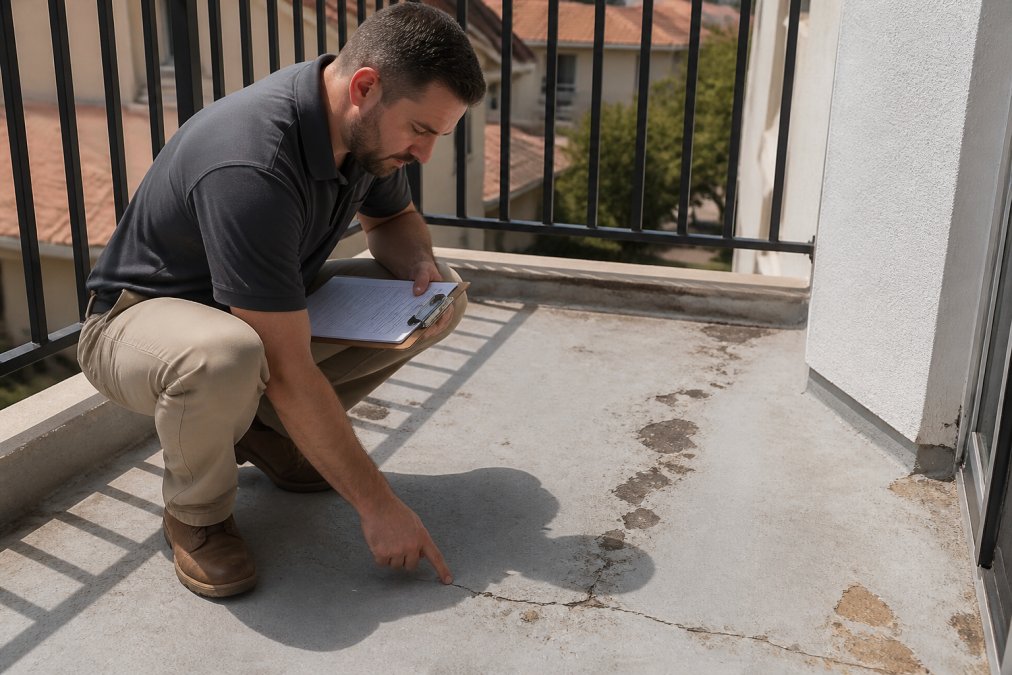
Water stains on ceilings below balconies are the first warning. They indicate water is penetrating the waterproofing layer and pooling above the structural deck.
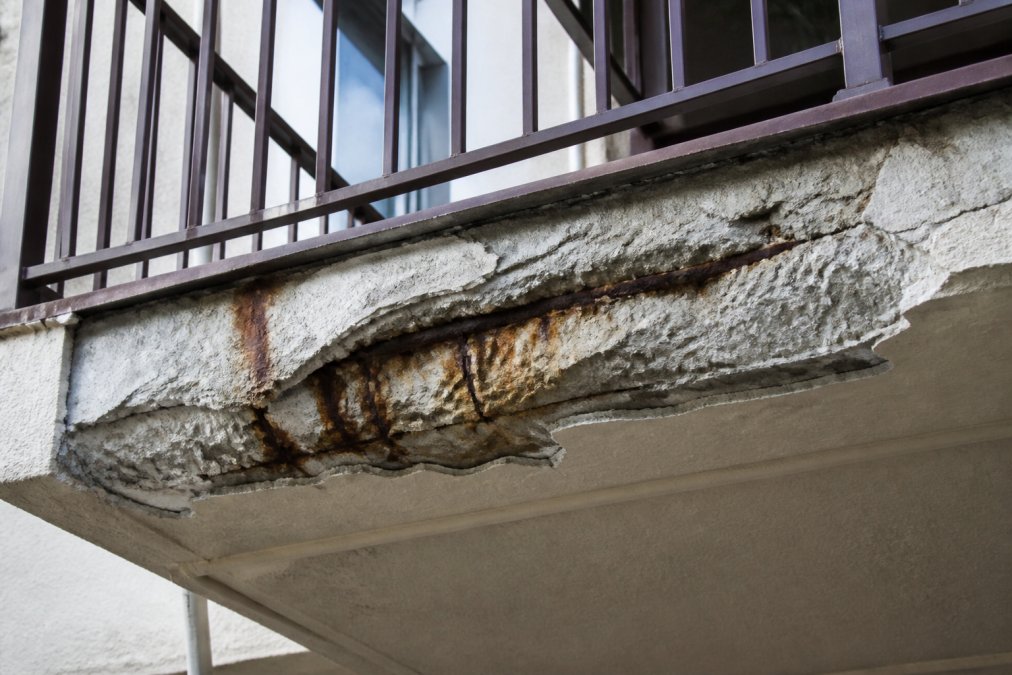
Visible cracks in the concrete or coating suggest structural movement or substrate failure beneath the waterproofing. Rust stains on balcony undersides mean water is corroding steel reinforcement inside the concrete. Once rebar begins rusting, structural integrity degrades rapidly.
Soft or spongy spots in wood-framed balconies indicate rot. If a screwdriver penetrates wood easily, water has compromised structural integrity. Delamination or peeling of existing coatings means the old waterproofing is failing and water is likely already infiltrating the substrate.
If your inspection reveals rust, rot, or structural cracks, structural repairs must be completed first, or new waterproofing will fail prematurely.
Balcony Waterproofing Maintenance Schedule for HOAs
Once waterproofing is installed, maintenance determines how long it actually lasts. A 10-year system can fail in 5 years if neglected, or last 15 years with proper care.
Monthly: Inspect for standing water or visible damage. Clear any debris blocking drainage.
Quarterly: Clean the balcony surface to remove dirt, algae, and organic growth. Use a soft-bristle brush and mild detergent. Never pressure wash polyurethane or cementitious coatings.
Annually: Perform a detailed visual inspection before winter. Look for new cracks, seam separation, or coating wear. Check flashing and edge details for gaps or deterioration.
Every 3-5 years: Schedule a professional inspection. Polyurethane coatings should be inspected every 3 years for wear patterns. Cementitious systems and vinyl membranes can extend to 5 years.
Before winter: Ensure all drains and scuppers are clear. Standing water in freeze-thaw climates will expand and crack the waterproofing layer.
Recoating schedule: Polyurethane coatings typically need recoating after 10-15 years. Cementitious systems and vinyl membranes last longer and may not require recoating during the typical 30-year building cycle.
The cost of preventive maintenance is negligible compared to the cost of water damage.
Choosing the Right Material for Your HOA
Your choice depends on four factors: substrate type, budget, timeline, and maintenance tolerance.
Concrete balconies with tight timelines: Polyurethane coatings (Sikalastic-726 or Tremco Vulkem OC810) are your fastest option. Installation takes 1-3 days, and the balcony is usable within a week.
Plywood balconies requiring code compliance: Cementitious systems (Pli-Dek or Westcoat ALX) are the best choice. They’re ICC-ES evaluated, explicitly compliant with SB 326, and provide structural strength.
Properties prioritizing low maintenance: Vinyl membranes (Duradek) offer the longest service life with minimal upkeep. Upfront cost is higher, but 20-year longevity and no recoating requirements offset the initial investment.
Mixed-substrate properties or complex flashing details: Liquid-applied membranes allow custom detailing around penetrations and transitions.
For most California HOAs managing SB 326 compliance, a professional inspection is the first step.
Frequently Asked Questions
Q: What is the best type of waterproofing for a balcony?
A: The best balcony waterproofing material depends on your substrate, budget, and traffic patterns. Polyurethane coatings like Sikalastic-726 offer fast installation and durability for light traffic. Cementitious systems like Pli-Dek provide structural strength and code compliance for concrete or plywood decks. Vinyl membranes like Duradek deliver low maintenance and 15+ year lifespans. For California HOAs, ensure your choice meets SB 326 compliance requirements and accommodates thermal expansion and moisture vapor transmission.
Q: How do I know if my balcony shows signs of balcony structural failure?
A: Key warning signs include water stains or discoloration on ceilings below, visible cracks in concrete or wood framing, rust on metal flashing or rebar, soft or spongy wood when probed, mold or mildew growth, and gaps between the balcony and building envelope. If you notice any of these, schedule a professional inspection immediately. Early detection prevents costly repairs and resident safety issues.
Q: How often should I perform balcony waterproofing maintenance?
A: Establish a balcony waterproofing maintenance schedule with inspections at least twice yearly (spring and fall), after severe weather, and annually after the first five years of installation. Check for debris accumulation, cracks, seam integrity, and drainage blockages. Clean gutters and drain pathways monthly. Document all findings. Most systems require recoating or resealing every 5-10 years depending on the material type and traffic exposure. Professional inspections every 3-5 years catch deterioration early.
Q: What does SB 326 balcony inspection requirements mean for my HOA’s waterproofing choices?
A: SB 326 mandates that California HOAs inspect all balconies and elevated exterior elements for structural safety and water intrusion. Your waterproofing material must be capable of preventing water infiltration into the structural frame and living spaces. Choose materials with proven crack-bridging ability, seam integrity, and UV resistance. Cementitious and polyurethane systems typically meet these standards. Hire a licensed inspector to verify compliance and identify repairs needed before selecting your waterproofing system.