Balcony Inspection Cost for HOA: 2026 Pricing Guide
Balcony inspection cost for HOA varies by unit count and scope. Learn pricing, SB 326/721 requirements, and budget planning strategies. Get started today.
Table of Contents
- Understanding Balcony Inspection Cost for HOA
- Factors Influencing Balcony Inspection Cost for HOA
- Balcony Inspection Requirements for HOA
- How Long Does a Balcony Inspection Take
- Balcony Safety Inspection Checklist for HOAs
- Hiring a Structural Engineer for Balcony Inspection
- Cost Breakdown and Budget Planning
- Insurance Implications and Liability Protection
Balcony Inspection Cost for HOA: 2026 Pricing Guide
Last Updated: July 1, 2026
Understanding Balcony Inspection Cost for HOA
California property owners face increasingly complex regulatory requirements around balcony safety. The balcony inspection cost for hoa has become a critical budget line item for condominium associations, particularly since the passage of SB 326 and SB 721. Most HOA boards underestimate what compliance actually costs, viewing the initial inspection as the only expense when structural repairs, follow-up assessments, and ongoing maintenance add significant layers of cost.
Understanding the true cost of balcony inspections means breaking down what drives pricing, what regulators require, and how to budget strategically.
SB 326 and SB 721 Compliance Requirements
California Civil Code sections 326 and 721 mandate regular inspections of exterior elevated elements, balconies, decks, stairs, and similar structures on residential buildings. SB 326 applies primarily to buildings three or more stories tall, while SB 721 extends requirements to smaller properties and additional structural elements.
These laws exist because balcony failures have caused serious injuries and deaths. The compliance timeline is strict: buildings must complete initial inspections by specific deadlines based on construction year and building height. After that, ongoing inspections occur every six years for visual assessments and every nine years for comprehensive structural reviews. Missing these deadlines carries substantial penalties and legal exposure.
Why HOAs Must Budget for Inspections
Beyond legal compliance, balcony inspections protect residents and reduce liability exposure. Early detection of problems like dry rot, termite damage, or waterproofing failures costs far less than emergency repairs or replacement. Insurance carriers increasingly require proof of inspection compliance before renewing policies, meaning the balcony inspection cost for hoa directly affects insurance premiums and coverage availability.
Factors Influencing Balcony Inspection Cost for HOA
The price of balcony inspections varies dramatically across California. Understanding what drives these differences helps HOA boards evaluate quotes critically.
Unit Count and Property Size
The number of units and balconies directly impacts inspection cost. Most inspectors charge either per-unit or per-balcony rates, typically $150-400 per unit for visual inspections, depending on building complexity and location. A 100-unit building might expect visual inspection costs between $15,000-40,000 for the initial assessment.
Comprehensive structural inspections, which involve detailed analysis by licensed engineers, cost significantly more, often $300-800 per unit or higher. Large buildings sometimes negotiate better per-unit rates due to volume, while smaller buildings pay premium rates due to fixed costs.
Visual vs. Comprehensive Inspection Scope
A visual inspection involves a trained inspector documenting visible signs of deterioration and photographing problem areas. This typically takes one to three days depending on building size and meets minimum regulatory requirements for initial compliance.
Comprehensive inspections go deeper. Licensed structural engineers use specialized equipment, moisture meters, and load-testing devices to assess structural integrity beneath surface appearances. They produce detailed engineering reports with findings and repair recommendations. These inspections take longer and require licensed professionals, driving costs up substantially.
Many HOAs start with visual inspections to identify problem areas, then authorize comprehensive assessments only for sections showing deterioration. This phased approach reduces initial costs while still meeting compliance deadlines.
Geographic Location and Local Labor Rates
Labor costs in California vary dramatically by region. San Francisco Bay Area inspectors command premium rates, often 30-50% higher than inland California. Specialized expertise in earthquake-prone regions or coastal properties adds cost. Travel time and accessibility also affect pricing, with downtown locations commanding higher fees than suburban complexes.
| Factor | Impact on Cost | Typical Range |
|---|---|---|
| Unit count (visual) | 50-100 unit building | $15,000-$40,000 |
| Comprehensive inspection | Per-unit engineering assessment | $300-$800 per unit |
| Geographic location | Bay Area premium | 30-50% higher than inland |
| Building age | Pre-1980 structures | Higher risk, more detailed work |
| Access difficulty | Parking, stairs, tight spaces | 10-20% site premiums |
Balcony Inspection Requirements for HOA
Regulatory requirements are non-negotiable. Understanding exactly what California law demands prevents boards from either over-spending or under-complying.
Inspection Frequency and Compliance Deadlines
SB 326 and SB 721 establish specific timelines based on building characteristics. Most California buildings that required inspections under these laws have already passed their deadlines or are approaching them. If your building hasn’t been inspected, that’s the urgent task.
After the initial assessment, visual inspections occur every six years. Comprehensive structural inspections happen every nine years. Boards should maintain a calendar of upcoming compliance dates and budget accordingly in reserve studies.
Penalties for Non-Compliance
California enforces these requirements aggressively. Civil penalties for non-compliance range from $1,000 to $5,000 per day of violation. A building 60 days overdue on an inspection could face cumulative penalties exceeding $300,000.
Beyond financial penalties, non-compliance creates liability exposure. If a balcony fails and causes injury, the HOA’s failure to inspect becomes evidence of negligence. Insurance may deny claims if the association violated inspection requirements. The practical lesson is clear: compliance costs far less than penalties and litigation.
How Long Does a Balcony Inspection Take
A small 20-unit building with simple balcony design might complete a visual inspection in one to two days. Larger buildings with 100+ units and complex architectural features take longer, potentially five to ten days. Comprehensive structural inspections with load testing and material analysis might require two to three weeks on-site, with additional time for lab analysis and report writing.
After the on-site inspection, report preparation takes two to four weeks for comprehensive assessments and one to two weeks for visual inspection reports. Weather affects timing too, as moisture testing and detailed structural assessment require dry conditions.
Balcony Safety Inspection Checklist for HOAs
Understanding what inspectors evaluate helps boards prepare and ask informed questions about findings and recommendations.
Key Elements Inspectors Evaluate
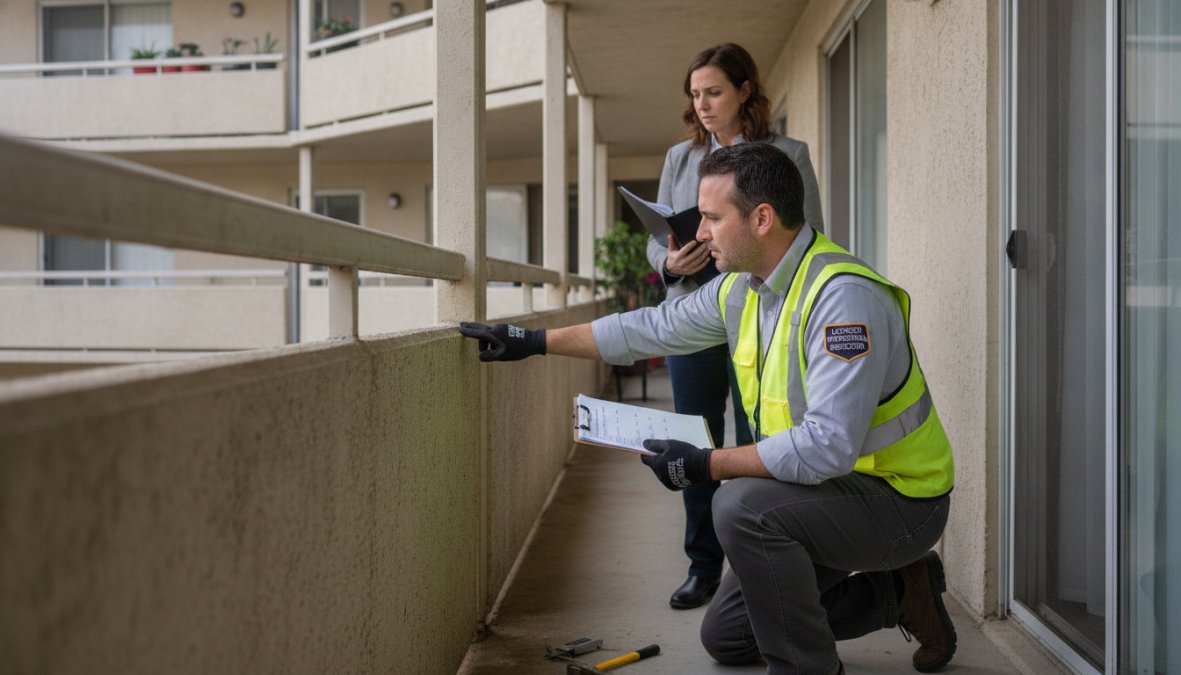
Inspectors examine railings for structural integrity, proper height, and load capacity. The ledger board connection, where the balcony attaches to the building, receives particular scrutiny as the most common failure point in balcony collapses. Inspectors assess decking material condition, whether wood, composite, or concrete shows deterioration or water damage.
Stairs and stair railings get the same scrutiny as balconies. The waterproofing system, flashing, sealants, and membranes are critical, as water intrusion is the primary cause of balcony deterioration.
Red Flags: Structural Integrity and Waterproofing Issues
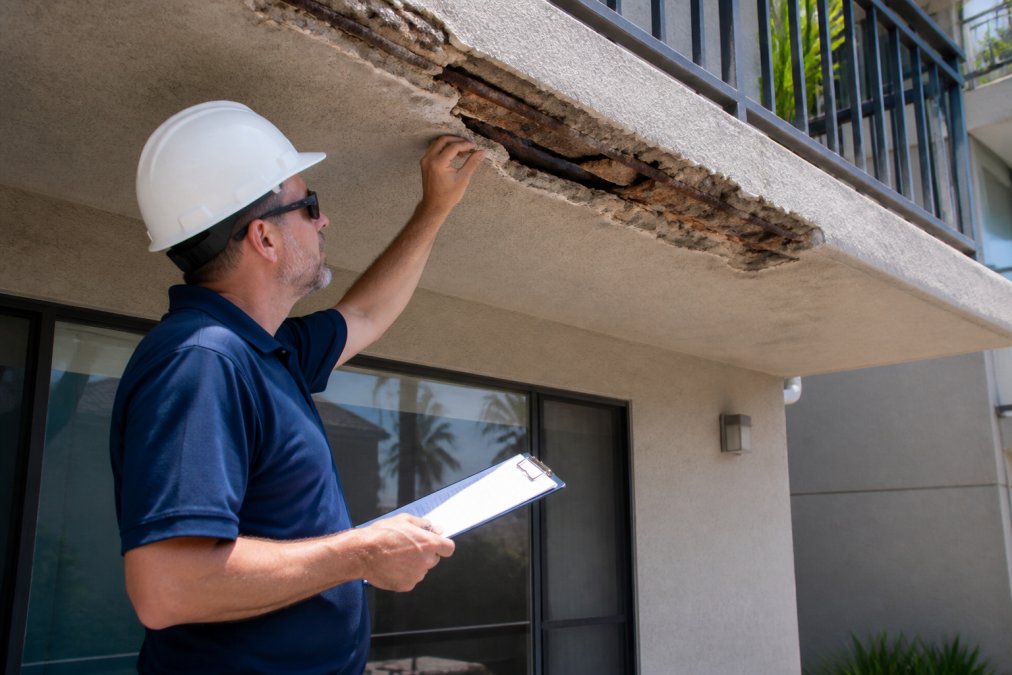
Dry rot in wood framing weakens structural members, reducing their load-bearing capacity. Termite damage appears similarly, with visible galleries or damage patterns. Waterproofing failures manifest as water stains, efflorescence, or visible moisture. Rust on steel reinforcement indicates moisture exposure and requires professional evaluation.
Balcony failures happen suddenly without warning. A building might appear structurally sound to the untrained eye while harboring critical deterioration beneath surfaces. This is why professional inspections are non-negotiable; early detection of hidden damage prevents catastrophic failure and protects residents.
Hiring a Structural Engineer for Balcony Inspection
Not all inspectors are equally qualified. Understanding credentials and vetting processes helps boards select competent professionals.
Qualifications and Licensing Requirements
California requires that structural inspections be performed by licensed professionals. A Structural Engineer (SE) license is the standard credential. Some jurisdictions accept Professional Engineers (PE) with structural engineering experience. California’s Department of Consumer Affairs maintains a database where you can verify licenses.
Experience matters beyond credentials. An engineer with 20 years of balcony inspection experience will catch problems that someone new to the field might miss. Ask inspectors about their specific experience with balcony work and California SB 326/721 compliance.
Vendor Vetting Checklist for HOA Boards
Licensing and Insurance Verification:
- Confirm the inspector holds a current California SE or PE license through the Department of Consumer Affairs website
- Request proof of errors and omissions (E&O) insurance with minimum coverage of $1 million
Experience and References:
- Ask how many balcony inspections the firm has completed in the past three years
- Request references from three recent HOA clients with similar building sizes and types
SB 326/721 Compliance Knowledge:
- Confirm the inspector understands California Civil Code sections 326 and 721
- Request a sample inspection report to assess detail and clarity
Pricing and Scope Clarity:
- Obtain written quotes that specify exactly what’s included
- Ask whether the quote covers all balconies and elevated elements
- Clarify who pays for any additional testing if deterioration is found
Get at least two quotes from qualified inspectors before deciding. Be wary of quotes significantly lower than others, as they may indicate inexperience or incomplete scope.
Cost Breakdown and Budget Planning
Strategic budgeting requires understanding what different inspection types cost and how to integrate costs into reserve studies.
Cost Estimates per Unit and Balcony
Visual inspections typically cost $150-400 per unit, with average pricing around $250 per unit in most California markets. A 100-unit building should budget $25,000 for a visual inspection. Comprehensive structural inspections run $300-800 per unit, with typical pricing near $500 per unit.
Travel and site setup fees might add $1,000-3,000 to any inspection. Report writing and engineering analysis typically add 20-30% to the cost of comprehensive inspections. Repairs identified during inspections represent the largest cost component, potentially triggering repair costs of $10,000-100,000+ per building depending on severity.
Reserve Study Integration and Funding Strategies
Reserve studies should include balcony inspection and maintenance costs as line items. A building with 100 units should reserve approximately $2,500-4,000 annually for visual inspections and $4,000-6,000 annually for comprehensive inspections, amortized across the inspection cycle.
Repair costs are harder to predict but can be estimated based on building age, climate exposure, and prior inspection findings. Some HOAs use special assessments to fund major repairs identified during inspections. However, strategic reserve funding prevents the need for surprise special assessments.
Sample RFP Template for HOA Boards
REQUEST FOR PROPOSAL: BALCONY INSPECTION SERVICES
Project Overview:
[Building name], a [number]-unit residential building located at [address], requires a [visual/comprehensive] balcony inspection per California Civil Code sections 326 and 721. The inspection must be completed by [deadline date].
Scope of Work:
The contractor shall:
- Perform a [visual/comprehensive] inspection of all exterior elevated elements, including balconies, decks, stairs, and railings
- Document all findings with photographs and written observations
- Assess structural integrity, waterproofing, and safety hazards
- Provide a detailed written report with findings, recommendations, and repair priorities
Deliverables:
- Detailed written inspection report with photographs
- Findings summary for HOA board presentation
- Recommendations for repairs with estimated timelines
- Compliance certification confirming code compliance
Timeline:
- Inspection to be completed by [date]
- Final report due [date]
Contractor Requirements:
- Valid California Structural Engineer (SE) or Professional Engineer (PE) license
- Minimum 5 years of balcony inspection experience
- Errors and omissions insurance with $1 million minimum coverage
- References from three recent HOA clients
Pricing:
Submit itemized pricing for:
- Per-unit inspection cost
- Travel and site setup fees
- Report preparation and analysis
- Any additional testing or assessment costs
Insurance Implications and Liability Protection
Balcony inspections directly affect insurance coverage and HOA liability exposure. Insurance carriers increasingly require proof of balcony inspection compliance before renewing HOA policies. Some carriers now ask for copies of inspection reports and evidence of corrective actions.
A balcony failure that causes injury to a resident creates catastrophic liability. If the HOA knew of deterioration through a prior inspection and failed to repair it, courts view this as gross negligence, which can pierce insurance coverage limits and expose board members to personal liability.
Conversely, a building that maintains current inspections and documents corrective actions demonstrates reasonable care. Even if a failure occurs, the HOA can show it acted responsibly. Documentation is critical, boards should maintain records of all inspections, findings, repair recommendations, and actions taken.
Balcony inspection compliance is non-negotiable in California. The regulatory requirements are clear, the penalties for non-compliance are severe, and the liability exposure for buildings with known deterioration is enormous. For most HOAs, the real question isn’t whether to inspect, it’s how to budget strategically and select qualified professionals.
Frequently Asked Questions
How often are HOA balcony inspections required under SB 326 and SB 721?
California Civil Code mandates initial comprehensive inspections for exterior elevated elements, with re-inspections typically required every 6 years or per local jurisdiction guidelines. Some properties may need more frequent visual inspections. Compliance deadlines vary based on building age and prior inspection history. HOAs must verify their specific jurisdiction's requirements, as some Bay Area and Los Angeles municipalities have adopted stricter timelines. Non-compliance can result in significant civil penalties.
What factors most influence balcony inspection cost for HOA?
Primary cost drivers include unit count, building size, inspection scope (visual vs. comprehensive), geographic location, and structural complexity. A visual inspection costs less than a comprehensive report requiring detailed structural analysis. Bay Area and Los Angeles properties typically have higher labor rates. Properties with visible dry rot, termite damage, or waterproofing concerns may require additional assessment, increasing overall costs. The number of balconies and accessibility challenges also affect pricing.
What qualifications should a structural engineer have for balcony inspections?
Inspectors must be licensed structural engineers or architects with California credentials and specific experience in exterior elevated elements (EEE) assessment. They should demonstrate familiarity with SB 326/721 compliance standards, load-bearing capacity evaluation, and building envelope inspection. Verify liability insurance, references from other HOAs, and knowledge of dry rot and waterproofing issues. Request proof of continuing education in building safety codes. Apex Balcony's inspectors bring decades of combined construction and design experience to ensure thorough, compliant evaluations.
How should HOAs budget for balcony inspections in their reserve study?
Integrate inspection costs into your reserve study as a critical line item, typically allocated over the 6-year compliance cycle. Factor in initial comprehensive inspections, follow-up visual inspections, and potential repair costs identified during assessment. Many HOAs use phased inspection strategies to spread costs across multiple years. Work with your reserve study analyst to estimate unit-based costs and establish a maintenance plan. Set aside funds for structural repairs discovered during inspection, as these often exceed initial inspection expenses.