California Balcony Safety Inspection Checklist: Complete Guide
Master California balcony safety inspections with our complete checklist. Learn SB 721 & SB 326 requirements, inspection steps, costs, and remediation.
Table of Contents
- Understanding California Balcony Safety Inspection Requirements
- The California Balcony Safety Inspection Checklist: Step-by-Step Process
- Common Balcony Structural Defects to Identify
- Balcony Inspection Cost California: Budget Planning and Estimation
- Hiring a Structural Engineer for Balcony Inspection
- Insurance Implications and Compliance Documentation
- Tenant and Homeowner Communication Protocols
- Conclusion: Staying Compliant and Safe
Last Updated: July 2, 2026
California property owners and HOA managers must ensure all balconies, decks, and elevated exterior elements meet state safety standards. A california balcony safety inspection checklist is a legal requirement under California law. This guide walks you through conducting a compliant inspection, identifying structural defects, and meeting regulatory deadlines.
Understanding California Balcony Safety Inspection Requirements
California’s balcony safety laws emerged from tragic failures in multi-family housing. The state now mandates comprehensive inspections of all elevated exterior elements to prevent accidents and structural collapses. These requirements apply to residential buildings with three or more units and certain commercial properties.
SB 721 and SB 326 Legislative Requirements
SB 721 (2018) established the foundation for balcony safety inspections in California, requiring all multi-family residential buildings with three or more units to conduct structural safety inspections of exterior elevated elements. SB 326 (2020) expanded these requirements and established stricter timelines for compliance and remediation.
SB 721 applies to buildings constructed before January 1, 2008, while SB 326 covers buildings constructed on or after that date. Both require licensed professionals to perform inspections and document findings in detail. Under SB 721, building owners had until January 1, 2025 to complete their first inspection. SB 326 requires inspections every nine years following the initial assessment. Failure to comply results in significant fines and legal liability if injuries occur.
Missing an inspection deadline creates immediate legal exposure. Property owners who fail to complete required inspections face penalties ranging from thousands to hundreds of thousands of dollars, plus potential criminal liability if a structural failure results in injury or death.
Who Must Comply and Inspection Frequency
Multi-family residential buildings with three or more units must comply regardless of whether they’re rental properties or condominiums. Mixed-use buildings with residential components also fall under these requirements. Initial SB 721 inspections were due by January 1, 2025, with subsequent inspections required every nine years. If significant defects are identified, remediation timelines may require more frequent follow-up inspections.
Property managers and HOA boards are responsible for ensuring compliance by scheduling inspections with licensed professionals, documenting findings, and communicating results to residents as required by law.
The California Balcony Safety Inspection Checklist: Step-by-Step Process
Conducting a thorough inspection requires systematic attention to structural components, waterproofing systems, and connection points.
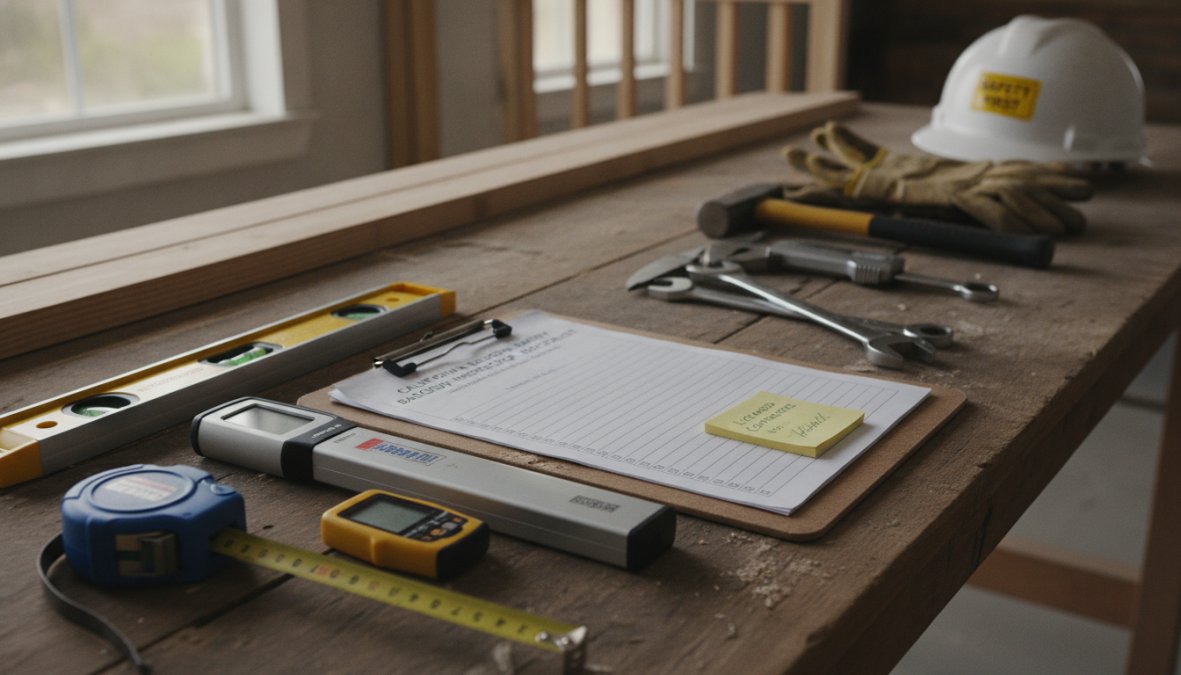
(/california-balcony-law-inspection-frequency-guide/) Safety Inspection Checklist: Step-by-Step Process]
Preparing for Your Inspection
Gather all relevant building documentation including original construction plans, previous inspection reports, maintenance records, and prior repair work. Schedule the inspection during dry weather when structural elements are most visible. Notify residents at least two weeks in advance, as inspectors need access to individual units and common areas.
Prepare a detailed list of all elevated exterior elements requiring inspection, including balconies, decks, stairs, and railings.
Coordinate with your property management team to ensure unit access is confirmed before the inspection day. Inspectors often need to examine the underside of balconies from adjacent units, so securing cooperation in advance prevents delays.
Structural Integrity and Load-Bearing Components Assessment
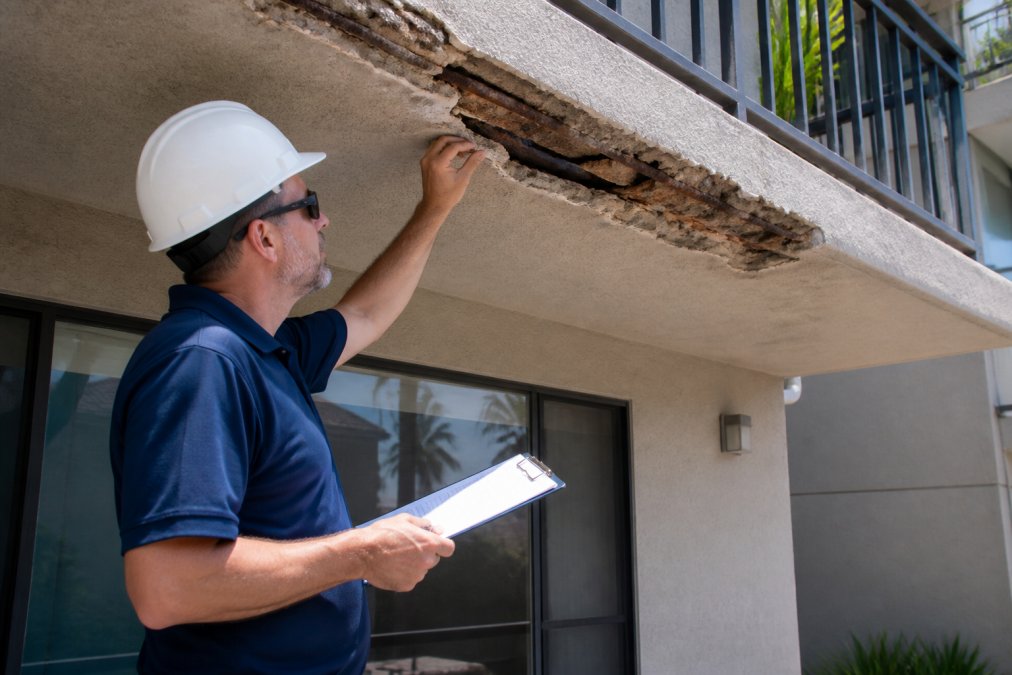
The structural assessment focuses on load-bearing elements that support the balcony’s weight: joists, beams, ledger boards, and connection points where the balcony attaches to the main building. Inspectors examine wood framing for decay, rot, insect damage, and inadequate sizing. They assess concrete for cracking, spalling, and reinforcement exposure. Steel components are evaluated for corrosion and structural compromises.
Connection points receive particular scrutiny because structural failures most commonly originate there. Ledger boards must be properly fastened with appropriate hardware and flashing. Inadequate connections have caused numerous balcony collapses throughout California.
Exterior Elevated Elements and Waterproofing Evaluation
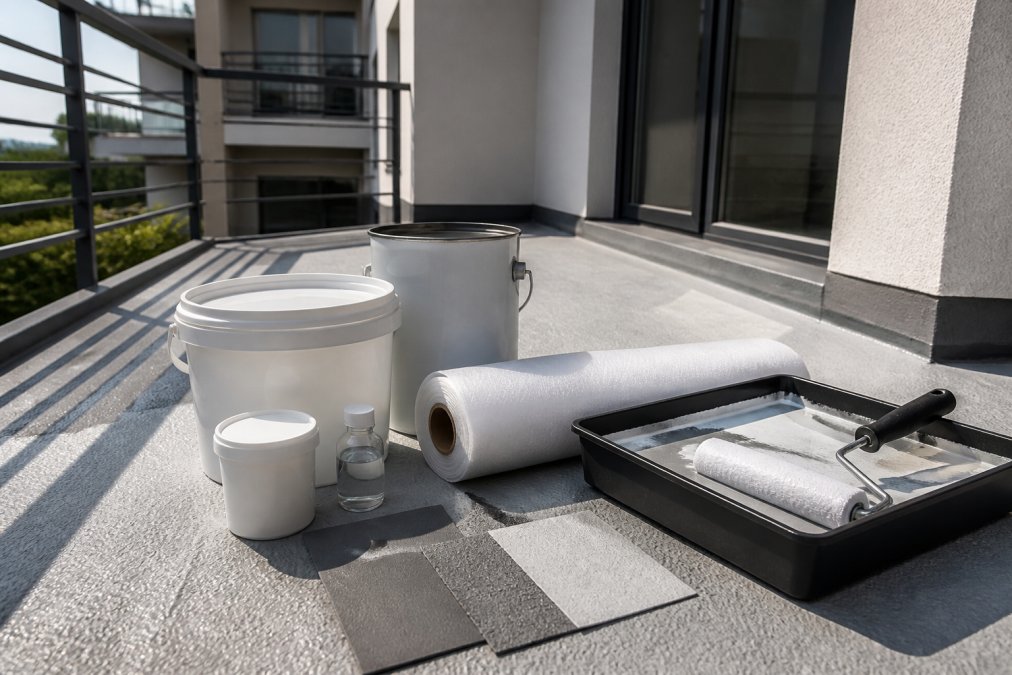
Waterproofing systems protect structural components from water intrusion, which causes corrosion, rot, and deterioration. Water intrusion is the single most common cause of balcony structural failure. Water penetrates cracks in concrete, gets behind flashing, and saturates wood framing, causing wood to rot, steel to corrode, and concrete to spall.
Flashing must be properly installed and maintained. Inspectors look for gaps, rust, deterioration, and improper installation. Sealants around penetrations must be intact and flexible. Drainage systems must effectively move water away from the structure through proper slope, gutter condition, and subsurface drainage.
Documentation and Certification
Detailed documentation is required for regulatory compliance. Inspectors must photograph all defects, measure structural components, document material conditions, and record test results. The inspection report must be certified by a licensed structural engineer or architect with specific expertise in building envelope and elevated elements.
Building owners must maintain copies of inspection reports for at least nine years. Many jurisdictions require that inspection reports be filed with the local building department.
Common Balcony Structural Defects to Identify
Water Intrusion and Corrosion Issues
Water intrusion is the leading cause of balcony deterioration. Moisture penetrates concrete, saturates wood framing, and initiates corrosion in steel reinforcement and fasteners. Visible signs include staining, efflorescence (white mineral deposits), rust streaks, and soft wood. Inspectors use moisture meters to detect hidden moisture and thermal imaging to reveal moisture patterns.
Corrosion in steel reinforcement weakens concrete’s structural capacity. As rust expands, it creates internal pressure causing concrete to crack and spall. Fasteners corrode when exposed to moisture and salt air, losing holding power as corrosion progresses.
Water intrusion is a progressive structural failure mechanism. Addressing water damage within the first few years of detection prevents expensive structural repairs and maintains safety.
Dry Rot, Decay, and Material Degradation
Dry rot and wood decay are common in California’s climate, particularly in shaded areas where moisture lingers. Inspectors probe wood framing with specialized tools to detect decay. Soft spots indicate advanced decay. Discoloration and fungal growth are warning signs. Affected wood must be replaced with pressure-treated lumber or alternative materials.
Concrete spalling exposes reinforcement to moisture and accelerates deterioration. Affected areas require concrete repair or replacement. Material degradation occurs at different rates depending on exposure and maintenance. Regular maintenance extends component life, but eventually all materials require replacement.
Railing and Connection Failures
Railing systems must meet specific code requirements for height, strength, and spacing. Many older balconies have railings that don’t meet current codes. Railings fail when fasteners corrode, wood rots, or connections loosen. A properly functioning railing should not move or flex when pressure is applied.
Balusters must meet spacing requirements to prevent children from becoming trapped. Spacing greater than four inches violates code. This is one of the easiest and least expensive defects to correct.
Balcony Inspection Cost California: Budget Planning and Estimation
Understanding inspection costs helps property owners budget appropriately and evaluate contractor proposals.
Cost Factors and Pricing Breakdown
Initial inspection costs depend primarily on the number of units and balconies. A small building with 12 units might cost $2,000 to $4,000. Larger buildings with 100+ units typically cost $8,000 to $15,000 or more. Licensed structural engineers charge hourly rates ranging from $150 to $300 per hour, depending on experience and location.
Destructive testing, where inspectors remove materials to assess hidden conditions, adds significant cost. A single destructive test might cost $500 to $2,000. Report preparation and certification add 20-30% to the total inspection cost.
Post-Inspection Remediation Steps and Repair Costs
Remediation costs dwarf inspection costs. A building requiring only minor repairs might spend $5,000 to $20,000. Buildings with significant structural defects can face remediation costs exceeding $100,000 or more per unit.
Water intrusion repairs typically cost $2,000 to $8,000 per balcony. Structural repairs to load-bearing components are the most expensive, typically $5,000 to $25,000 or more per balcony. Railing repairs and upgrades are relatively inexpensive, typically $1,000 to $5,000 per balcony.
Property owners should budget for contingency costs, as inspections often reveal hidden defects. A common approach is to budget an additional 20-30% beyond initial repair estimates.
Prioritize repairs based on safety risk and cost-effectiveness. Address critical structural defects and immediate safety hazards first. Schedule less urgent repairs for later phases to spread costs over time.
Hiring a Structural Engineer for Balcony Inspection
Selecting the right licensed professional is critical to ensuring a thorough, compliant inspection.
Qualifications and Licensed Professional Requirements
California law requires that balcony inspections be performed by a licensed structural engineer or architect with specific experience in building envelope and elevated elements. Look for professionals with specific experience in balcony inspections and SB 721/SB 326 compliance. Ask for references from other building owners and property managers.
Match the professional’s expertise to your building’s characteristics. Verify that the professional carries errors and omissions insurance and liability coverage.
Destructive vs. Non-Destructive Testing Methods
Non-destructive testing (NDT) methods evaluate structural conditions without removing materials. These include visual inspection, moisture detection, thermal imaging, and ultrasonic testing. NDT is faster and less expensive but cannot detect all hidden defects.
Destructive testing involves removing small samples of materials for laboratory analysis or removing portions of the structure to visually inspect hidden components. This method reveals conditions that NDT cannot detect but is more invasive and expensive. Most comprehensive inspections use a combination of both methods.
Common NDT methods include moisture meters, visual inspection with magnification, and thermal imaging. Destructive testing methods include core sampling and wood probing to assess rot.
Insurance Implications and Compliance Documentation
Insurance coverage and regulatory compliance are closely intertwined. Property insurance companies increasingly require evidence of SB 721/SB 326 compliance before issuing or renewing coverage. Some insurers won’t cover buildings with known unrepaired defects.
Liability exposure increases significantly if defects are known but not repaired. If a balcony failure injures someone and the owner knew about the defect, the owner faces both civil and potentially criminal liability. Inspection documentation proves that the owner was aware of conditions and took appropriate action.
Keep detailed records of all inspection reports, remediation work, permits, and contractor certifications. These records demonstrate compliance during regulatory audits and provide evidence of responsible property management.
Tenant and Homeowner Communication Protocols
Transparent communication about balcony safety builds trust and ensures residents understand why work is being performed. Notify residents at least two weeks before scheduled inspections. Explain what the inspection involves, why it’s required, and how findings will be communicated.
After inspection completion, communicate findings to residents in clear, non-technical language. Explain what defects were found, what they mean for safety, and what remediation steps will be taken. For significant defects requiring remediation, provide a timeline for repairs and explain any temporary restrictions on balcony use.
For condominium buildings and HOAs, provide detailed information to the board and unit owners. Explain how remediation costs will be funded and provide a realistic timeline. Regular updates during remediation work maintain confidence in management.
California balcony safety inspections are a legal requirement that protects residents and property owners. Completing thorough inspections on schedule, addressing identified defects promptly, and maintaining detailed documentation keeps your property compliant and safe. The investment in professional inspection and timely remediation is far less costly than the liability exposure of ignoring these requirements.
| Inspection Phase | Key Actions | Timeline |
|---|---|---|
| Preparation | Gather documentation, schedule access, notify residents | 2-4 weeks before |
| Initial Assessment | Non-destructive testing, visual inspection, measurements | 1-3 days |
| Detailed Analysis | Destructive testing if needed, material sampling, report preparation | 1-2 weeks |
| Documentation | Final report certification, filing with jurisdiction | 1 week after analysis |
| Remediation Planning | Prioritize defects, obtain quotes, plan funding | 2-4 weeks after report |
| Remediation Execution | Complete repairs according to plan and timeline | Varies by scope |
According to California Building Standards Commission guidance on balcony safety, property owners who complete inspections and document remediation efforts establish a clear compliance record that protects against regulatory enforcement. Research from structural engineering standards for residential buildings shows that buildings with regular inspection and maintenance programs experience significantly fewer structural failures than those with deferred maintenance. National Association of Home Builders analysis of building code compliance indicates that early identification of defects through systematic inspection reduces long-term remediation costs by 40-60% compared to reactive repairs after failures occur.
Frequently Asked Questions
What is the California balcony inspection law and who must comply?
California's SB 721 and SB 326 require multi-family residential buildings to inspect balconies and other Exterior Elevated Elements (EEE) for structural integrity and safety hazards. Buildings with three or more units must comply. Inspections must be performed by licensed architects or structural engineers and follow specific cycles to identify issues like water intrusion, corrosion, dry rot, and load-bearing component failures.
How often are balcony inspections required in California?
California balcony inspection cycles depend on the initial inspection findings and building age. Typically, inspections follow a 6 to 9-year cycle, though buildings with significant defects may require more frequent re-inspections. Your licensed professional will recommend the appropriate inspection schedule based on structural condition, building code compliance, and remediation needs identified during the assessment.
What are common balcony structural defects found during California inspections?
Common balcony structural defects include water intrusion through flashing and waterproofing membrane failures, corrosion of metal components, dry rot in wood joists and beams, deteriorated decking, and compromised balcony railing connections. These defects compromise structural integrity and create safety hazards. Early detection through proper inspection prevents accidents and reduces costly repairs compared to addressing failures after structural damage occurs.
How much does a California balcony inspection cost and what affects pricing?
Balcony inspection costs vary based on building size, number of units, accessibility, and scope of evaluation. Factors include structural engineer fees, testing methods (destructive vs. non-destructive), documentation requirements, and property complexity. Budget for initial inspections, then plan for post-inspection remediation costs if defects are identified. Many property managers allocate reserves for likely repairs discovered during the inspection process.