SB 721 Inspection Requirements for Landlords: A 2026 Guide
SB 721 inspection requirements explained for landlords. Learn deadlines, qualified inspectors, compliance timelines, and penalties. Start your compliance.
Table of Contents
- What Is SB 721 and Why It Matters for Landlords
- SB 721 Inspection Requirements for Landlords: Step-by-Step Compliance Checklist
- Qualified SB 721 Inspector Requirements: Who Can Perform Inspections
- SB 721 Repair Timeline: From Inspection Findings to Completion
- SB 721 vs SB 326: Understanding the Differences
- SB 721 Non-Compliance Penalties and Liability Risks
- Budgeting for SB 721 Inspections and Repairs
- Conclusion
Last Updated: June 25, 2026
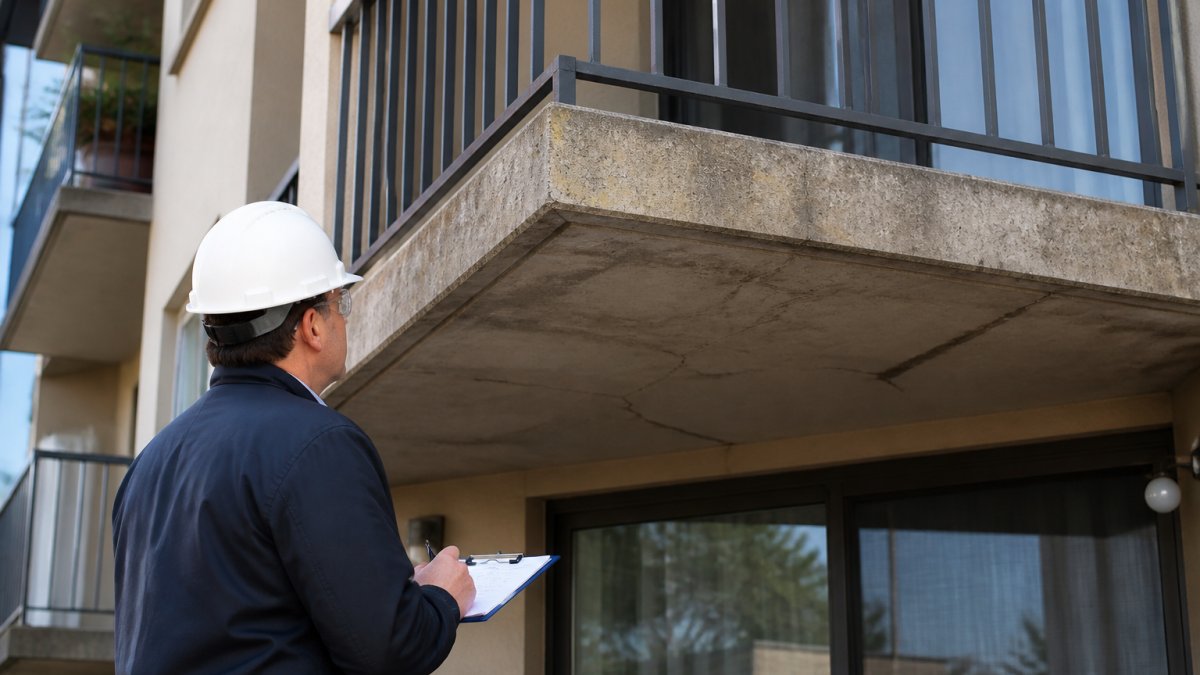
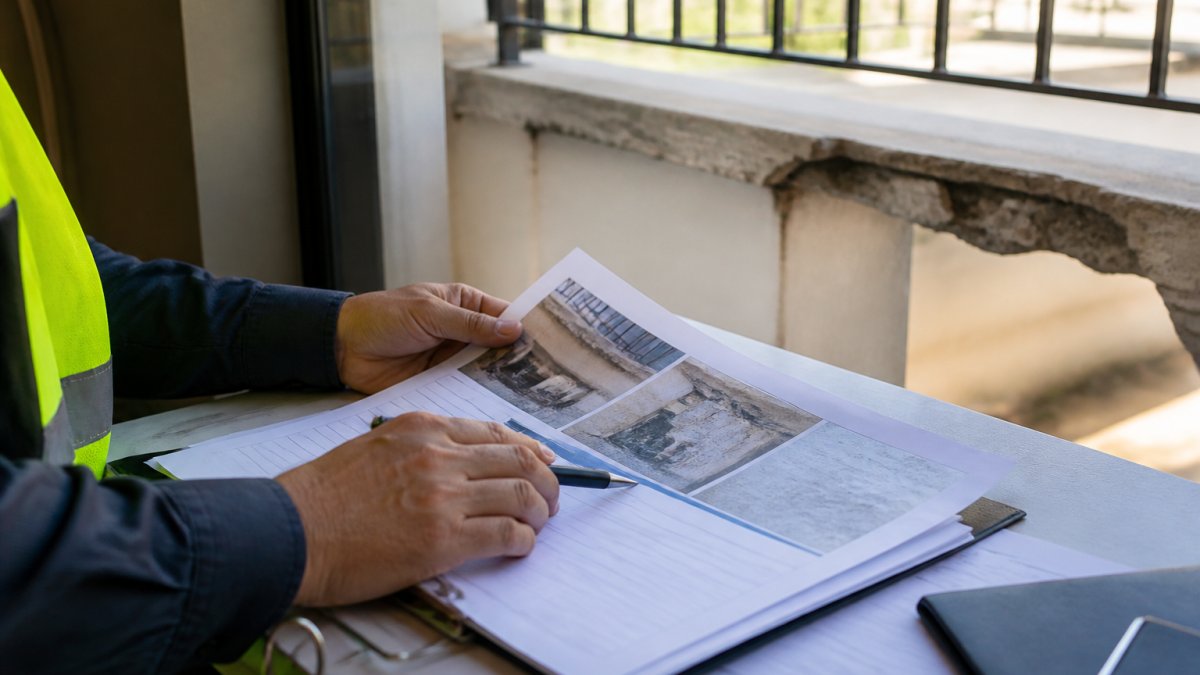
Understanding SB 721 inspection requirements for landlords is not optional in California. This guide breaks down every compliance obligation you face as a rental property owner, from inspection deadlines to documentation standards. California’s SB 721 was enacted after fatal balcony collapses exposed how many landlords lacked systematic ways to assess structural deterioration in elevated exterior elements. Below, we’ll show you exactly how to meet your legal obligations, what inspectors look for, and how to avoid penalties that catch unprepared property owners off guard.
Here’s what most guides get wrong: they treat SB 721 as a one-time checkbox rather than an ongoing safety management obligation. It isn’t. The law establishes a recurring inspection cycle with specific documentation requirements, repair timelines, and enforcement mechanisms.
What Is SB 721 and Why It Matters for Landlords
SB 721 is a California law, signed in 2018 and codified in California Civil Code Sections 1954.50 through 1954.56, that mandates periodic inspections of Exterior Elevated Elements on multifamily rental properties. The law was a direct response to the 2015 Berkeley balcony collapse that killed six people. That tragedy revealed a systemic failure: landlords had no legal obligation to inspect elevated structures, and wood-framed construction deteriorates silently until it fails.
The law targets rental properties with three or more multifamily dwelling units that include exterior elevated elements. The stakes are real. Structural failure in load-bearing components doesn’t give advance warning.
According to California Legislative Information on SB 721, the law applies to buildings with exterior elevated elements supported substantially by wood or wood-based products.
Key Definitions: Exterior Elevated Elements and Scope
Exterior Elevated Elements (EEE) are load-bearing components extending beyond exterior walls, elevated more than six feet above ground, and designed for human occupancy or use. This includes balconies, decks, porches, stairways, walkways, and entry structures.
The definition is broader than most landlords assume. A covered walkway connecting two building sections qualifies. Waterproofing elements, flashing, and structural connections between EEEs and the main building are all within scope. If it’s elevated, wood-framed, and people stand on it, assume it’s covered.
SB 721 Inspection Requirements for Landlords: Step-by-Step Compliance Checklist
The compliance process follows a predictable sequence. Working through it methodically prevents gaps that lead to enforcement actions.
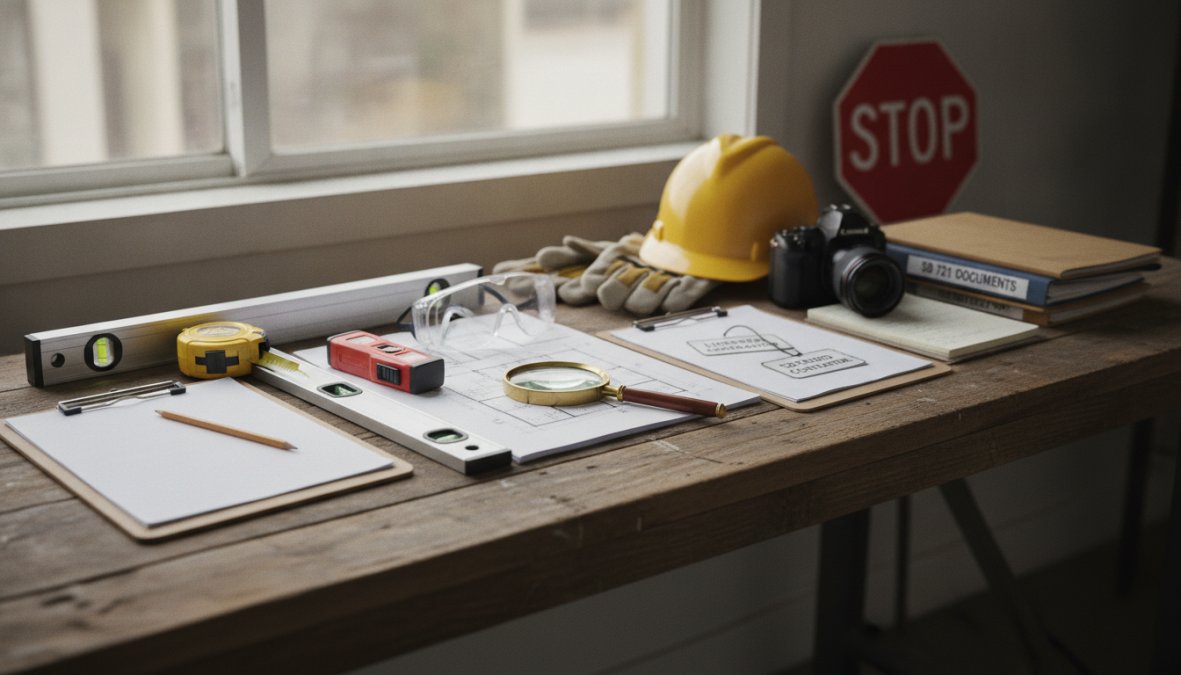
Here is the complete compliance checklist:
- Confirm your property has three or more multifamily units with EEEs
- Identify all Exterior Elevated Elements on the property
- Verify the initial inspection deadline for your property
- Select a qualified inspector (licensed contractor, structural engineer, or architect)
- Schedule inspection covering at least 15% of each EEE type
- Receive written inspection report within 45 days of inspection completion
- Submit report copy to the local enforcement agency if required
- Triage findings: emergency conditions require immediate action, non-emergency repairs must begin within 120 days
- Complete all required repairs within the mandated timeline
- Retain inspection records for the life of the building
- Schedule next inspection within six years
Properties Subject to SB 721
SB 721 applies to buildings with three or more multifamily dwelling units. Single-family homes and duplexes are exempt. Condominiums governed by an HOA are subject to the separate SB 326. The critical qualifier is that the building must contain exterior elevated elements supported substantially by wood or wood-based products. A concrete-framed building with concrete balconies falls outside the law’s primary scope.
If you own a mixed-use building with residential units above commercial space, the residential component triggers SB 721 obligations if it meets the unit count threshold. Property managers acting on behalf of landlords share compliance responsibility.
Inspection Deadlines and Timeline Requirements
The initial compliance deadline for most properties was January 1, 2025. If your property has not yet been inspected, you are already out of compliance. For properties that completed initial inspections, the six-year cycle clock has started.
The timeline for acting on findings is equally strict:
- Emergency conditions: Immediate action required. The area must be made safe or taken out of service within 15 days.
- Non-emergency deficiencies: Repairs must begin within 120 days of receiving the inspection report. Extensions require written approval from the local enforcement agency.
Inspection Frequency and Periodic Requirements
SB 721 mandates inspections every six years. This is a hard floor, not a suggested interval. The six-year cycle resets from the date of the most recent completed inspection.
Schedule your next inspection at the five-year mark, not the six-year mark. This gives you a full year to address any findings before the legal deadline.
Qualified SB 721 Inspector Requirements: Who Can Perform Inspections
The law does not allow property owners to self-inspect or hire a general handyman. The inspection must be performed by one of the following licensed professionals:
- A licensed architect
- A licensed civil or structural engineer
- A licensed general contractor (Class B)
- A licensed specialty contractor in a relevant classification (C-5 framing, C-61 limited specialty)
The inspector must have experience with the type of construction being evaluated.
How to Vet and Select a Qualified Inspector
The biggest mistake landlords make is selecting an inspector based on price alone. A low-cost inspection that misses critical deterioration creates far greater liability than the cost difference.
Ask every prospective inspector these questions before hiring:
- What is your specific experience with SB 721 inspections on multifamily properties?
- How many EEE inspections have you completed in the past two years?
- Do you carry errors and omissions insurance?
- Will you provide a written report that meets SB 721 documentation requirements?
Never hire an inspector who offers to “pass” your property without completing the required sampling. An incomplete inspection creates a false paper trail that exposes you to far greater liability if a failure occurs later.
Sampling Methodology and the 15 Percent Rule
The 15 percent rule requires that inspectors examine a representative sample of at least 15% of each type of Exterior Elevated Element. This means 15% of balconies, 15% of stairways, 15% of walkways, calculated separately.
The inspector selects which units to sample, and the selection must be representative. If the sample reveals significant deterioration, the inspector may expand the scope to additional elements. This expansion is not optional.
According to California Building Standards Commission guidance on elevated element inspections, the sampling methodology must be documented in the inspection report, including which elements were selected and the rationale for that selection.
SB 721 Repair Timeline: From Inspection Findings to Completion
The SB 721 repair timeline depends entirely on how the inspector classifies the findings. Two categories exist: conditions that pose an immediate threat to life and safety, and conditions that represent deterioration requiring repair but not immediate danger.
Emergency conditions require the property owner to take immediate protective action within 15 days. The local enforcement agency must be notified. Failure to act on an emergency finding is the fastest path to criminal liability under California law.
Non-emergency deficiencies trigger a 120-day repair window from the date the inspection report is received. Owners who cannot complete repairs within that window must apply for an extension in writing.
The real-world implication: budget and schedule repairs before you receive the report, not after. A 120-day clock that starts while you’re still soliciting bids is a clock you’re already losing.
Reporting and Documentation Requirements
The inspection report must be written, signed by the qualified inspector, and delivered to the property owner within 45 days of completing the inspection. The report must include:
- The address and description of the property
- The date of the inspection
- A list of all EEEs inspected and the sampling methodology used
- The condition of each inspected element, including any identified deficiencies
- A recommendation for repair or further evaluation where deficiencies exist
- The inspector’s license number and signature
Property owners must retain inspection reports for the life of the building. Local enforcement agencies may request copies at any time.
| Compliance Step | Deadline | Responsible Party |
|---|---|---|
| Initial inspection | January 1, 2025 (passed) | Property owner |
| Written report delivery | Within 45 days of inspection | Inspector |
| Emergency repair action | Within 15 days of finding | Property owner |
| Non-emergency repair start | Within 120 days of report | Property owner |
| Report retention | Life of building | Property owner |
| Next periodic inspection | Within 6 years | Property owner |
SB 721 vs SB 326: Understanding the Differences
The most common point of confusion among California property owners is the relationship between SB 721 and SB 326. These are two separate laws with different scopes, timelines, and inspection standards.
SB 721 applies to multifamily rental properties with three or more units. The inspection must be performed by a licensed professional. The six-year inspection cycle applies.
SB 326 applies to condominium projects governed by a common interest development (CID) and its HOA. The inspection must be performed by a licensed architect or structural engineer specifically.
The key practical difference: if you own rental units in a building, SB 721 governs you. If you own a condo unit and your HOA manages common areas including balconies, SB 326 governs the HOA’s obligations.
SB 721 governs rental property landlords. SB 326 governs HOAs managing condominium common areas. If your situation involves both ownership structures, both laws apply to their respective parties.
SB 721 Non-Compliance Penalties and Liability Risks
Non-compliance with SB 721 inspection requirements carries consequences that compound over time. California law authorizes local enforcement agencies to issue citations, impose fines, and in cases of serious neglect, pursue criminal charges against property owners who knowingly allow unsafe conditions to persist.
Beyond regulatory penalties, the civil liability exposure is substantial. A landlord who cannot produce a compliant inspection report after a structural failure faces a near-impossible defense in personal injury litigation. The absence of required documentation is treated as evidence of negligence.
Insurance Implications of Non-Compliance
Property insurance policies for multifamily buildings increasingly include compliance clauses that condition coverage on adherence to applicable building codes and safety laws. A carrier that discovers an uninsured SB 721 violation at the time of a claim may deny coverage on the grounds that the loss resulted from a known, unaddressed deficiency.
As documented in California Department of Insurance guidance on property coverage conditions, insurers are permitted to exclude losses attributable to code violations that the policyholder was aware of or should have been aware of. An SB 721 violation that predates a structural failure fits that description precisely.
Non-compliance may void the insurance coverage you’re counting on to absorb costs.
Budgeting for SB 721 Inspections and Repairs
Budgeting for SB 721 compliance is an area where many landlords underestimate costs, particularly for older wood-framed construction with deferred maintenance histories. Inspection costs vary by property size, number of EEEs, and geographic market. Repair costs depend entirely on what the inspection finds.
A reasonable budgeting framework:
- Inspection costs: Expect costs to scale with the number of EEEs and the complexity of access.
- Minor repairs (surface deterioration, sealant failure, minor wood rot): Typically addressable within a moderate budget per element.
- Moderate repairs (structural connections, waterproofing membrane replacement): More significant investment per element.
- Major repairs (structural framing replacement, full deck rebuilds): Reserve funds should account for worst-case scenarios, particularly in buildings over 20 years old.
The most expensive outcome is discovering major structural deterioration during an emergency inspection triggered by a visible failure. Proactive inspection and early repair consistently costs less than reactive remediation and eliminates the liability exposure that comes with documented neglect.
Owners who treat SB 721 compliance as a capital planning item rather than an emergency expense manage costs far more effectively. Scheduling inspections through a specialized firm that understands both the legal requirements and the construction realities of California multifamily housing produces reports that are actionable, not just technically compliant.
For landlords managing multiple properties, a phased inspection schedule that staggers compliance across the portfolio smooths cash flow while maintaining full legal compliance.
According to National Multifamily Housing Council resources on building maintenance compliance, proactive maintenance programs in multifamily housing consistently reduce long-term capital expenditure by catching deterioration before it becomes structural failure.
Staying compliant with California’s balcony inspection laws is genuinely demanding, and the consequences of falling behind are severe. Apex Balcony provides licensed inspection services specifically designed for SB 721 and SB 326 compliance, with inspectors who carry decades of construction and design experience and know exactly what California enforcement agencies expect in a compliant report. From the initial walkthrough to the final documentation, Apex Balcony gives property owners a clear path to necessary repairs and protects residents from preventable structural failures. Book your inspection with Apex Balcony and get ahead of your next compliance deadline.
Frequently Asked Questions
What is SB 721 and which buildings must comply?
SB 721 requires inspections of exterior elevated elements (balconies, decks, stairs, and similar structures) on multifamily rental properties in California. The law applies to residential buildings with three or more units. Condominium projects, HOAs, and rental properties must comply with inspection deadlines and periodic inspection requirements to ensure structural integrity and resident safety.
What are the qualified SB 721 inspector requirements?
Qualified inspectors must be licensed structural engineers, architects, or licensed contractors with structural expertise. They must have demonstrated knowledge of wood-framed construction, load-bearing components, and California Building Code standards. Inspectors must perform visual inspections and invasive testing where necessary, document findings thoroughly, and maintain records. Verify credentials and ask about experience with SB 721 and SB 326 compliance.
What happens if I don't comply with SB 721 inspection deadlines?
Non-compliance with SB 721 inspection requirements can result in significant fines, local enforcement action, and potential liability if injuries occur. Property owners face escalating penalties from local enforcement agencies. Additionally, insurance coverage may be denied for accidents involving uninspected or unrepaired elevated elements, leaving you personally liable for damages and medical costs.
How often must SB 721 inspections be performed?
SB 721 requires periodic inspections every 6 years for exterior elevated elements. Initial inspection deadlines depend on when your property was constructed or last inspected. After the first inspection, landlords must schedule follow-up inspections at 6-year intervals. Emergency repairs must be addressed immediately if structural failure is identified, with repair timelines typically 180 days for non-critical issues and shorter periods for safety-critical repairs.