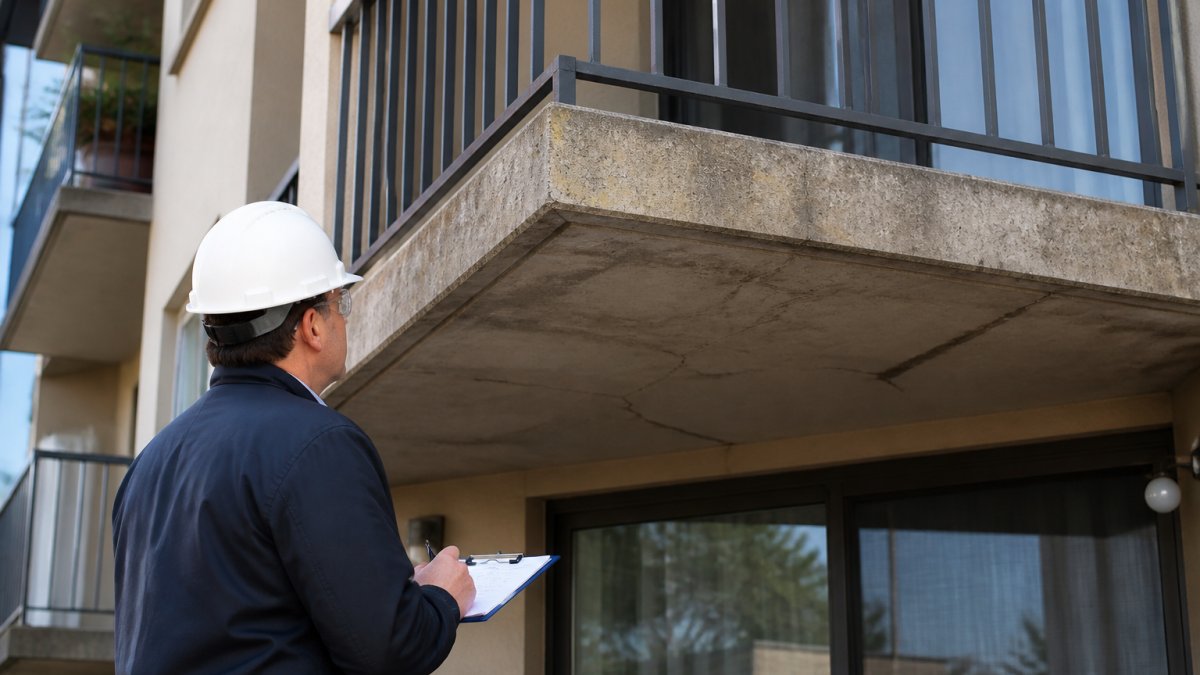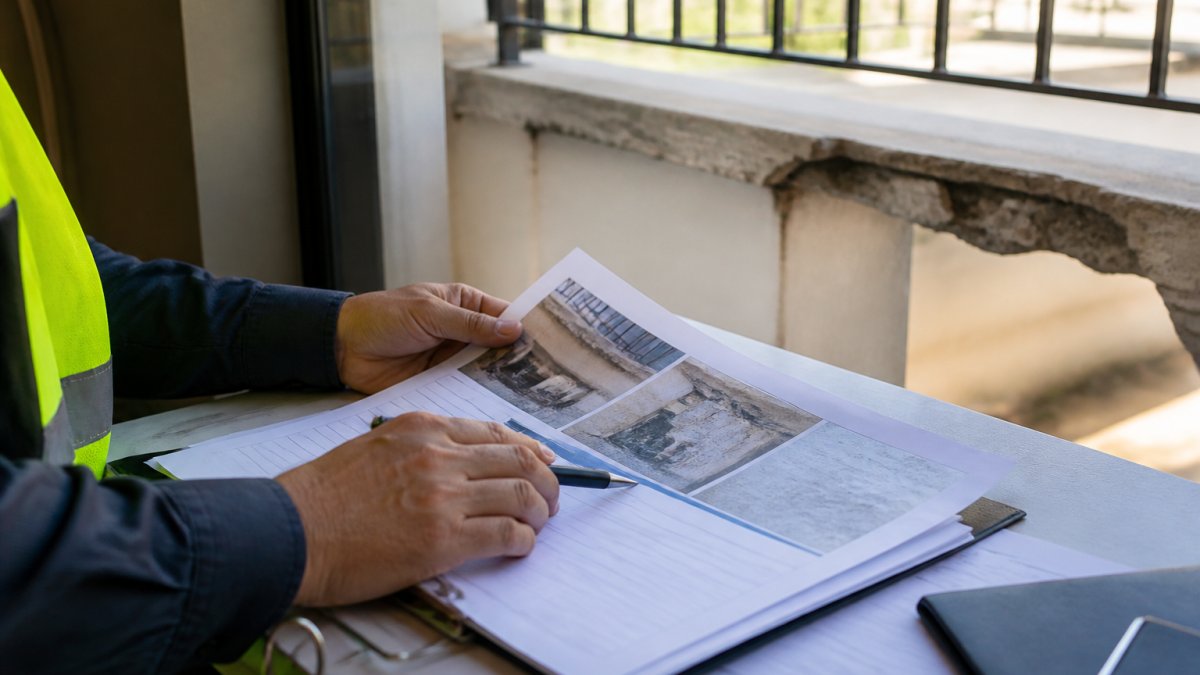
California Balcony Law Inspection Frequency: Complete 2026 Guide
Learn California balcony law inspection frequency requirements under SB 721 and SB 326. Deadlines, costs, qualified inspectors, and compliance steps.
Table of Contents
- What Is SB 721 and SB 326? Understanding California’s Balcony Laws
- California Balcony Law Inspection Frequency: What You Must Know
- Which Buildings Must Comply With Inspection Requirements
- Finding a Licensed Balcony Inspector in California
- Balcony Inspection Cost in California: Budgeting and Benchmarks
- California Balcony Repair Timeline: From Inspection to Compliance
- Liability and Insurance Implications of Non-Compliance
- Common Mistakes Property Owners Make With Inspection Frequency
Last Updated: June 24, 2026
California’s balcony inspection laws are stricter than most property owners realize. Understanding inspection frequency is the difference between compliance and serious legal exposure. The stakes are real: balcony failures have caused fatal accidents in California, which is precisely why the legislature acted.
What Is SB 721 and SB 326? Understanding California’s Balcony Laws
California’s two primary balcony inspection statutes are SB 721 and SB 326, both enacted in response to a 2015 Berkeley balcony collapse that killed six people. These laws created mandatory inspection requirements for Exterior Elevated Elements (EEE), a defined category that includes balconies, decks, stairways, walkways, and their associated railings and waterproofing systems. According to California Legislative Information on SB 721, the law applies to multifamily residential buildings and establishes specific timelines, inspector qualifications, and repair mandates.
SB 721 targets apartment buildings with three or more units that are not governed by a homeowners association and is codified in the California Health and Safety Code.
SB 326 targets condominium buildings managed by an HOA and is codified in the California Civil Code.
Both laws share the same core goal: ensuring structural integrity of load-bearing elevated elements before they become safety hazards.
Key Differences Between SB 721 and SB 326
| Feature | SB 721 (Apartments) | SB 326 (HOAs/Condos) |
|---|---|---|
| Governing Code | Health and Safety Code | Civil Code |
| Applies To | 3+ unit rental buildings | HOA-governed condos |
| Inspector Type | Licensed contractor, architect, or engineer | Licensed architect or structural engineer only |
| Inspection Cycle | Every 6 years | Every 9 years |
| Initial Deadline | January 1, 2025 | February 1, 2025 |
The inspector qualification difference is significant. SB 326 requires a licensed architect or structural engineer, while SB 721 allows qualified contractors with specific license classifications. Property owners frequently mix these up, which can invalidate an inspection.
California Balcony Law Inspection Frequency: What You Must Know
The inspection frequency depends on which law governs your property. SB 721 properties require inspection every six years, and SB 326 properties require inspection every nine years. Both cycles reset from the date of the completed and documented inspection, not from the deadline date.
The clock only starts when a qualifying inspection report is submitted to the building department. If your inspector’s report is incomplete or submitted by an unqualified professional, the cycle does not reset and you remain out of compliance.
Initial Inspection Deadlines by Building Type
The initial inspection deadlines have already passed for most California buildings. Missing them creates immediate enforcement risk.
- SB 721 (apartment buildings): Initial inspection deadline was January 1, 2025
- SB 326 (HOA-governed condos): Initial inspection deadline was February 1, 2025
- Newly constructed buildings: Must comply before the first certificate of occupancy is issued for buildings constructed after January 1, 2020
If your building has not completed its initial inspection, you are currently out of compliance. The building department has authority to cite property owners and mandate emergency repairs or restrict occupancy.
Ongoing Inspection Requirements
After the initial inspection, the ongoing inspection frequency is fixed by statute.
- SB 721 properties: Inspections required every six years
- SB 326 properties: Inspections required every nine years
- Post-repair inspections: Required after any structural repair to confirm the work meets code
- Triggered inspections: Required when a complaint is filed or a visible safety hazard is identified by building department staff
Do not assume that completing repairs resets your inspection clock automatically. Post-repair inspections are separate from the routine cycle and must be documented independently. Skipping this step leaves a gap in your compliance record that can create liability during litigation.
Which Buildings Must Comply With Inspection Requirements
Not every California building with a balcony falls under these statutes. The applicability rules are specific.
SB 721 applies to:
- Multifamily residential buildings with three or more units
- Buildings where the units are rented (not owner-occupied condos)
- Elevated exterior elements six feet or more above ground level
SB 326 applies to:
- Common interest developments governed by an HOA
- Condominium associations with three or more units
- Elevated exterior elements that are part of the common area or attached to individual units
Exempt from both statutes:
- Single-family homes
- Duplexes (two-unit buildings)
- Buildings where all EEEs are ground-level or below six feet
- Commercial properties (though separate building codes apply)
An Exterior Elevated Element is any load-bearing component of a balcony, deck, stairway, walkway, or landing that extends beyond the building’s exterior wall and is elevated six feet or more above grade.
Finding a Licensed Balcony Inspector in California
The right inspector is not just a legal requirement. It is the single most important factor in whether your inspection report holds up under scrutiny.
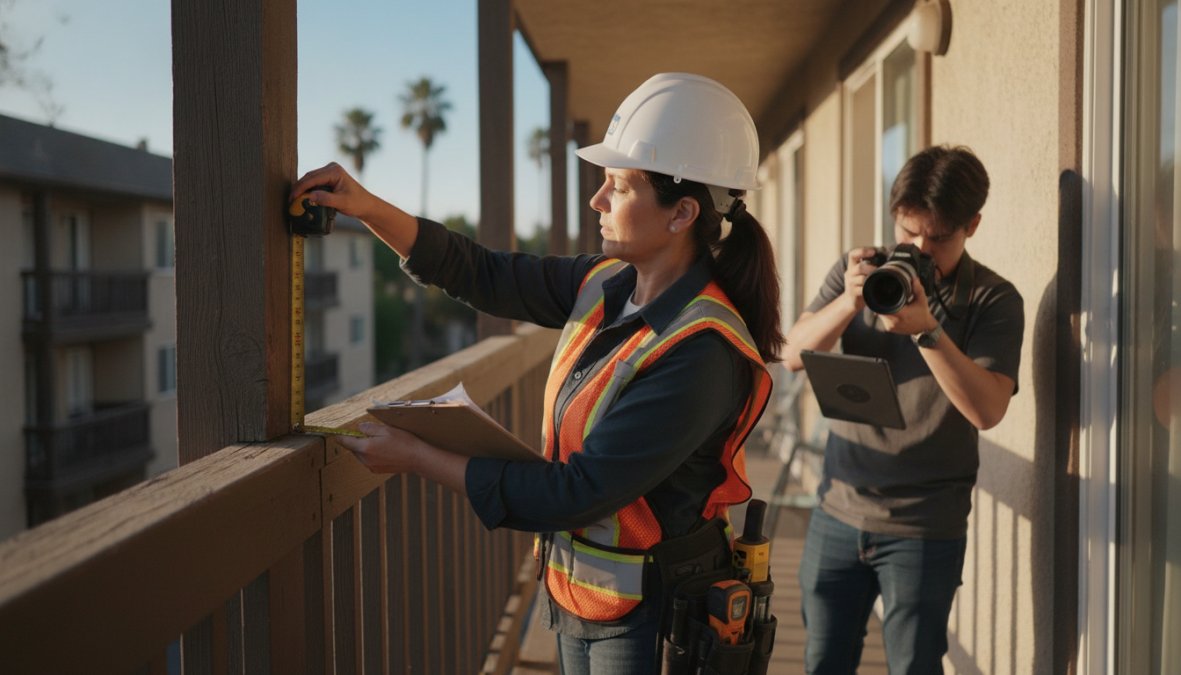
For SB 326 properties, only a licensed architect or structural engineer qualifies. For SB 721 properties, the law also accepts licensed contractors holding specific license classifications, including Class A (General Engineering), Class B (General Building), or certain specialty classifications. The inspector must carry appropriate errors and omissions insurance and general liability coverage.
Qualifications and Credentials to Look For
Before hiring any inspector, verify these credentials directly with the California Contractors State License Board or the California Architects Board.
- Valid California license in an accepted classification
- Demonstrated experience with EEE inspections specifically
- Familiarity with both SB 721 and SB 326 reporting requirements
- Ability to produce a compliant written inspection report with findings, photographs, and repair recommendations
- Professional liability insurance
Step-by-Step Procurement Guide
- Confirm which statute applies to your property before contacting any inspector
- Verify license status through the California Contractors State License Board license lookup
- Request a scope of work that explicitly references the applicable statute
- Compare at least three bids to establish a realistic price baseline
- Confirm report format will meet your building department’s submission requirements
- Schedule access coordination with tenants or HOA members in advance
- Obtain the completed report and submit it to your local building department
Ask each inspector candidate to provide a sample redacted report from a comparable property. A well-structured report includes photographs of every inspected element, a condition rating, and specific repair recommendations with urgency classifications.
Balcony Inspection Cost in California: Budgeting and Benchmarks
Balcony inspection cost in California varies considerably based on building size, number of EEEs, location, and inspector type. Property owners who budget for inspection alone and ignore repair contingencies consistently underestimate their total compliance cost.
Cost Factors and Price Ranges
Several variables drive inspection pricing: number of EEEs, building height and access difficulty, inspector type, geographic location, and report complexity. Buildings with deferred maintenance require more detailed documentation and higher costs.
Budgeting for Repairs and Maintenance
The inspection is the beginning of the compliance process, not the end. Repair costs depend entirely on what the inspection finds.
| Finding Category | Urgency Level | Typical Response Timeframe |
|---|---|---|
| Imminent threat to safety | Emergency | Immediate – 15 days |
| Significant structural concern | Urgent | 30 – 120 days |
| Moderate deterioration (dry rot, corrosion) | Standard | 120 days – 1 year |
| Minor maintenance items | Routine | Next maintenance cycle |
| Waterproofing deficiency | Preventive | Before next rainy season |
Budget for repairs as a separate line item from inspection costs. Buildings with older waterproofing systems, visible dry rot, or corroded railings should allocate a meaningful repair contingency before the inspection takes place.
California Balcony Repair Timeline: From Inspection to Compliance
Once an inspection report identifies a deficiency, the law sets specific deadlines for corrective action, and the building department tracks them.
Inspection Report and Repair Mandate Process
After a qualifying inspection, the process follows a defined sequence: the inspector submits a written report to the property owner and local building department; the property owner reviews findings and classifies repairs by urgency level; emergency conditions must be addressed immediately, often within 15 days; non-emergency repairs must be completed within the timeframe specified in the report; completion documentation must be submitted to the building department; and a post-repair inspection by a qualified professional confirms the work meets structural and waterproofing standards.
The repair mandate process is sequential and documented. Missing any step, including the post-repair confirmation inspection, leaves the property owner without a complete compliance record. That gap becomes significant if a future incident triggers litigation.
Maintenance Checklist for Property Owners
Proactive maintenance between inspection cycles reduces repair costs and prevents emergency findings. Use this checklist on an annual basis.
- Visually inspect all balcony railings for corrosion, loose fasteners, or visible deflection
- Check waterproofing membranes for cracking, bubbling, or separation at seams
- Inspect drainage systems on decks and walkways for blockage or standing water
- Look for signs of dry rot at wood framing connections and ledger boards
- Test railing stability by applying lateral force at the top rail
- Document any visible cracks in concrete decks or stairway treads
- Review prior inspection report findings and confirm repairs remain intact
- Confirm that no unauthorized modifications have been made to any EEE
This checklist does not replace a statutory inspection. It supplements it by catching deterioration early.
Liability and Insurance Implications of Non-Compliance
Non-compliance with California balcony inspection laws creates liability exposure that extends well beyond a building department citation. Property owners who have not completed required inspections face compounded risk if a structural failure occurs.
Many commercial property and general liability policies contain exclusions or coverage limitations for losses arising from known or foreseeable conditions. A missed inspection deadline is evidence that a condition was foreseeable. California courts have consistently held that violation of a safety statute constitutes negligence per se, meaning a plaintiff does not need to prove the property owner was careless, only that the statute was violated and the violation caused harm. For a property owner who has missed the inspection deadline, this is a difficult position to defend.
HOAs face an additional layer of exposure. Board members who knowingly defer required inspections can face personal liability claims from unit owners, separate from the association’s institutional exposure.
The practical response is straightforward: complete the inspection, document the process, and maintain the compliance record permanently.
Common Mistakes Property Owners Make With Inspection Frequency
Most compliance failures follow predictable patterns that a structured approach can prevent.
Assuming the first inspection resets the clock automatically. The cycle only resets when a qualifying report is submitted to the building department. An inspection that was conducted but never formally submitted does not satisfy the statute.
Hiring the wrong inspector type. SB 326 requires a licensed architect or structural engineer. A licensed contractor cannot produce a qualifying report for an HOA-governed property.
Treating the inspection report as the finish line. The report is the starting point for the repair process. Property owners who file the report and take no further action on identified deficiencies are still out of compliance.
Ignoring the statistically significant sample requirement. SB 326 requires inspection of a statistically significant sample of EEEs, not just one or two representative balconies.
Failing to maintain records. Building ownership changes hands. Inspection records, repair documentation, and post-repair confirmation reports should be maintained as permanent property records.
According to California Building Officials guidance on EEE compliance, local building departments are increasing enforcement activity as initial deadlines have passed, making documentation hygiene more important than ever.
The california balcony law inspection frequency is not a compliance checkbox. It is an ongoing operational responsibility that requires tracking, documentation, and proactive maintenance between cycles. Property owners who treat it as a one-time task consistently find themselves scrambling when the next deadline approaches.
Managing california balcony law inspection frequency compliance is genuinely complex, and the consequences of getting it wrong range from citations to catastrophic liability. Apex Balcony provides licensed inspection services specifically designed for SB 721 and SB 326 compliance. Our inspectors identify early signs of structural failure in balconies, decks, and stairways, and we provide a clear path to necessary repairs so building owners and HOAs can protect their residents and their assets. Book your inspection with Apex Balcony and get a compliance record that holds up under scrutiny.
Frequently Asked Questions
How often do I need to inspect balconies under California balcony law inspection frequency requirements?
Under SB 721 and SB 326, initial inspections must be completed by specific deadlines based on building age and type. After the initial inspection, ongoing visual inspections are typically required every 6 years for buildings with a statistically significant sample of defects, and every 9 years for those without major issues. Property owners should consult their building department for specific timelines, as requirements vary by jurisdiction and building classification under the California Health and Safety Code.
What qualifications should a licensed balcony inspector in California have?
A qualified balcony inspector must be a licensed architect or structural engineer registered in California. They should have specific experience evaluating exterior elevated elements, including balconies, decks, stairways, and walkways. Look for inspectors with demonstrated expertise in identifying structural integrity issues such as dry rot, corrosion, waterproofing failures, and load-bearing defects. Verify their current license status and ask about their experience with SB 721 and SB 326 compliance inspections.
What is the difference between SB 721 and SB 326 inspection requirements?
SB 326 applies to residential multifamily buildings three stories or taller built before January 1, 1995, requiring initial inspections by January 1, 2025. SB 721 expanded requirements to all multifamily buildings three stories or taller, regardless of age, with staggered deadlines based on the number of units. Both laws mandate inspections of exterior elevated elements and require remediation of safety hazards. The key difference is scope: SB 721 covers newer buildings and has more flexible deadlines, while SB 326 targets older structures with earlier compliance deadlines.
What happens if I miss a balcony inspection deadline in California?
Missing a compliance deadline can result in enforcement action by the building department, including fines, loss of certificate of occupancy, and potential liability for injuries. Property owners may face legal consequences if a resident is injured due to unaddressed defects discovered during inspections. Additionally, insurance coverage may be denied if non-compliance is documented. Immediate action is critical: contact a licensed inspector to schedule your inspection and begin the repair mandate process as soon as possible to avoid penalties and ensure resident safety.