Balcony Inspection Report Requirements: A 2026 Guide
Balcony inspection report requirements under SB 721 and SB 326 explained. Deadlines, inspector qualifications, and compliance steps. Book your inspection.
Table of Contents
- SB 721 Balcony Inspection Requirements: What Property Owners Must Know
- SB 326 Balcony Inspection Checklist for HOAs and Condominiums
- Balcony Inspection Report Requirements: Documentation and Reporting Standards
- Hiring a Qualified Balcony Inspector: Credentials and Red Flags
- How Long Does a Balcony Inspection Take, and What Happens Next
- Consequences of Non-Compliance and Insurance Implications
- Budgeting for Balcony Inspection Report Requirements and Repairs
- Conclusion
Last Updated: June 15, 2026
California’s SB 721 and SB 326 balcony inspection laws caught many property owners off guard, and the balcony inspection report requirements embedded in those laws are more specific than most guides let on. At Apex Balcony, we’ve worked with hundreds of building owners across California and seen firsthand how documentation errors, missed deadlines, and underqualified inspectors turn a manageable compliance task into a costly legal liability. Below, we’ll walk you through exactly what the law requires, what a compliant report must contain, and how to avoid the most common mistakes.
The stakes are real. Structural failures involving exterior elevated elements have caused deaths and serious injuries across California, which is precisely why the legislature mandated regular inspections. Compliance is straightforward when you understand the framework.
SB 721 Balcony Inspection Requirements: What Property Owners Must Know
Senate Bill 721 is California’s mandatory inspection law for exterior elevated elements on multi-family residential buildings with three or more units. It applies to building owners of rental properties and obligates them to have all qualifying elevated exterior elements inspected by a licensed professional on a recurring six-year cycle.
The law was enacted following a 2015 Berkeley balcony collapse that killed six people and injured seven others, traced directly to wood decay and water intrusion that went undetected. As documented in California Legislative Information on SB 721, the bill passed in 2018 and established the first statewide mandate for periodic structural inspection of elevated elements.
What Are Exterior Elevated Elements (EEEs)?
Exterior Elevated Elements (EEEs) are load-bearing components that extend beyond the exterior walls, are designed for human occupancy or use, and are elevated more than six feet above ground level.
Under SB 721, EEEs include:
- Balconies and decks
- Stairways, landings, and walkways
- Guardrails and handrails attached to EEEs
- Any associated waterproofing systems
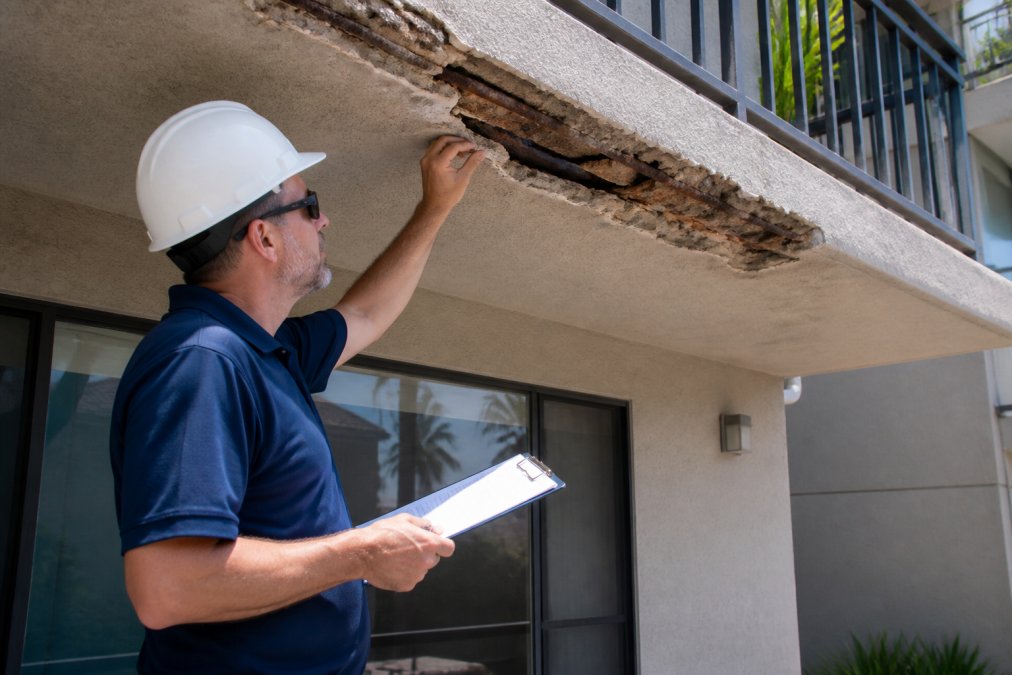
The critical detail most property managers miss: it’s not just the walking surface. The entire structural assembly, framing, connections, and waterproofing membrane, falls within scope. A visually intact deck can still fail inspection if the underlying wood-based products show water intrusion or decay.
Inspection Frequency, Deadlines, and the 6-Year Cycle
The inspection cycle under SB 721 runs every six years. The original compliance deadline for buildings with three or more units was January 1, 2025. Buildings permitted after January 1, 2020 must complete their first inspection before the sixth anniversary of the certificate of occupancy.
The six-year clock resets from the date of the most recent inspection, not from a fixed calendar year. If your inspector finds conditions requiring repair, you cannot defer and restart the clock. Repairs must be completed and documented before the cycle closes.
Missing the SB 721 deadline doesn’t just create a compliance gap. Under California law, it can constitute negligence per se, meaning a plaintiff in a personal injury case doesn’t need to prove you were careless, the violation itself establishes liability.
SB 326 Balcony Inspection Checklist for HOAs and Condominiums
Senate Bill 326 governs condominium associations and HOAs, placing the inspection obligation on the HOA board rather than individual unit owners. The inspection cycle is also six years, with an original compliance deadline of September 1, 2025.
The SB 326 balcony inspection checklist differs from SB 721 in one critical way: SB 326 requires inspections to be performed by a licensed architect or licensed structural engineer only. General contractors and building inspectors who qualify under SB 721 do not meet the SB 326 standard.
Key items an SB 326-compliant inspection must assess:
- Visual inspection of all accessible EEEs
- Identification of wood decay, rotted wood, or stucco discoloration
- Assessment of load-bearing components and connections
- Review of waterproofing integrity and signs of water intrusion
- Evaluation of guardrails and handrails for structural adequacy
- Sampling methodology documentation (see 15% rule below)
- Written report delivered to the HOA board within 45 days
The HOA board must present the inspection report at the next board meeting and include findings in the association’s reserve study.
Sampling Methodology: Understanding the 15% Rule
The 15% rule is one of the most misunderstood aspects of SB 326 compliance. The inspector must examine at least 15% of each type of EEE, with a minimum of one unit of each type, selected randomly across all buildings, not concentrated in one area.
If the inspector finds substantial damage or safety hazards in the initial sample, SB 326 requires expanding the inspection scope. A 15% sample that reveals systemic wood decay effectively triggers a full inspection obligation. The report must document which units were sampled, the selection methodology, and the rationale for any scope expansion. Inspectors who skip this documentation are producing non-compliant reports regardless of their findings.
Balcony Inspection Report Requirements: Documentation and Reporting Standards
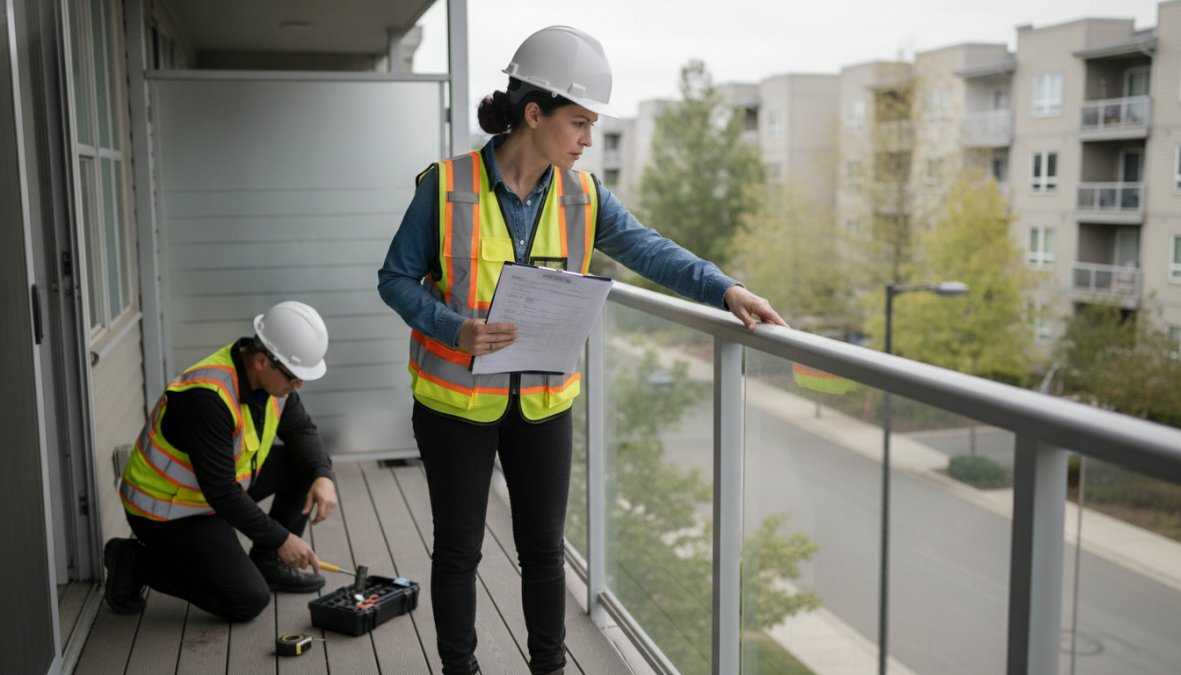
A compliant balcony inspection report is a legal document, not just a summary of findings. The balcony inspection report requirements under both SB 721 and SB 326 specify what must be included, how findings must be categorized, and how the report must be transmitted.
What a Compliant Report Must Include
The report must address the following elements to satisfy California building code requirements:
- Inspector credentials: License number, license type, and the name of the licensed professional who performed the inspection
- Property identification: Address, unit numbers inspected, and building permit history where relevant
- Scope of inspection: Which EEE types were inspected, sampling methodology, and percentage of units examined
- Condition findings: Each EEE assessed must be classified as safe, requiring repair or replacement, or an immediate safety hazard
- Photographic documentation: Photos of all identified deficiencies, including close-ups of stucco discoloration, rotted wood, and compromised waterproofing
- Recommended corrective actions: Specific repairs required, prioritized by safety risk
- Inspector signature and date: Signed by the licensed professional, not a technician or assistant
Any EEE classified as an immediate safety hazard triggers a mandatory reporting obligation: restrict access, notify residents, and notify local enforcement authorities.
Record Keeping and Submission to Local Authorities
Property owners must retain inspection reports for at least two full inspection cycles, a minimum of 12 years. If a structural failure occurs and you cannot produce prior inspection reports, the absence of records becomes evidence in litigation.
Under SB 721, local enforcement agencies may request inspection reports at any time, and some jurisdictions require proactive submission to the building department. According to California Department of Housing and Community Development guidance, local jurisdictions retain authority to impose stricter documentation requirements than the state minimum.
Store inspection reports in at least two locations: a physical file at the property and a cloud-based document management system. Inspectors who provide digital-first report delivery make this significantly easier to maintain across a large portfolio.
Hiring a Qualified Balcony Inspector: Credentials and Red Flags
The inspector’s credentials determine whether your report is legally valid, and an invalid report is worse than no report at all.
Under SB 721, qualifying inspectors include:
- Licensed architects
- Licensed civil or structural engineers
- Certified building inspectors with specific experience in exterior elevated elements
- Licensed general contractors with documented EEE inspection experience
Under SB 326, only licensed architects or structural engineers qualify. This distinction matters enormously for HOA boards.
Red flags to watch for during the hiring process:
- No verifiable license number (always check with California Contractors State License Board)
- Offers a flat-rate inspection for all unit types without reviewing the property first
- Cannot explain their sampling methodology before the inspection begins
- Delivers reports without photographic documentation
- Uses templated language that doesn’t reference your specific property
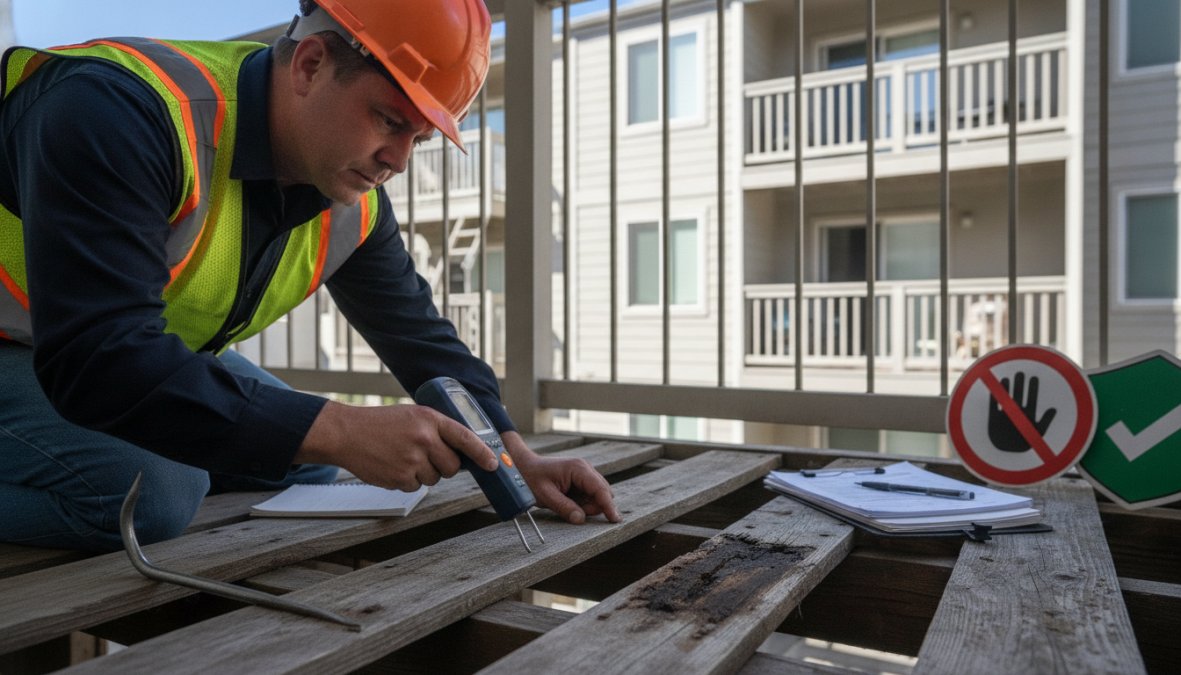
Apex Balcony’s team of licensed inspectors brings decades of combined construction and design experience to every inspection, delivering reports that satisfy California building code documentation standards and hold up under legal scrutiny.
Verify every inspector’s license before signing a contract. A report signed by an unqualified inspector has zero legal standing, and you’ll be paying for a second inspection within weeks.
How Long Does a Balcony Inspection Take, and What Happens Next
A typical balcony inspection for a mid-size apartment building takes two to six hours on-site, depending on the number of units, EEE complexity, and site access. The written report generally follows within five to ten business days. The question most property managers don’t ask upfront: what happens if the inspector finds problems?
Post-Inspection Remediation Workflow
Step 1: Triage findings by severity. Immediate safety hazards require same-day action, restrict access and notify residents. Non-urgent repairs can be scheduled within the compliance window.
Step 2: Obtain contractor bids. Use the inspection report’s photographic documentation and specific repair recommendations to solicit bids. Vague bids that don’t reference the inspector’s findings are a warning sign.
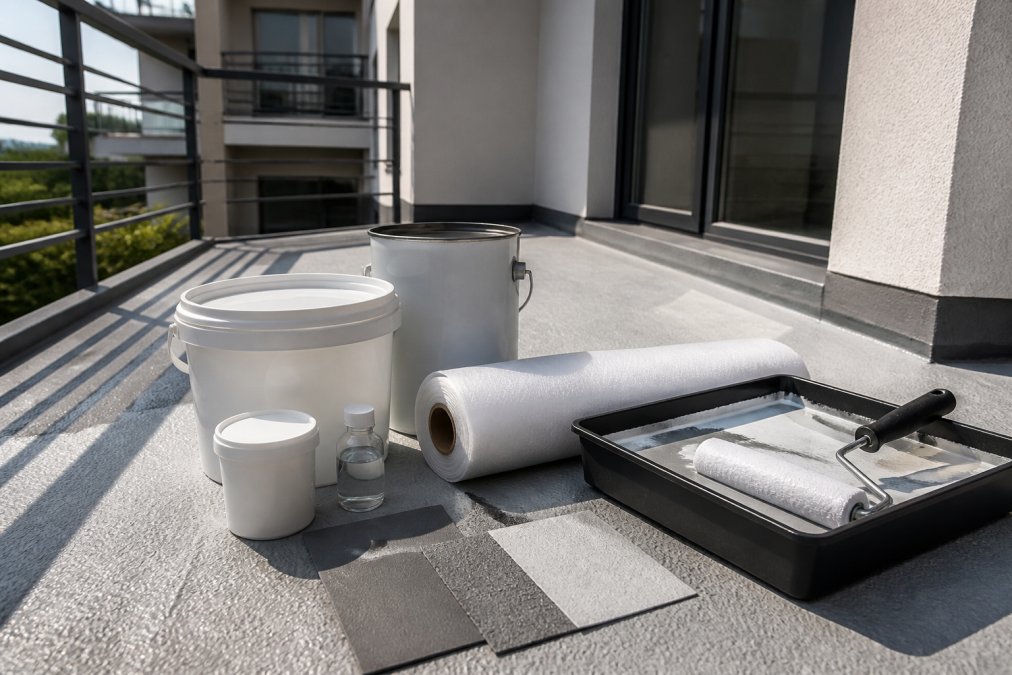
Step 3: Verify contractor qualifications. Structural repairs to EEEs must be performed by licensed contractors. Keep documentation of contractor licenses alongside the inspection report.
Step 4: Obtain permits where required. Many structural repairs to load-bearing components require building permits. Unpermitted repairs can void your compliance status.
Step 5: Arrange a follow-up inspection. Once repairs are complete, the original inspector or a qualified substitute must verify the work and issue a clearance document that becomes part of your permanent inspection record.
Step 6: Update your reserve study. For HOAs, findings that affect long-term maintenance costs must be reflected in the reserve study at the next update cycle.
Consequences of Non-Compliance and Insurance Implications
Non-compliance with SB 721 or SB 326 carries consequences well beyond a fine. A violation of the inspection mandate can constitute negligence per se, fundamentally shifting the litigation dynamic if a resident or guest is injured.
Property management liability exposure includes:
- Civil liability for injuries resulting from structural failure
- Regulatory fines from local enforcement agencies
- Forced closure of affected units until inspections are completed
- Increased insurance premiums or policy cancellation
Many commercial property insurers have added balcony inspection compliance as a policy condition following the Berkeley collapse and subsequent legislation. A policy that excludes coverage for losses attributable to uninspected EEEs is effectively worthless for the most likely failure scenario. Property owners should request written confirmation from their insurer that coverage remains in force throughout the inspection cycle.
According to California Department of Insurance guidance on property liability, insurers operating in California are permitted to adjust premiums and coverage terms based on documented maintenance and inspection compliance records. Maintaining a clean inspection history is a risk management tool that directly affects your insurance costs.
Budgeting for Balcony Inspection Report Requirements and Repairs
Costs vary significantly based on building size, EEE complexity, and regional labor markets. What’s consistent: property owners who budget reactively pay substantially more than those who plan proactively.
A practical budgeting framework for the six-year inspection cycle:
| Cost Category | Typical Scope | Budget Approach |
|---|---|---|
| Initial inspection | Per-unit or per-building fee | Obtain 3 bids; verify credentials first |
| Minor repairs | Surface sealing, hardware replacement | Reserve fund allocation |
| Moderate repairs | Waterproofing replacement, wood repair | Capital improvement budget |
| Major structural repairs | Framing replacement, full deck rebuild | Emergency reserve or special assessment |
| Follow-up inspection | Clearance documentation | Include in initial inspection contract |
The single most effective cost-reduction strategy is early detection. Inspections that catch water intrusion before it progresses to wood decay consistently result in lower repair costs, a minor waterproofing repair costs a fraction of structural framing replacement. For HOA boards, inspection findings should feed directly into the reserve fund analysis. Boards that treat inspection findings as isolated events rather than long-term maintenance data consistently underfund their reserves.
Deferring repairs to avoid a special assessment is one of the most expensive decisions an HOA board can make. Deferred structural maintenance compounds rapidly, and the liability exposure during the deferral period is uninsured risk.
Staying ahead of California’s balcony inspection laws requires qualified inspectors, compliant documentation, a clear remediation workflow, and the discipline to maintain records across inspection cycles. Apex Balcony provides licensed inspection services specifically designed to meet SB 326 and SB 721 requirements, with inspectors who carry decades of construction and design experience and deliver reports that satisfy California building code documentation standards. Get started with Apex Balcony and protect your residents, your property, and your liability position before the next compliance deadline arrives.
Frequently Asked Questions
What is included in a professional balcony inspection report?
A compliant balcony inspection report must document the condition of all inspected Exterior Elevated Elements, identify any load-bearing components showing signs of wood decay, water intrusion, or structural failure, include photographs of safety hazards such as stucco discoloration or rotted wood, note the percentage of elements sampled, provide a pass or fail determination, and outline any required repairs with a recommended timeline. Both SB 721 and SB 326 specify minimum documentation standards that the report must satisfy.
Are balcony inspection reports mandatory for all California buildings?
Not all buildings. Senate Bill 721 applies to multi-family dwellings with three or more units, while Senate Bill 326 applies to common interest developments governed by an HOA board, such as condominium complexes. Single-family homes are generally exempt. If your property falls into either category, balcony inspection report requirements under California law are mandatory, and failure to comply can result in significant liability exposure and financial penalties.
Who is qualified to perform a balcony inspection under SB 721 and SB 326?
Under SB 721 balcony inspection requirements, qualified inspectors include licensed architects, structural engineers, licensed general contractors with relevant experience, or certified building inspectors. SB 326 specifically requires a licensed structural engineer or architect to perform inspections for HOA-governed properties. When hiring a qualified balcony inspector, always verify their California license number, confirm they carry liability insurance, and ask for references from similar multi-family dwelling projects.
How often are balcony inspections required by law in California?
Both SB 721 and SB 326 establish a six-year inspection cycle. Under SB 721, the first inspection deadline for most buildings was January 1, 2025. Under SB 326, HOAs must complete their first inspection before the end of their fiscal year that falls closest to January 1, 2025, then repeat every six years. Property management teams should build this recurring inspection cycle into their long-term capital planning and risk management calendars to avoid missing deadlines.
What happens if a balcony fails an inspection?
If an inspector identifies an unsafe condition during the inspection process, they are required by law to notify the building owner and, in some cases, local code enforcement. The owner must restrict occupancy of the affected Exterior Elevated Elements immediately and complete repairs within the timeframe specified in the inspection report. Failure to act not only creates negligence per se liability if an injury occurs, but can also trigger insurance claim denials and violations of California building code.
How do I prepare my property for a balcony inspection?
Before the inspection, clear all furniture, planters, and stored items from balconies, decks, and stairways so the inspector has full access to the walking surface and structural components. Gather any prior inspection reports or repair records to give the inspector historical context. Alert tenants in advance so access is not blocked. Having this documentation ready can shorten how long a balcony inspection takes and may reduce the number of elements flagged for further review.