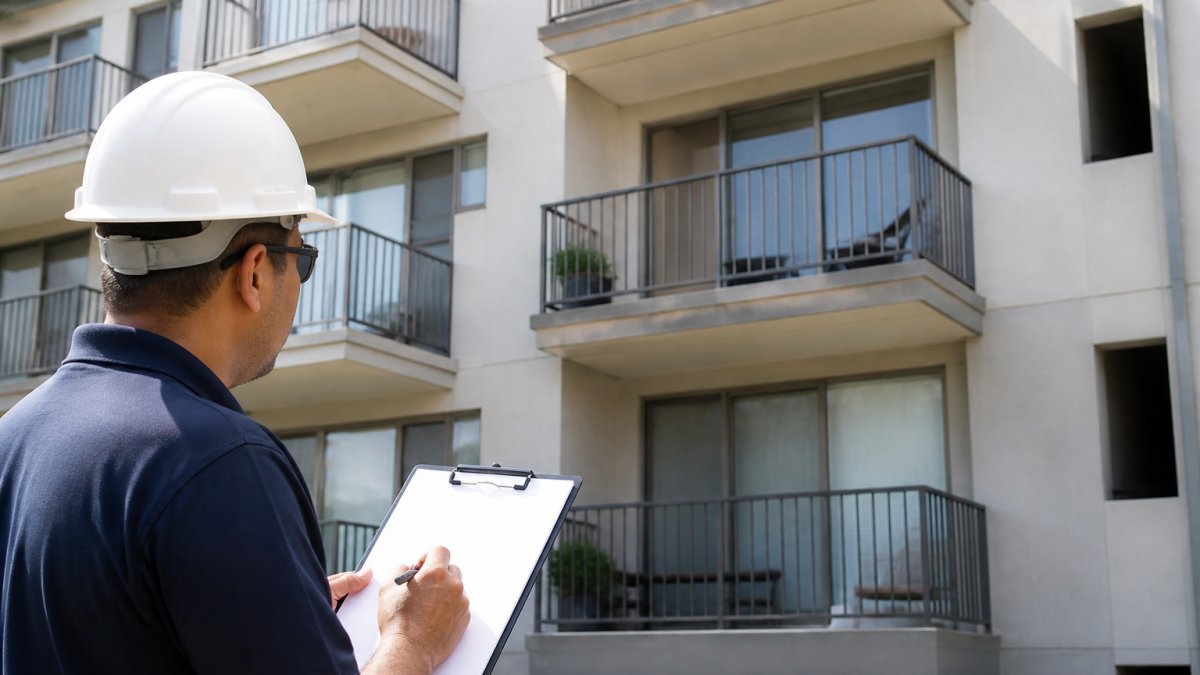
Managing Balcony Inspection Repair Projects: A Complete Guide
Master managing balcony inspection repair projects from compliance to completion. Learn timelines, hiring contractors, and cost strategies. Start today.
Table of Contents
- Understanding Your Legal Obligations for Managing Balcony Inspection Repair Projects
- Creating a Balcony Inspection Checklist for Your Property
- Developing a Balcony Repair Project Timeline
- Hiring Balcony Repair Contractors: Selection and Management
- Generating and Managing Your Balcony Inspection Report Template
- Cost Factors and Budgeting for Balcony Projects
- Post-Repair Maintenance and Long-Term Management
- Protecting Your Property: Insurance and Liability Mitigation
Last Updated: June 20, 2026
Managing balcony inspection repair projects is one of the most consequential responsibilities a California property owner or manager faces. At Apex Balcony, we have worked with hundreds of building owners navigating the legal, structural, and logistical demands of balcony compliance. This guide covers everything you need to manage balcony inspection and repair projects from compliance through long-term maintenance, with practical tools you can use immediately.
The buildings that avoid liability are the ones that build inspection, documentation, and maintenance into their annual operating rhythm rather than treating balcony management as a one-time compliance event.
Understanding Your Legal Obligations for Managing Balcony Inspection Repair Projects
California law has fundamentally changed how building owners approach exterior elevated elements. Two statutes define the compliance landscape: SB 721 and SB 326.
SB 721 and SB 326 Compliance Requirements
SB 721 applies to multifamily residential buildings with three or more units and requires inspection of all Exterior Elevated Elements (EEEs) by a licensed contractor, architect, or structural engineer. SB 326 applies to common interest developments governed by an HOA board, requiring inspection by a licensed architect or structural engineer specifically.
An Exterior Elevated Element (EEE) is any walking surface elevated more than six feet above ground level that relies on wood or wood-based products for structural support and is designed for human occupancy. This includes balconies, decks, stairways, walkways, and entry structures.
The distinction matters because it determines who can legally conduct the inspection. Sending an unqualified vendor to perform an SB 326 inspection exposes the building owner to direct liability.
Statutory Deadlines and Inspection Cycles
The statutory deadline for initial SB 721 inspections was January 1, 2025. Buildings that have not yet completed compliant inspections are already out of compliance. SB 326 requires inspections on a six-year cycle, timed to coincide with reserve study updates.
Missing these deadlines is not a technicality. Jurisdictions can issue notices of violation, and liability in the event of a structural failure falls squarely on the building owner who failed to inspect.
If your building completed an informal visual inspection but did not receive a formal compliance report from a [licensed structural engineer](/structural-engineer-for-balcony-inspection/) or architect, that inspection does not satisfy SB 326 or SB 721 requirements. You need a qualifying report on file.
Creating a Balcony Inspection Checklist for Your Property
A thorough balcony inspection checklist is the foundation of any defensible compliance program. Inspections fall into two categories: visual assessment and invasive testing.
Visual Inspection Components
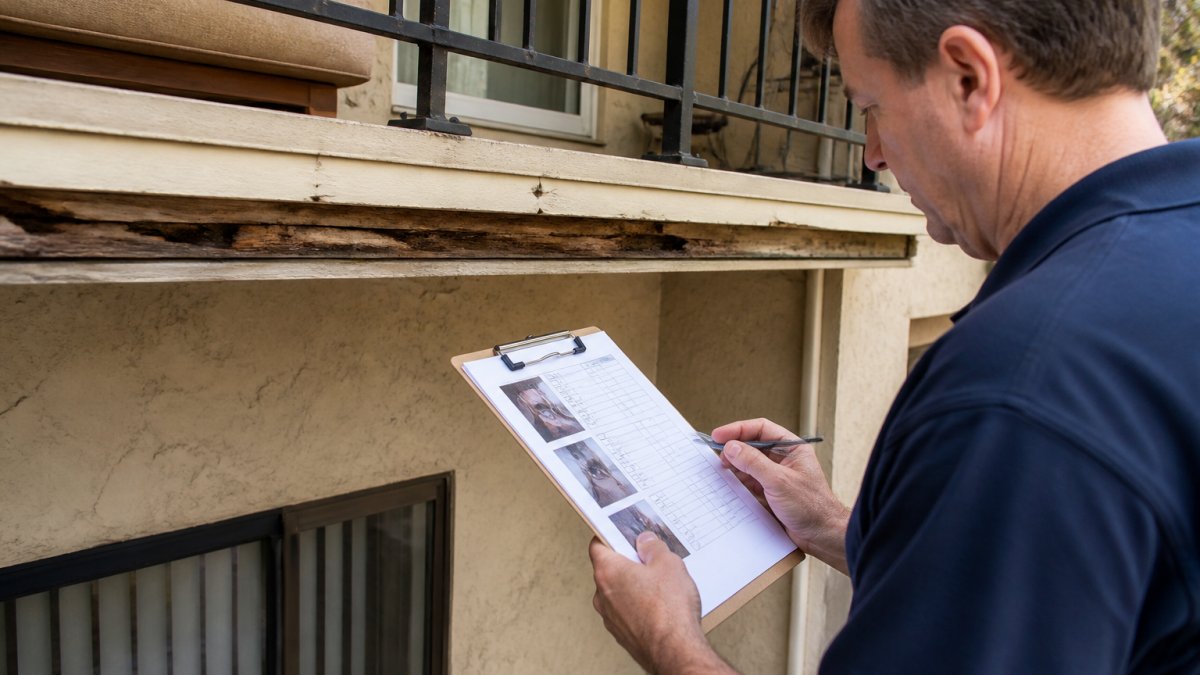
Visual inspection is the starting point for every EEE assessment. A qualified inspector examines the building envelope for surface-level indicators of deterioration before determining whether invasive testing is warranted.
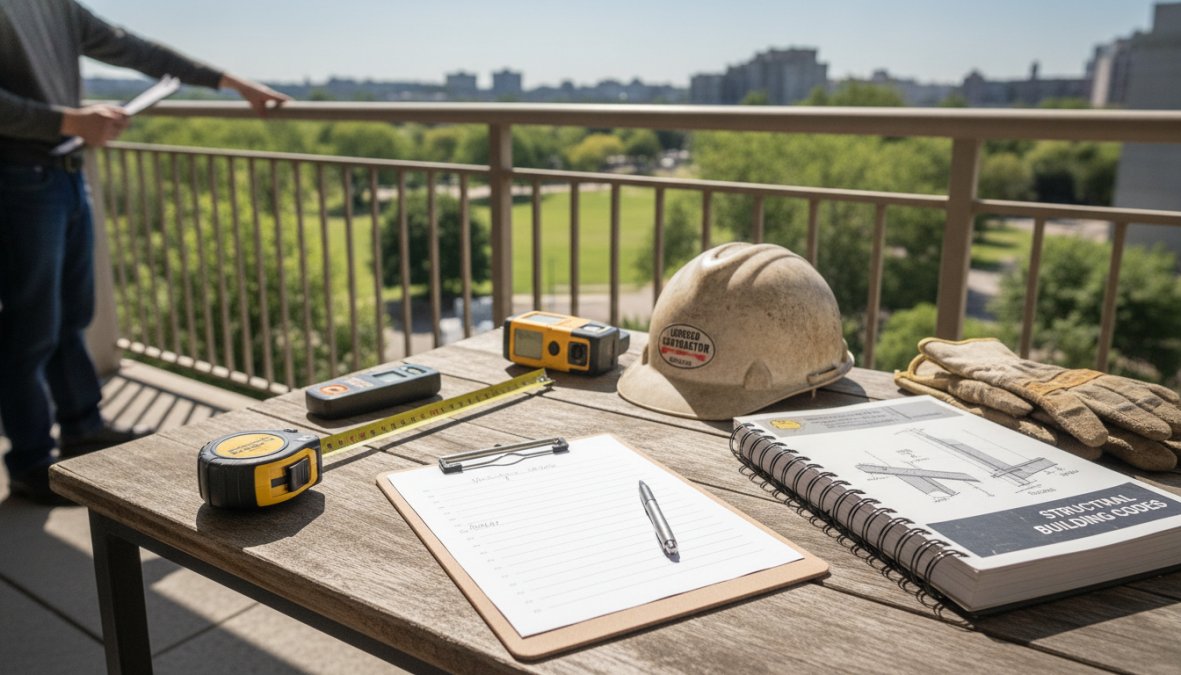
Key visual inspection components include:
- Surface condition: Visible cracking, spalling, or delamination of concrete or wood decking
- Waterproofing integrity: Blistering, peeling, or failed sealant at deck-to-wall transitions
- Ledger connection: Signs of separation, corrosion, or moisture intrusion where the balcony attaches to the building
- Corrosion: Rust staining or oxidation on metal fasteners and brackets
- Dry rot: Soft, discolored, or crumbling wood at structural members
- Drainage: Standing water or clogged drains that accelerate deterioration
- Load-bearing capacity indicators: Visible deflection, sagging, or unusual movement
A well-structured checklist documents each element with photographs, GPS coordinates, and condition ratings.
Invasive Testing and Deterioration Assessment
Visual inspection alone cannot detect moisture intrusion hidden within wall assemblies or early-stage dry rot inside structural members. When visual indicators suggest potential deterioration, invasive testing is required.
Invasive testing methods include probe testing of wood members, core sampling of concrete, and opening of wall or floor assemblies to inspect framing. The inspector documents load-bearing capacity concerns in a formal compliance report that determines whether immediate repair is required, whether the element can remain in service pending scheduled repair, or whether it must be taken out of service immediately.
Request that your inspector photograph every invasive test location before closing it up. This creates a baseline record that makes future inspections faster and more targeted.
Developing a Balcony Repair Project Timeline
The biggest mistake property managers make is treating the inspection report as the end of the process. The report is the starting line.
Pre-Repair Planning and Risk Assessment
Pre-repair planning begins the moment you receive the compliance report. Prioritize findings by severity: immediate safety hazards require emergency response, while non-critical deterioration can follow a scheduled timeline.
A practical repair project timeline for a mid-size multifamily building typically includes:
- Receive compliance report and triage findings by severity
- Notify tenants of inspection findings and anticipated repair scope
- Solicit bids from at least three licensed contractors
- Review bids against the compliance report’s remediation specifications
- Confirm permit requirements with the local building department
- Award contract and establish a project schedule with milestones
- Execute repairs with documented site visits and progress photos
- Schedule final inspection and obtain safety certification
- File updated compliance records
The pre-repair phase typically takes four to eight weeks for straightforward projects. Complex structural remediation can extend planning to twelve weeks or more.
Repair Execution and Permit Requirements
Permit requirements vary by jurisdiction and repair scope. Cosmetic repairs such as waterproofing resurfacing may not require a permit. Structural repairs, including ledger connection replacement or any modification affecting load-bearing capacity, almost always do.
Skipping permits is a liability trap. Unpermitted structural repairs are not recognized by building code, can void insurance coverage, and create disclosure obligations at sale.
Hiring Balcony Repair Contractors: Selection and Management
Not every licensed contractor is qualified to perform EEE repairs. Credential verification is non-negotiable.
Vetting Licensed Contractors and Structural Engineers
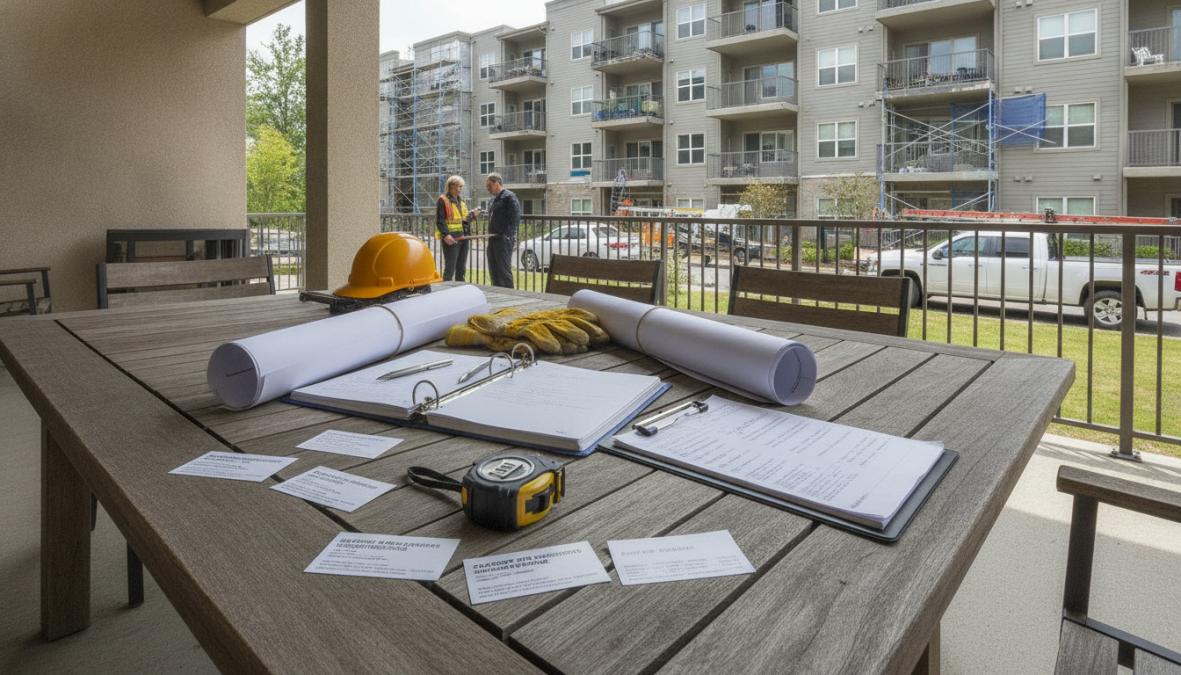
When hiring balcony repair contractors, verify:
- California contractor’s license: Confirm active status through the California Contractors State License Board license lookup
- Classification: Structural repairs require a C-5 (framing and rough carpentry) or B (general building) license; waterproofing requires C-33 or C-39
- Insurance: General liability and workers’ compensation certificates naming your property as additional insured
- Experience with EEE compliance: Ask for references from SB 721 or SB 326 remediation projects
- Permit familiarity: A qualified contractor pulls permits as standard practice
For SB 326 projects, the inspecting structural engineer should be separate from the repair contractor to maintain an independent compliance chain.
Contractor Communication and Project Oversight
Establish a single point of contact on both sides, set a weekly check-in cadence, and document every material decision in writing. Common mistakes include approving scope changes verbally without a written change order, failing to verify subcontractor insurance, and accepting completed repairs without a final walkthrough against the original compliance report.
A well-managed project ends with a signed completion report, permit closeout documentation, and updated maintenance log entries.
Generating and Managing Your Balcony Inspection Report Template
Essential Documentation and Compliance Records
A balcony inspection report template is a standardized document that captures all findings from an EEE inspection in a format that satisfies statutory requirements and creates a defensible compliance record.
Every compliant inspection report should include:
- Property address and unit or element identification
- Inspector name, license number, and license classification
- Inspection date and methodology
- Findings for each EEE, including condition ratings and photographs
- Risk assessment and prioritization of repairs
- Specific remediation recommendations with timeframes
- Inspector signature and certification statement
Property managers should maintain inspection reports, repair contracts, permit records, and maintenance logs in a single compliance file for each building. This file is your primary liability mitigation tool.
Tenant Communication Template:
Dear [Resident Name],
We are writing to inform you that [Building Name] will be conducting required balcony and deck repairs beginning [Start Date] and estimated to conclude by [End Date]. These repairs are required under California SB 721/SB 326 to maintain the safety and structural integrity of your building’s exterior elevated elements.
During this period, access to [specific balcony/deck/stairway] will be restricted. Please contact [Property Manager Name] at [contact information] with any questions.
Proactive tenant communication reduces complaints, demonstrates good faith, and creates a documented record that you notified residents before restricting access.
Cost Factors and Budgeting for Balcony Projects
Budgeting for balcony inspection and repair projects requires separating inspection costs from remediation costs.
Inspection costs depend on building size, number of EEEs, and whether invasive testing is required. Remediation costs vary based on:
- Scope of deterioration: Surface waterproofing repairs cost far less than structural ledger connection replacement
- Material selection: Composite decking, concrete, and treated lumber carry different costs
- Access complexity: Elevated elements requiring scaffolding or lift equipment add significant cost
- Permit and inspection fees: Local jurisdiction fees vary
For reserve fund planning, maintain a dedicated EEE reserve line item. After receiving your compliance report, obtain three bids and use the median bid as your budget baseline. Add a contingency of at least fifteen percent for structural repairs, where concealed damage frequently expands scope.
| Cost Category | Typical Range | Notes |
|---|---|---|
| Initial compliance inspection | Varies by building size | Higher for invasive testing |
| Surface waterproofing repair | Per element | Depends on material and area |
| Structural remediation | Per element | Ledger/framing work costs more |
| Permit fees | Per jurisdiction | Confirm locally |
| Reserve fund contribution | Annual | Based on inspection cycle |
Post-Repair Maintenance and Long-Term Management
Repairs without a maintenance schedule are a temporary fix. Treat post-repair maintenance as a system, not an afterthought.
A post-repair maintenance schedule for exterior elevated elements should include:
- Annual visual inspection: Property management staff or a qualified vendor checks for new signs of moisture intrusion, sealant failure, corrosion, or surface deterioration
- Biannual waterproofing inspection: A licensed contractor assesses the condition of deck coatings, flashing, and drainage systems
- Six-year compliance inspection cycle: Satisfies SB 326 statutory requirements
- Maintenance log updates: Every inspection, repair, and material replacement is logged with date, scope, and responsible party
The period immediately after a major repair is the highest-risk window for new issues. Schedule a thirty-day post-completion walkthrough as a standard practice.
Protecting Your Property: Insurance and Liability Mitigation
Insurance implications for balcony inspection and repair projects are significant. Many commercial property and general liability policies contain exclusions for known structural defects that were not remediated within a reasonable timeframe.
If your compliance report identified a safety hazard and you delayed repairs, your insurer may deny a claim arising from that element. The compliance report creates a documented record of known conditions.
Practical liability mitigation steps:
- Share compliance reports with your insurance broker immediately upon receipt
- Confirm that your policy covers EEE-related incidents and ask about exclusions
- Document every repair action with photographs, contracts, and permit records
- Ensure contractor insurance certificates are current before work begins
- Restrict access to any element rated as an immediate safety hazard until repairs are complete
- Retain all documentation for at least ten years
Property owners who treat managing balcony inspection repair projects as compliance-and-done miss the insurance dimension entirely. The documentation you generate during inspection and repair is your primary defense against liability claims.
Balcony compliance in California is complex, and the stakes are high: structural failures, regulatory penalties, and liability exposure are all real consequences of deferred action. Apex Balcony works with building owners and HOA boards across California to manage the full inspection lifecycle, from initial SB 721 and SB 326 compliance inspections through compliance reporting and remediation guidance. Our licensed inspectors bring decades of construction and design experience to every assessment, identifying early signs of structural failure before they become emergencies. Book your inspection with Apex Balcony and get a clear, compliant path forward for your property.
Frequently Asked Questions
What are the legal requirements for managing balcony inspection repair projects in California?
California's SB 721 and SB 326 require building owners to conduct regular inspections of Exterior Elevated Elements (balconies, decks, stairways) and document findings in a compliance report. Statutory deadlines vary by building age and occupancy type. Property managers must ensure inspections are performed by qualified structural engineers or licensed contractors, with results filed and repairs completed within specified timeframes. Non-compliance can result in liability exposure and legal penalties.
How often should balcony inspection cycles occur and what does a balcony inspection checklist include?
Inspection frequency depends on your building's age and previous findings. Your balcony inspection checklist should include visual assessment of waterproofing, moisture intrusion, dry rot, corrosion, ledger connections, and load-bearing capacity. Invasive testing may be required to detect hidden deterioration. Document all findings in a formal balcony inspection report template that tracks structural integrity, identifies safety hazards, and recommends remediation priorities for your property management records.
What should I look for when hiring balcony repair contractors?
When hiring balcony repair contractors, verify they hold current California licenses and have experience with building code compliance and SB 721/SB 326 projects. Request references from similar-sized properties and confirm they work with qualified structural engineers for load-bearing assessments. Review their balcony repair project timeline estimates, liability insurance, and past compliance reports. Choose contractors who provide clear communication, detailed scope documentation, and post-repair maintenance schedules to ensure long-term structural integrity.
How much do balcony inspection and repair projects typically cost?
Balcony inspection costs typically range from $500-$3,000 per building, depending on size and complexity. Repair costs vary dramatically based on deterioration severity, minor waterproofing fixes may cost $2,000-$5,000, while structural remediation (dry rot replacement, ledger reconnection) can exceed $25,000 per unit. Budget planning should include contingencies for invasive testing discoveries. Many property managers reserve 10-15% of total project budgets for unexpected structural issues identified during detailed inspections.