How to Fix Galvanic Corrosion on Metal Railings
Learn how to fix galvanic corrosion on metal railings, from rust removal and priming to repainting and prevention. Protect your railings for good.
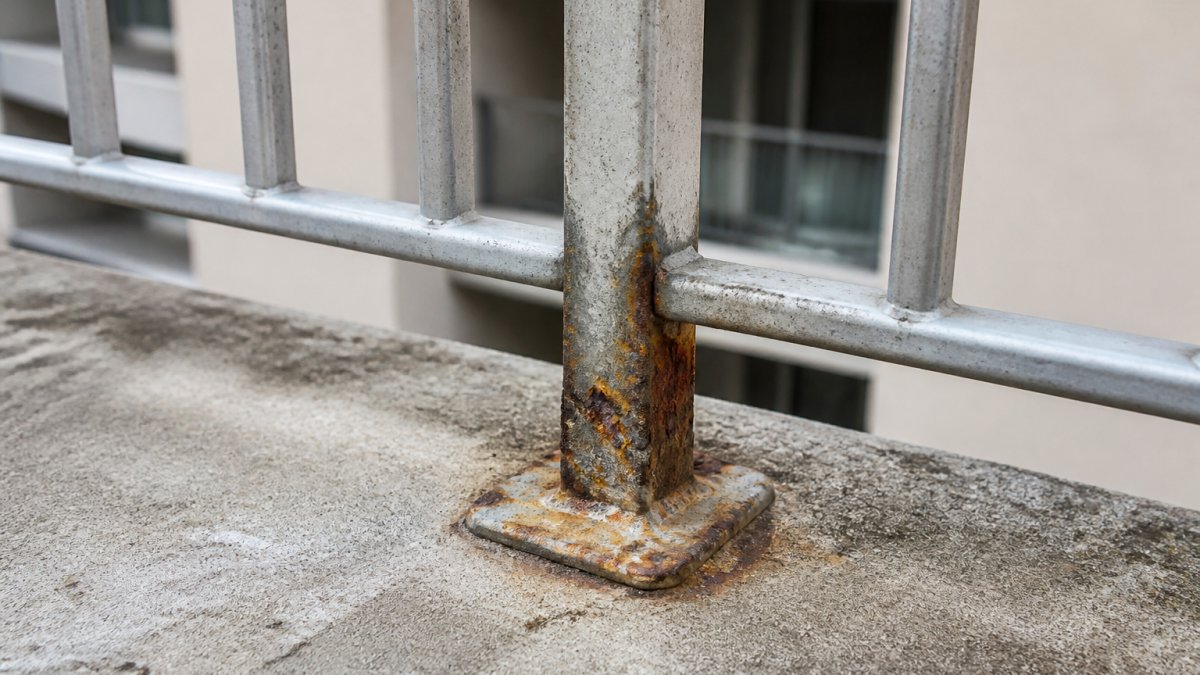
Table of Contents
- How to Tell If Your Railing Has Galvanic Corrosion
- What You’ll Need Before You Start
- Step 1: Assess Safety and Structural Damage
- Step 2: How to Remove Rust from Metal Railings
- Step 3: Stop the Corrosion Cell at Joints and Fasteners
- Step 4: How to Repaint an Iron Railing
- Step 5: How to Prevent Railings from Rusting
- When to Repair vs. Replace a Corroded Railing
- Frequently Asked Questions
Last Updated: October 15, 2026
How to Tell If Your Railing Has Galvanic Corrosion
Galvanic corrosion on metal railings is the accelerated breakdown of one metal caused by electrical contact with a different, more noble metal in the presence of moisture. Left alone, it eats through joints and fasteners fast. At Apex Balcony, our licensed inspectors see it constantly on multi-unit properties.
The damage rarely starts on the open rail. It starts where two metals meet.
Galvanic Corrosion Between Dissimilar Metals: The Core Problem
Galvanic corrosion between dissimilar metals happens when two unlike metals touch in a wet environment. One acts as the anode and gives up metal.
That is why the worst damage sits at joints, base plates, and fasteners.
Three conditions have to line up at once for the cell to run:
- Two different metals in direct electrical contact.
- An electrolyte, water, condensation, or salt spray bridging the gap.
- A completed circuit, usually through the fasteners and the frame itself.
Break any one of the three and the corrosion stops. That is the entire logic behind the repair steps later in this guide.
Identifying the Metals in Your Railing Assembly
You cannot predict galvanic risk without knowing what you are looking at. Most railings are one of four metals.
- Carbon steel, magnetic, dark gray, rusts orange-brown. Common in older welded guardrails and cheap fasteners.
- Galvanized steel, carbon steel with a sacrificial zinc coating. Dull gray, sometimes spangled; a magnet sticks.
- Aluminum, non-magnetic, light, silver-white. Forms a gray-white powder at contact points rather than orange rust.
A few field checks help sort them out:
- Magnet test. A magnet sticks to carbon and galvanized steel, generally not to aluminum or 300-series stainless.
- Color of the corrosion product. Orange-brown flaking points to steel; white or gray powder to aluminum or a consumed zinc coating; dark pitting to stainless.
- Weight and feel. Aluminum feels light; steel feels dense.
Which Metal Pairings Are Most Prone to Attack
Once you know the metals, you can rank the risk: the wider the gap in the galvanic series, the faster the less noble one corrodes.
| Pairing | Risk | What Happens |
|---|---|---|
| Aluminum + stainless steel | High | Aluminum becomes the anode and pits or powders at the contact point |
| Aluminum + carbon steel | High | Steel rusts and aluminum corrodes; both degrade |
| Galvanized steel + stainless steel | Moderate to high | The zinc coating is consumed faster than normal |
| Galvanized steel + bare carbon steel | Low | Both are steel-family; the zinc still protects the joint |
| Stainless steel + stainless steel | Low | Same metal, no cell |
| Aluminum + aluminum | Low | Same metal, no cell |
The pattern to remember: mixing across metal families, aluminum against steel or stainless, is where galvanic corrosion does its worst work. Keeping fasteners and connectors in the same family as the rail removes most of the risk.
Rust vs. Galvanic Corrosion: Key Visual Differences
Rust is the normal oxidation of iron or steel when it meets oxygen and water. It spreads evenly across the surface, showing orange-brown flaking on the whole rail.
Galvanic corrosion attacks one metal next to a different one, showing pitting, white or gray powder, and deep metal loss at the joint.
Here is how to tell them apart:
| Feature | Ordinary Rust | Galvanic Corrosion |
|---|---|---|
| Location | Even, all over | At joints and fasteners |
| Color | Orange-brown | White, gray, or dark pitting |
| Pattern | Flaking and scaling | Deep localized pits |
| Trigger | Moisture and oxygen | Two different metals plus moisture |
| Fastener condition | Rusts with the rail | One metal eaten, the other intact |
A quick field test: if the rail is sound a few inches from a joint but the metal at the fastener is pitted, powdered, or eaten away, you are looking at galvanic corrosion, not ordinary rust.
What You’ll Need Before You Start
Gather your tools before you touch the railing, so bare metal is not left exposed.
Safety gear:
- Safety glasses and work gloves
- A respirator for paint and primer fumes
Cleaning and removal:
- Stiff wire brush and sandpaper (medium and fine grit)
- Scraper and a wire cup brush for a drill
- Rags and a mild degreaser
Repair and finish:
- Rust-inhibiting metal primer
- Topcoat paint rated for outdoor metal
- Stainless steel or nylon washers and fasteners
Never mix bare steel fasteners with aluminum or galvanized parts. That single shortcut is the most common cause of galvanic corrosion we find on railings. It restarts the corrosion cell the moment the job is done.
Step 1: Assess Safety and Structural Damage
Check safety first. Push and pull each post and rail section by hand. Look for wobble, cracks at welds, and rust eating into the base plate.
If a post moves, or a base plate is more than lightly pitted, stop. That is a structural problem, not a cosmetic one: a corroded base can fail under load, and a collapse on an elevated walkway is a life-safety event.
Step 2: How to Remove Rust from Metal Railings
Remove all loose rust before you prime, or the new coating will fail. Start with a wire brush on the corroded areas.
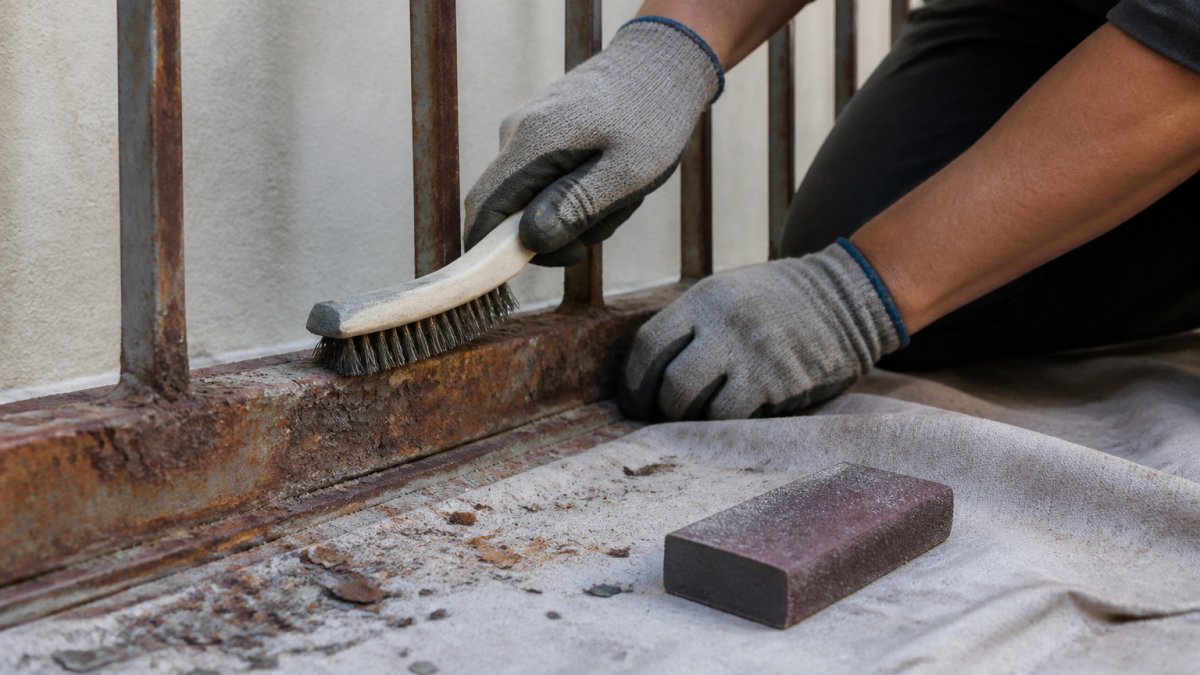
Next, scrape away flaking coating, then sand the bare spots, medium grit first, then fine grit to smooth.
Wipe the surface clean with a rag and degreaser. The metal should be dry and dull, not shiny; oil left behind keeps the primer from sticking.
- Remove every trace of loose rust and old paint
- Feather the edges where old coating meets bare metal
- Clean and dry the surface fully before priming
Step 3: Stop the Corrosion Cell at Joints and Fasteners
Stopping the cell means breaking the metal-to-metal contact. This is the fix most guides leave out, and the one that actually solves the problem. Repainting over a live joint hides the damage for a season and lets it keep eating from the inside.
Isolate the Dissimilar Metals
The goal is a non-conductive barrier between the two metals so current cannot flow. Common isolating materials include:
- Nylon or plastic washers between a fastener head and the metal it bears on.
- Neoprene or EPDM gaskets between a base plate and the surface it sits on.
- Plastic or nylon sleeves inside a bolt hole so the shank never touches the surrounding metal.
Any one of these breaks the circuit; using two together is cheap insurance at a joint that is hard to reach later.
Replace Incompatible Fasteners
Fasteners are the most common failure point because they are almost always a different metal than the rail. The rule:
- Match the fastener family to the rail. Stainless rail, stainless fasteners. Aluminum rail, aluminum or stainless fasteners with isolation. Galvanized rail, galvanized fasteners.
- Never put bare carbon steel fasteners into aluminum or galvanized rail. That single shortcut is the most common cause of galvanic corrosion we find on railings.
- Use 300-series stainless for exposed outdoor fasteners where the budget allows; it resists uniform rust and holds up in coastal air.
Prepare Galvanized and Aluminum Surfaces Correctly
Galvanized and aluminum railings need different prep than bare steel; the wrong abrasive or primer is why coatings fail.
- Galvanized steel. Do not grind the zinc off. Clean it, remove white rust with a stiff brush, and use a primer formulated for galvanized metal, standard alkyd primers often fail to adhere to zinc.
- Aluminum. Scuff lightly, clean, and use a primer rated for aluminum. Bare aluminum forms an oxide layer within minutes, so prime soon after cleaning.
- Damaged galvanized areas. Where the zinc is gone and bare steel shows, clean the area and apply a zinc-rich primer to bring back sacrificial protection, then topcoat.
Rebuild and Seal the Joint
Do this at every joint where two different metals meet:
- Take the joint apart and clean both surfaces down to sound metal.
- Remove all loose corrosion product, white powder, flaking rust, or spent zinc.
- Coat the mating faces with an isolating primer.
- Add a nylon or plastic washer (and a sleeve if the bolt passes through the rail).
- Rebuild with fasteners in the correct family.
- Seal the joint so water cannot sit inside it.
Galvanic corrosion needs a path for current and a place for water to pool. Cut off the contact and seal the gap, and the cell stops.
Water hides in the gap between a base plate and the concrete. Seal that seam with a flexible outdoor sealant after the paint cures. Moisture trapped there is what keeps a “fixed” railing corroding from the bottom up.
When the Joint Is Beyond Repair
If the metal around a fastener hole is pitted through, or the hole has enlarged so the bolt no longer grips, isolation will not save it. That joint needs a new plate, a welded repair, or a replacement section; cosmetic repair on a joint that has lost section thickness just postpones failure.
Step 4: How to Repaint an Iron Railing
Repainting an iron railing correctly means primer first, then topcoat, with full cure time between each, the step that locks out moisture and restores the barrier. Apply a rust-inhibiting metal primer to all bare and repaired spots, let it cure per the label, then apply a topcoat made for outdoor metal in two thin coats rather than one thick one.
- Prime within hours of cleaning bare metal
- Use thin coats to avoid runs and trapped moisture
- Let each coat cure fully before the next
A proper coating is a barrier. Skip the primer and the topcoat sits on rust, not clean metal, and peels within a season.
Step 5: How to Prevent Railings from Rusting
Preventing future rust comes down to three habits: keep water out, keep metals separated, and inspect on a schedule. Prevention is far cheaper than repair.
- Rinse salt and dirt off coastal railings a few times a year
- Touch up any scratch or chip before rust starts
- Re-seal joints and base plates every couple of years
For property owners under state balcony rules, these checks also feed your compliance record. Annual inspection is the baseline most owners use.
The cheapest repair is the one you prevent. A ten-minute rinse and a touch-up coat twice a year will outlast any one-time fix.
When to Repair vs. Replace a Corroded Railing
Repair when corrosion is surface-level and the metal is still thick. Replace when a post, base plate, or weld has lost real material or the section moves under load.
Use this rule of thumb:
| Condition | Action |
|---|---|
| Surface rust only | Clean, prime, and repaint |
| Pitting at joints | Repair joints and isolate metals |
| Thin or cracked metal | Replace the section |
| Wobbly post or base | Replace and get a structural check |
Also weigh the railing’s age and design.
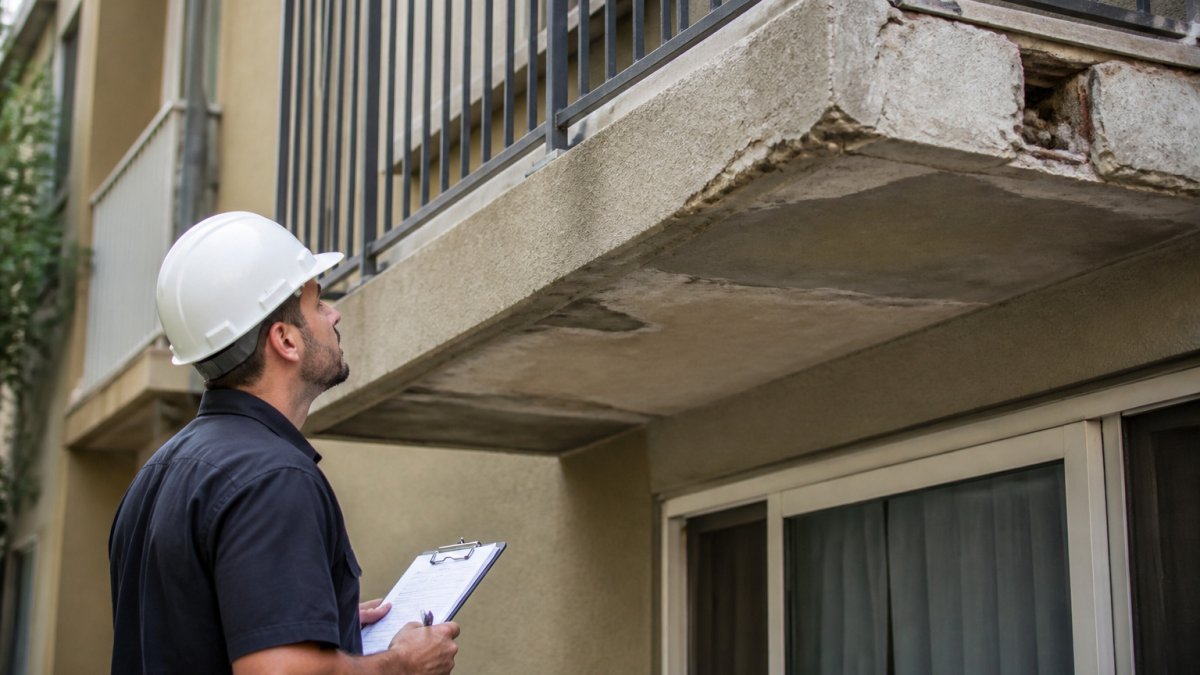
If you are unsure whether the damage is cosmetic or structural, bring in a licensed inspector.
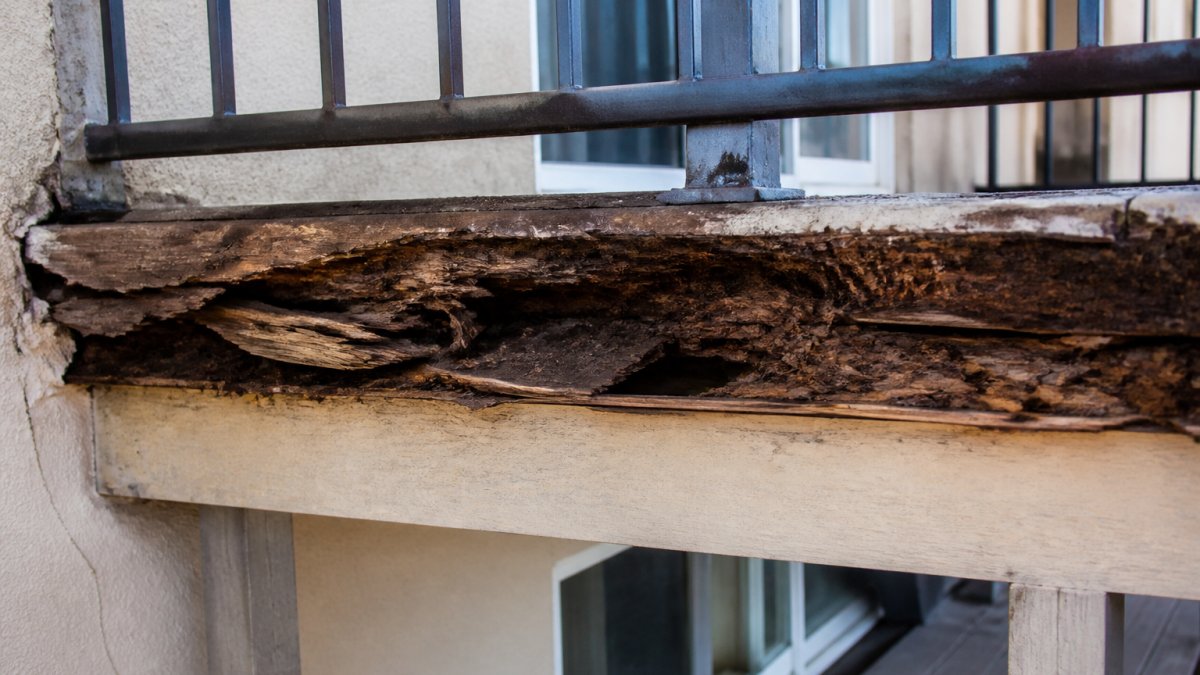
The same corrosion that ruins a railing can hide inside a balcony structure where you cannot see it.
Frequently Asked Questions
How can you tell if rust on a railing is galvanic corrosion?
Galvanic corrosion between dissimilar metals typically appears at contact points where two different metals meet, such as aluminum posts bolted to steel bases or galvanized brackets touching bare iron. Look for white or gray powdery deposits on aluminum, bubbling paint around fasteners, and concentrated corrosion in a ring pattern at joints. Ordinary rust from weather exposure tends to spread more evenly across the surface. If corrosion clusters tightly around fasteners or where two metals touch, galvanic activity is the likely cause.
Can you paint over corrosion on a metal railing?
Painting directly over active corrosion will fail within months. You need to remove loose rust with a wire brush or sandpaper, treat the bare metal with a rust-inhibiting primer, and then apply a topcoat. If galvanic corrosion is the root cause, painting alone will not stop it. You also need to break the metal-to-metal contact at joints using nylon washers or isolation tape. Surface preparation determines how long the paint lasts, so do not skip the cleaning and sanding steps.
How do you stop galvanic corrosion between two metals?
The most effective approach is to separate the dissimilar metals with a non-conductive barrier. Nylon washers, plastic shims, or rubber gaskets placed between contact surfaces block the electrical current that drives galvanic corrosion. You can also apply a corrosion-inhibiting compound at the joint. If the joint is already damaged, clean it thoroughly, remove loose rust, and apply a zinc-rich primer before reassembling with isolation washers. For railings in coastal or high-moisture areas, inspect these joints annually.
When should a corroded railing be replaced instead of repaired?
Replacement becomes necessary when corrosion has reduced the structural thickness of the metal by more than 25 percent, when fasteners can no longer hold torque, or when the railing base shows cracking or separation from the concrete. Surface rust on a solid railing is repairable. But if a railing feels loose when pushed, or if you can see deep pitting and flaking at load-bearing connections, a licensed inspector should assess whether repair is safe. Railings on elevated balconies carry life-safety risk, so err on the side of professional evaluation.
Corroded railings are a warning sign, and hidden structural damage is the bigger risk. Apex Balcony helps building owners and HOAs stay ahead of it with licensed inspectors, deep experience in balcony safety rules, and a full review of every elevated exterior element. Book an inspection with Apex Balcony and get a clear, documented path to safe, compliant railings.